



Use laminated vinyl or BOPP film stickers for water bottles. They handle condensation, hand oils, and repeated washing far better than paper, holding their color and edges through daily use. Follow proper application and washing habits, and a good laminated sticker will outlast the bottle it rides on. Skip anything labeled “paper” or “matte cardstock” for this job.
TL;DR:
- Laminated vinyl and BOPP stickers outperform paper in durability, resistance to moisture, oils, and repeated washing, especially when fully laminated.
- Surface type and adhesive choice significantly affect how long a sticker stays intact, with smooth, non-porous bottles like glass or stainless steel providing the best hold.
- Proper application, including cleaning with alcohol and avoiding cold or wet surfaces, is essential for ensuring stickers last months or years.
- Expect short-term use and easier removal when stickers lack lamination, with heat and adhesive remover assisting in safe, clean peeling.
- Custom stickers offer better control over material, lamination, and adhesive, but reviewing specifications and requesting samples is crucial before bulk orders.
Table of Contents
- Water Bottle Stickers: Vinyl vs Paper vs BOPP Explained
- How Do You Choose the Right Sticker for Your Bottle?
- How Do You Apply Stickers Without Bubbles or Peeling?
- How Long Do Water Bottle Stickers Last, and How Do You Remove Them Safely?
- Pre-Made Packs or Custom-Printed Stickers: Which Should You Buy?
- What Modern Day Knight Looks for in a Sticker
- Are Water Bottle Stickers Safe and Non-Toxic?
- Creative Ways to Use Water Bottle Stickers
- What Actually Matters When Buying Water Bottle Stickers
- Ready to Gear Up? Here’s Where to Start
- Sources
Water Bottle Stickers: Vinyl vs Paper vs BOPP Explained
Every sticker starts as a face material bonded to an adhesive, then often finished with a laminate. That combination decides whether it survives a gym bag or dies in the dishwasher.
Laminated vinyl is the standard for a reason. It’s a flexible plastic film that stretches around curves without cracking, resists tearing when a water bottle gets tossed into a bag, and shrugs off moisture that would turn paper to mush. BOPP (biaxially oriented polypropylene) works similarly, often at a lower cost, and both materials are consistently recommended for outdoor and frequently handled projects where a sticker needs to survive more than a shelf.
Paper stickers have their place, but that place is a laptop that stays dry or a notebook cover. On a bottle, paper stickers absorb water at the edges, ripple, and peel within days. Reviewers who test both materials side by side consistently point buyers toward vinyl for anything that touches liquid.
The laminate layer matters as much as the base material. It seals the printed ink from UV fading and physical abrasion, which is the actual mechanism behind any “waterproof” claim on a product page.
A few things to know before you buy:
- Vinyl and BOPP resist moisture and oils better than paper, according to sticker durability comparisons.
- Lamination adds cost but extends lifespan significantly on anything handled daily.
- “Waterproof” ink alone, without a laminate, still fades faster under friction.
Pro Tip: If a listing doesn’t mention lamination at all, assume it’s a bare print and treat it as short-term decoration, not a durable sticker.
Vendors selling custom water bottle stickers routinely advertise waterproof laminate as a standard feature, not an upgrade. That’s the baseline you should shop for.
How Do You Choose the Right Sticker for Your Bottle?
Picking a sticker isn’t just about the design. Surface, size, finish, and adhesive strength all affect how long it stays put.
- Check the surface first. Stainless steel and glass hold laminated vinyl exceptionally well because they’re smooth and non-porous. Powder-coated bottles work too, but textured or matte powder coats grip adhesive less evenly, so expect slightly shorter hold times. Plastic bottles are fine as long as the surface isn’t rubberized.
- Measure before you design. Wrap a flexible tape measure around the usable band of the bottle, avoiding the cap threads and base curve. Leave margin on your design so nothing important sits right at the trim edge.
- Pick a finish that matches the use case. Matte resists fingerprint glare and looks more premium; gloss pops color but shows smudges; clear stickers blend into the bottle for a subtler look. Specialty finishes like holographic add flair but often cost more and show wear at the edges faster.
- Match adhesive to purpose. Removable adhesive suits kids’ bottles, seasonal designs, or anyone who swaps stickers often. Permanent adhesive is the better call for merch you want to stay put for years.
- Request a proof and a sample before committing to a big order. Reputable printers offer this step, and it’s the fastest way to test how a design and adhesive perform on your exact bottle finish before you order in bulk.
Budget-wise, expect to pay more per unit for small custom runs than for mass-produced packs. That premium buys you control over material, laminate thickness, and exact sizing.
How Do You Apply Stickers Without Bubbles or Peeling?
Application technique determines whether a good sticker lasts two years or two weeks. Most failures trace back to a rushed surface prep, not a bad product.
- Clean the surface with isopropyl alcohol, not just soap and water. Soap can leave a thin residue that blocks adhesive contact.
- Let it dry completely. Even a faint film of moisture will trap air under the sticker and cause bubbling.
- Align the sticker before peeling the backing fully. Tack one edge down first, then peel the rest of the backing away slowly as you press.
- Smooth from the center outward with a credit card, squeegee, or your thumb, pushing air toward the edges rather than trapping it in the middle.
- Use gentle heat on curved surfaces. A hairdryer on low warms the vinyl just enough to conform to a curve without stretching or warping the print.
- Wait at least 24 hours before washing the bottle, giving the adhesive time to fully cure against the surface.
Pro Tip: Applying a sticker to a cold bottle straight out of the fridge is a common mistake. Condensation forms almost instantly and ruins your bond before it starts.
Skip textured, dirty, or wet surfaces entirely. No amount of pressing fixes a poor starting surface.
How Long Do Water Bottle Stickers Last, and How Do You Remove Them Safely?
Expect a laminated vinyl or BOPP sticker to hold up well through months of hand washing, with some designs lasting a year or more depending on how often the bottle gets used. Dishwasher exposure shortens that window. High-heat cycles are hardest on adhesive, so most vendors recommend top-rack placement or hand washing instead of a standard bottom-rack cycle.
A few care basics keep stickers looking sharp longer:
- Hand wash with mild soap when possible, especially for stickers you want to keep for the long haul.
- If you do use a dishwasher, stick to the top rack and skip heated dry settings.
- Avoid abrasive sponges directly over the sticker’s edges, which is where peeling starts.
When it’s time for a new look or the old design has faded, removal is straightforward. Gentle heat from a hairdryer loosens the adhesive, letting you peel from one corner slowly. Any leftover residue responds well to an adhesive remover or a dab of cooking oil worked in with a cloth. Clean the surface afterward with soap and water before applying anything new.
If a sticker has cracked, lifted at multiple edges, or the print has faded past recognition, replacing it beats trying to patch or reseal it.
Pre-Made Packs or Custom-Printed Stickers: Which Should You Buy?
Both routes work, but they solve different problems. Pre-made packs, the kind sold in bulk on retail marketplaces, give you volume and trendy designs cheaply, but you’re stuck with whatever material and laminate the seller chose, and specs are rarely listed in detail.
Custom printing costs more per sticker but gives you control over every variable that determines durability. Here’s what to lock down before you order:
- Material: vinyl or BOPP, never uncoated paper.
- Laminate: gloss, matte, or specialty finish, applied over the full print.
- Ink type: solvent or UV-cured ink resists fading better than standard inkjet output.
- Adhesive strength: removable for casual use, permanent for merch meant to last.
- Finish and shape: die-cut edges around your design look cleaner than a square backing.
Lead times and minimums vary by printer, so ask upfront rather than assuming. A small sample order is worth the extra few dollars if you’re testing a design or a new bottle finish for the first time.
If you’d rather skip the spec sheet entirely, ready-made options like the Stay Dangerous sticker or the Modern Day Knight Old School sticker come built to the durability standard this guide describes, no custom order required.
What Modern Day Knight Looks for in a Sticker
We build gear for people who use it hard, not display it on a shelf. That standard shapes every material choice we make, stickers included.
Integrity in a product means it holds up exactly the way it claims to. A sticker that peels in a week after being sold as durable breaks trust the same way a hollow promise does.
Veterans and their families mark gear for a reason. A sticker on a canteen or hydration bottle says something about who carries it, whether that’s a unit, a value, or a piece of identity worth displaying. We choose laminated vinyl for our own stickers and merch because half-measures don’t belong in gear meant to be lived in, not just looked at. Readers building out a themed bottle can browse our gear collection or check the Global Citizen sticker for another durable, ready-to-apply option.
Are Water Bottle Stickers Safe and Non-Toxic?
If a sticker is going on something you drink from, safety isn’t a minor detail. The good news is that reputable vinyl and BOPP stickers are built with this exact use case in mind.
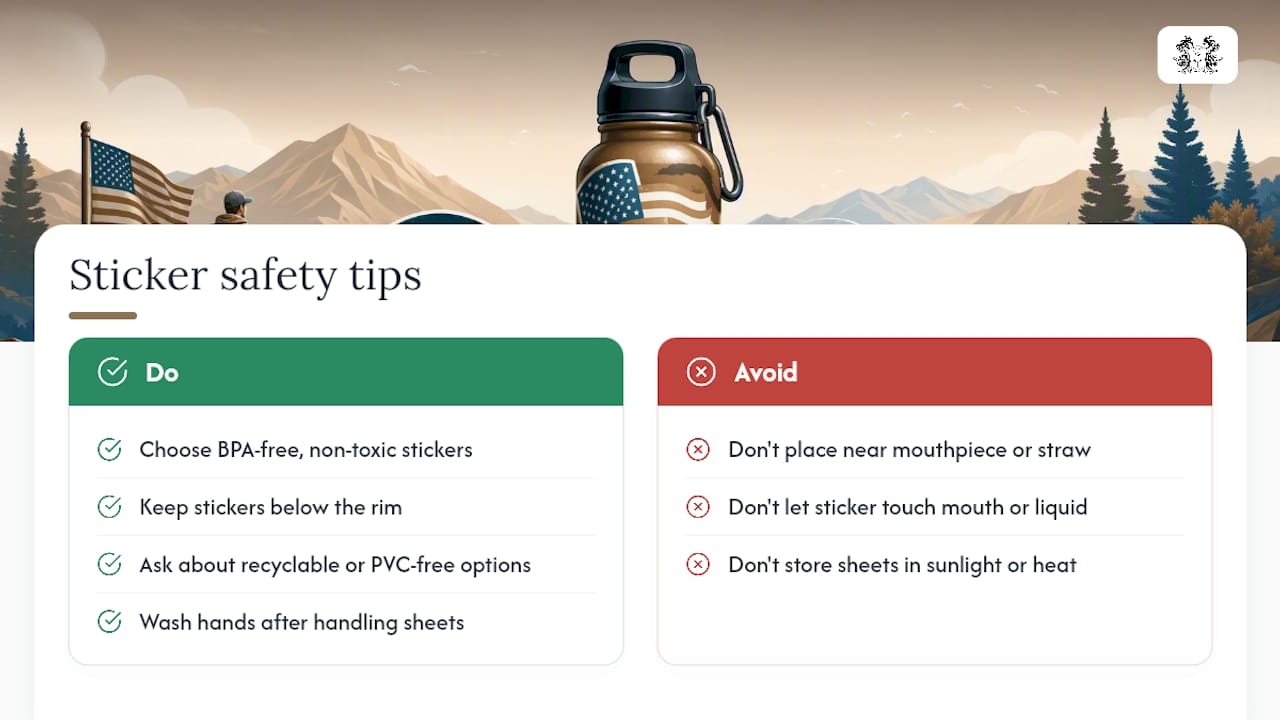
Look for stickers explicitly labeled BPA-free and non-toxic, especially for bottles used by kids or anyone who drinks from the bottle daily. Most quality vinyl stickers sold for water bottles meet this standard already, since manufacturers know the product is designed for repeated hand contact and occasional exposure to drinking water at the rim.
Placement matters as much as material. Keep stickers below the rim and away from the mouthpiece or straw opening entirely. Even a non-toxic sticker shouldn’t sit anywhere it could contact your mouth or flake into the liquid inside.
Environmentally, vinyl and BOPP aren’t biodegradable the way paper is, which is a fair trade-off to weigh if sustainability matters to you. Some printers now offer recyclable or PVC-free vinyl alternatives that still hold up to moisture, so it’s worth asking a printer directly if that’s a priority. A sticker that lasts three years instead of three weeks also means less waste overall, since you’re not replacing it every season.
Wash your hands after handling a sticker sheet before touching food, and store unused sheets away from direct sunlight and heat, which can degrade adhesive quality even before application.
Creative Ways to Use Water Bottle Stickers
A water bottle is one of the most personal surfaces you carry every day, which makes it a natural canvas. The right sticker turns a plain steel bottle into something instantly recognizable across a locker room, an office fridge, or a gear bag full of identical bottles.
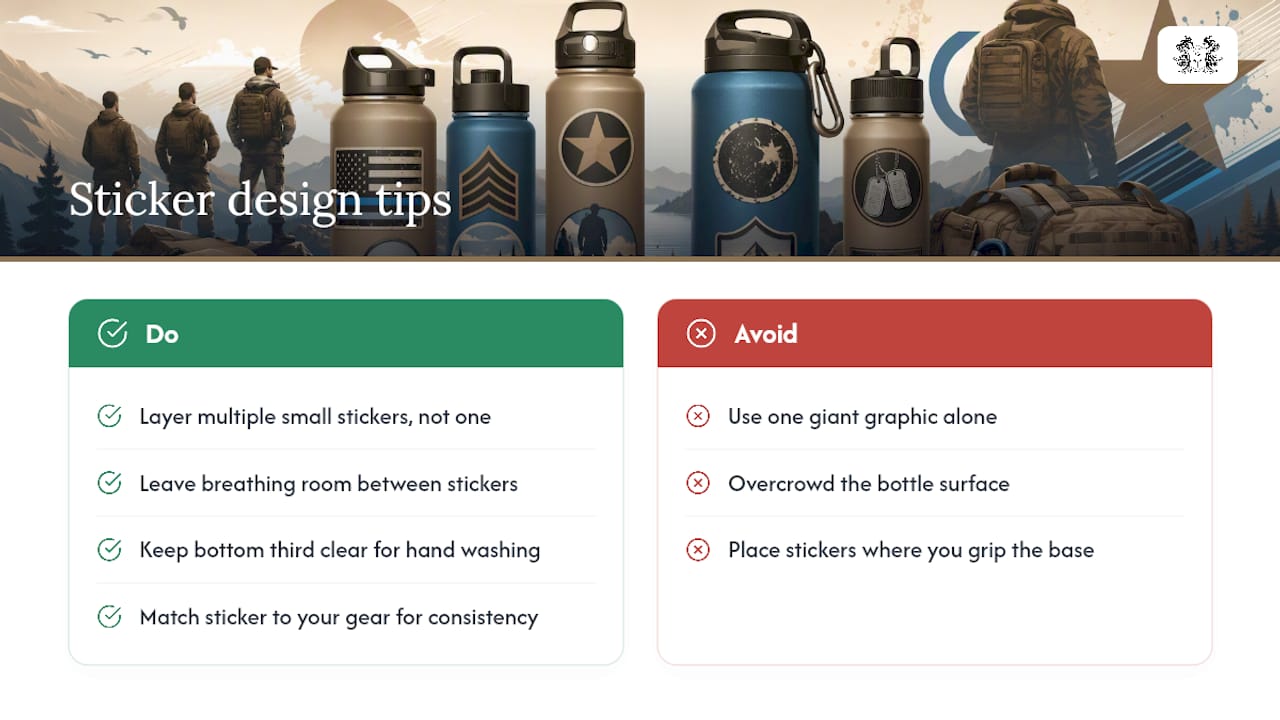
Layering multiple small stickers works better than one giant graphic in most cases. It creates visual interest and lets you swap or add pieces over time without redoing the whole design. Leave breathing room between stickers so the bottle doesn’t look cluttered, and keep the bottom third clear if you plan to hand wash by gripping the base.
Military families and veterans often use stickers to mark service branch pride, deployment locations, or a favorite motto that keeps them grounded. Others build a travel log, adding a new sticker for every state or trail conquered. A single bold sticker centered on the front, paired with a smaller one near the cap, gives a clean, intentional look without overcrowding the surface.
Matching your bottle to your gear is another approach worth considering. A sticker that echoes the design on your hoodie or ball cap builds a small but consistent identity across everything you carry. It’s a simple way to make your gear look like it belongs to one story instead of a random collection of items.
What Actually Matters When Buying Water Bottle Stickers
Most sticker guides bury the real answer under a dozen finish options and design tips. It comes down to two things: material and application. Get those right, and everything else is preference.
The conventional advice to “just check the reviews” falls short because reviews rarely mention lamination thickness or adhesive type, the two variables that actually predict longevity. Ask a printer directly instead. If they can’t tell you whether the laminate is gloss or matte, or what adhesive class they use, that’s a signal to look elsewhere.
Prioritize a sample order before committing to a full batch, especially on a bottle finish you haven’t tested before. It costs a few dollars and saves you from discovering a peeling edge three weeks after your order arrives. Durability isn’t a marketing claim worth taking at face value. It’s a spec you can actually ask for and get a straight answer on.
— Modern Day Knight
Ready to Gear Up? Here’s Where to Start
Modern Day Knight builds the same durable, laminated vinyl standard into every sticker and piece of apparel we sell, so you’re not gambling on a material that peels after one wash cycle. Measure your bottle’s usable band, browse our themed sticker lineup, and pair it with apparel that carries the same story, like the Army Brat Hoodie or the Army Brat Tee for a matching look.
If you’re testing a design or a new bottle surface for the first time, start small. Order one sticker, apply it following the steps above, and see how it holds up through a week of real use before committing to a full set. That’s the same logic behind requesting proofs from any printer, applied to gear you already trust.
Check the gear collection for ready-made options, or explore the Army Brat sticker if military family pride is the design direction you’re after.
Sources
For deeper technical detail on materials, durability, and printing specs, see Printivity’s stickers guide on vinyl and BOPP performance, Avery’s water bottle sticker specs on ordering and proofing, and Wynwoodblvd for broader material context.
- Vinyl vs Paper Stickers: The Real Difference in Durability - Sticker Company Reviews
- Water Bottle Stickers - Durable, Easy to Peel | Avery
- Custom Water Bottle Stickers - Waterproof | Sticker Kiko
- Stickers guide - Printivity


