



A curved hem dips lower at the center front and back and rises at the side seams, built for tucking and a lengthened line. A straight hem stays level across, built to be worn untucked with a clean, casual finish. Your choice comes down to how you plan to wear the shirt, tucked or loose, and whether you want an elongated or a boxier silhouette.
TL;DR:
- Curved hems are more complex to produce, typically using more fabric, and are designed for tucking, especially with larger drop and side vents.
- Straight hems are simpler, level, and best suited for untucked wear, especially in casual or athletic settings.
- Hem shape impacts visual balance, with curved hems elongating the torso and slimming the hips, while straight hems provide a clean, boxy look.
- Fabric type and stitch technique influence how well a curved hem maintains its shape; stretch fabrics like jersey are more forgiving than woven materials.
- The choice of hem should align with how you plan to wear the shirt, with curved hems for tucked looks and straight hems for loose, layered, or athletic styles.
Table of Contents
- Curved hem vs straight: what to look for on the rack
- When to tuck and when to leave it loose
- Which hem flatters your build?
- Why fabric and construction change how a hem behaves
- How to alter a curved hem toward a straighter look
- Putting the hem shapes into real outfits
- What we believe about hem choice and fit
- Shirts and hoodies built around the hem shapes we just covered
- Sources
Curved hem vs straight: what to look for on the rack
Recognizing the difference between a curved hem and a straight hem takes about two seconds once you know what to check. Grip the front hem, then the back. On a curved hem, the fabric drops lower at the center, front and back, then rises toward the side seams, creating a rounded dip often called a scoop or shirttail hem. On a straight hem, the fabric runs level the entire way around, with no rise at the sides.
This isn’t just a stylistic quirk. A curved hem is technically more complex to construct and typically uses more fabric than a straight cut, because the pattern piece itself curves instead of running in a flat line. That extra fabric and the tighter tolerance required to keep the curve symmetrical is part of why curved-hem tees often carry a slightly higher price tag than a basic straight-hem tee.
The depth of that curve matters too. A shallow curve barely changes your silhouette. A deep scoop hem drops several inches lower at center back, which extends coverage over the hip and seat when tucked, but leaves noticeably more length hanging at the sides when worn loose. Side-seam height works the same way in reverse: the higher the side seam rises, the more the shirt “tunnels” upward when you move, which is exactly why shirttail hems exist on dress shirts meant to stay tucked through a full day of sitting, reaching, and walking.
Quick visual checklist for telling them apart in a product photo or fitting room:
- Straight hem: level line, same length front, back, and sides.
- Curved hem (scoop): noticeably lower at center front and back, higher at the sides.
- Shirttail hem: a curved hem specifically designed for dress shirts, with enough drop to stay tucked through movement.
- Side vents: small slits at the hem, often paired with either style, that add ease when tucking or sitting.
When to tuck and when to leave it loose
The rule of thumb here isn’t complicated: curved and shirttail hems are built to be tucked, straight hems are built to hang free. Ignore that logic and you end up with bunching at the sides of a tucked straight-hem shirt, or an oddly long drape when you leave a deep scoop hem untucked.
Hem length and side vents do a lot of the heavy lifting on tuckability. A shirttail with generous drop and side vents gives you room to sit, twist, and reach without the shirt pulling loose. A straight hem cut short and tight has almost nothing to grip once tucked, which is exactly why it’s built for untucked wear in casual and mass-market pieces rather than smart-casual looks.
Here’s how that plays out in real outfits:
- Office or client meeting: a shirttail-hem button-down tucked into chinos, with a plain leather belt to keep the line clean underneath a blazer.
- Weekend casual: a straight-hem graphic tee worn untucked with jeans and sneakers, letting the hem sit at its natural length without adjustment.
- Layered streetwear: a straight-hem tee under an open flannel or hoodie, where the tee’s hem peeks out evenly at the bottom for that stacked, intentional look.
- Smart-casual dinner: a curved-hem shirt tucked into dark denim, unbuttoned at the collar, no jacket needed.
- Active or errand day: a straight-hem tee worn loose, chosen specifically because it won’t ride up or need re-tucking every time you bend down.
Notice the pattern. Tucking rewards curve and drop. Staying loose rewards a level hem that already looks finished on its own.
Which hem flatters your build?
Hem shape changes how your whole torso reads, and that’s the real reason to care about curved hem vs straight beyond simple preference. A curved hem breaks up the straight horizontal line that a level hem creates right at hip height, and that broken line tends to draw the eye downward and lengthen the look of the legs. Style writers commonly point to this as the slimming effect of a curved hem, since it softens attention on a wider hip or midsection instead of framing it with a hard line.
A straight hem does the opposite job, and that’s not a flaw, it’s a feature for the right build. If your proportions are already balanced, a level hem gives you a clean, structured baseline without adding extra visual movement. Straight hems also read as more classic and boxier, which suits a leaner or athletic frame that doesn’t need the length trick a curve provides.
Run this checklist next time you try something on:
- Hem hits at or just below the hip bone when standing straight.
- No pulling or riding up when you sit down.
- Side seams sit flat against your body, not flaring outward.
- Fabric drapes without clinging or ballooning at the waist.
Pro Tip: Stand in front of a mirror, raise both arms overhead, then lower them. If the hem stays put on a curved cut but creeps up on a straight one, that tells you exactly how much drop you actually need for your body type.
Why fabric and construction change how a hem behaves
Two shirts with the same hem shape can behave completely differently depending on what they’re made of and how they’re sewn. Fabric weight and stretch decide whether a curve holds its shape or collapses into a limp droop by the end of the day.
Jersey knit, the stuff most graphic tees are made from, has natural stretch that lets a curved hem move with your body without pulling tight. Poplin, a crisp woven cotton common in dress shirts, has no stretch at all, so a curved shirttail hem depends entirely on precise cutting to lie flat. Flannel sits somewhere in between, heavier and less flexible than jersey, which is why flannel shirts more often stick to straight or gently curved hems rather than deep scoops.
Stitch technique matters just as much as fabric. Coverstitching is the standard for knit hems, because it stretches with the fabric instead of cracking under tension, while wovens typically get a double-fold, single-needle finish that stays crisp without needing to flex. On a curved hem specifically, pattern grading and quality control have to be tighter than on a straight cut, since any unevenness in the curve shows up immediately as puckering or a wavy line.
What to check before you buy:
- Even stitching with no puckering or tunneling along the curve.
- A finish that matches the fabric, coverstitch on knits, folded seams on wovens.
- Consistent hem depth after a wash, some cheaper curved hems relax unevenly.
- Reinforced side seams where the curve rises, a common stress point.
How to alter a curved hem toward a straighter look
Reshaping a curved hem into something closer to a straight cut is a doable weekend project on the right fabric, but it has real limits.
- Measure and mark: put the shirt on, decide your target length, then mark a level line with tailor’s chalk using the shortest point of the current curve as your guide.
- Fold and baste: turn the new hem up along your marked line, press it flat, and baste it in place with a temporary straight stitch before committing.
- Choose the right stitch: use a twin-needle or coverstitch machine on knits to preserve stretch; a straight lockstitch works fine on stable wovens like poplin.
- Try it on again: check for pulling or waviness before trimming excess fabric, since coverstitch machines don’t handle heavily stretched or distorted edges well.
Deep scoop hems or anything in a heavy stretch knit are usually better left to a tailor, since removing a coverstitch curve without re-creating the original stretch often leaves the new hem stiff and rigid compared to the rest of the shirt. When you do hand it off, tell the tailor your target final length, how much curve you want removed, and whether you want the original coverstitch finish preserved or replaced.
Putting the hem shapes into real outfits
Seeing curved hem vs straight hem side by side in actual outfits makes the decision easier than reading measurements ever will.
Straight-hem tees do their best work under layers. Wear one under an open flannel, a lightweight jacket, or one of your tactical casual layering pieces, and the level hem sits evenly beneath whatever you throw over it, no uneven peeking at the sides. Streetwear and athleisure looks lean on this same logic, often pairing a straight or slightly scooped hem with joggers for a clean vertical line from waist to ankle.
Curved and shirttail hems shine in smarter contexts. Tuck one into chinos for a tidy office look, or leave a curved-hem shirt untucked under a blazer for smart-casual balance where the dip at center back keeps things from looking boxy.
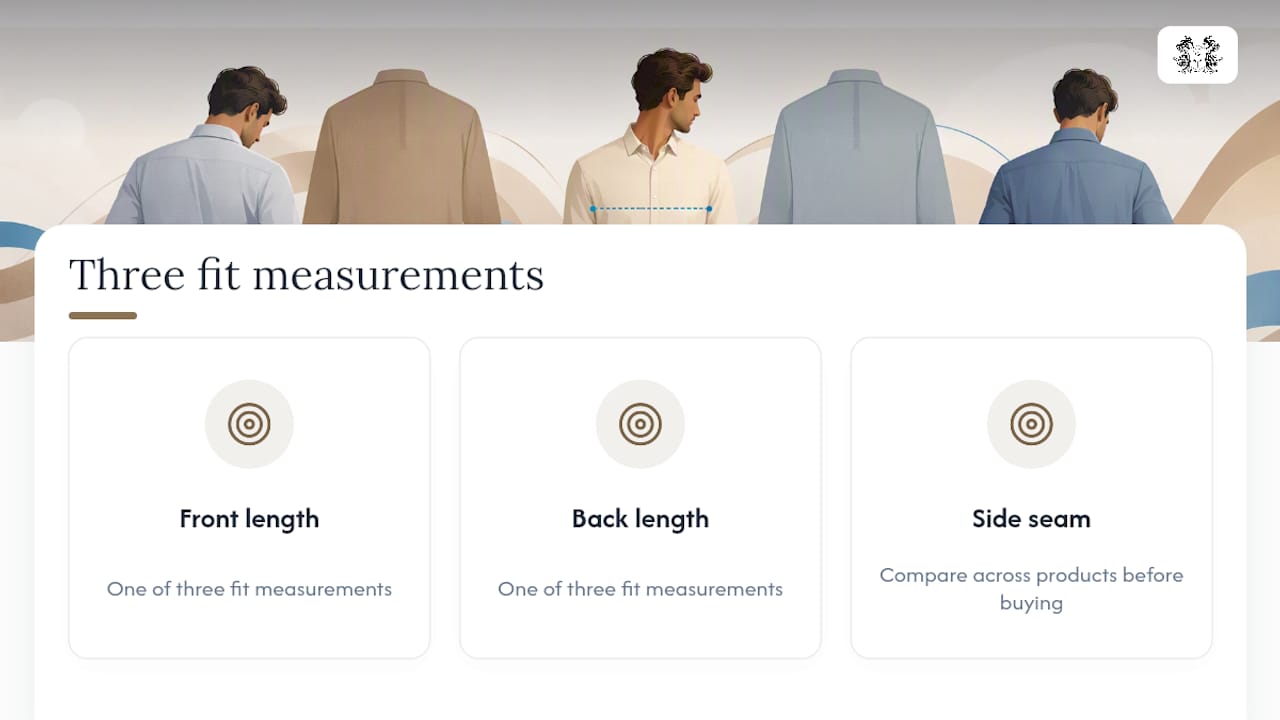
Before buying, compare three measurements across products: front hem length, back hem length, and side-seam height. That trio tells you more about fit than any product photo, and it’s worth a quick check on the full shirt catalog before you commit.
What we believe about hem choice and fit
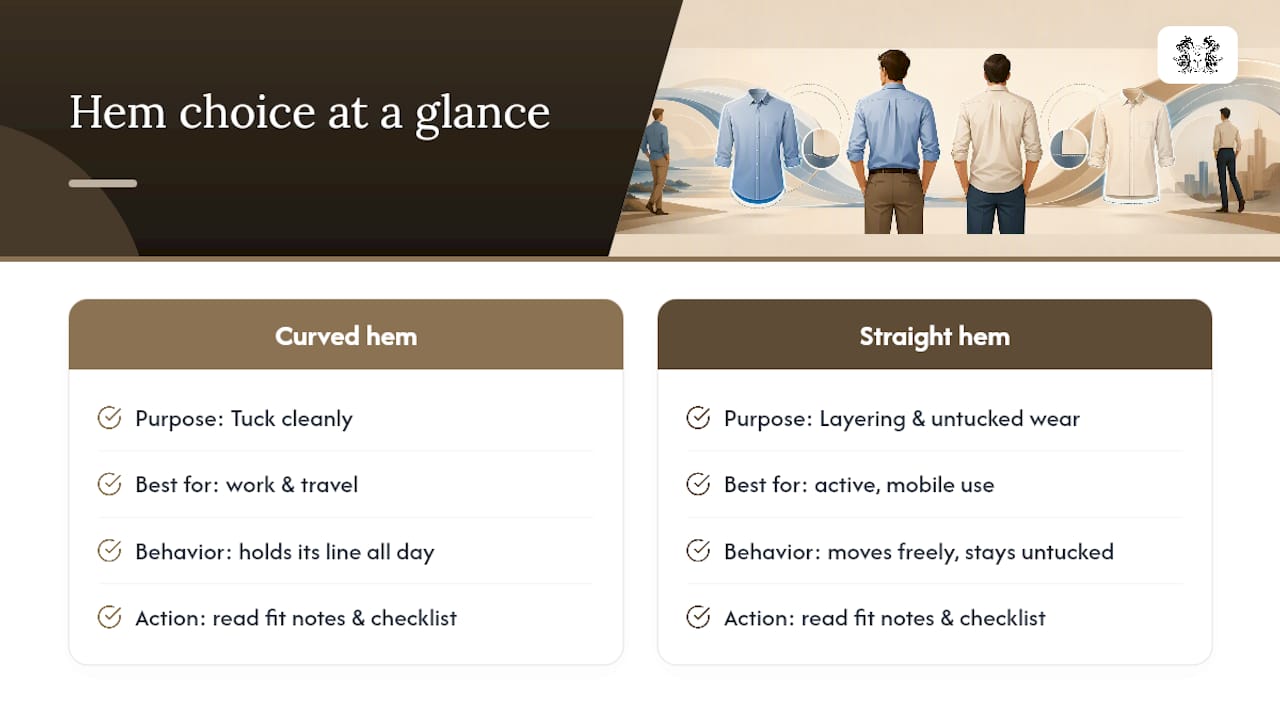
We build every shirt and hoodie to serve a purpose, not just to hang a certain way. A curved hem earns its place when a piece is meant to tuck clean and hold its line through a full day of work or travel. A straight hem earns its place when the piece is meant to layer, move, and stay untucked without a second thought.
Read the fit notes on each product page and run the try-on checklist from earlier in this article. The right hem isn’t the trendiest one, it’s the one that matches how you actually plan to wear the piece.
— Modern Day Knight
Shirts and hoodies built around the hem shapes we just covered
Some brands cut tees and hoodies with intention, not trend-chasing, so the hem on every piece matches how you’re meant to wear it, tucked, layered, or thrown on and gone. That’s the real advantage here: you’re not guessing at fit from a flat product photo, you’re choosing a piece designed with a specific wear pattern in mind.

The Army Brat Tee runs a straight hem built for untucked, everyday wear, layer it under the Army Brat Hoodie for a matched set with a clean stacked line at the waist. The History Matters Tee works the same way solo or under an open flannel. For heavier layering, the Modern Day Knight Old School Hoodie and Global Citizen Hoodie both give you a boxier, straight-hem base to build outfits around, while the Accountability Hoodie pairs well over a tucked tee for a smart-casual finish.
Check the fit notes on any product page, then pick the piece that matches how you’ll actually wear it.
Sources
- Hem of a Shirt | Curved, Straight & Shirt-Tail Explained
- Professional hemming techniques (Seamwork podcast)
- The Slimming Power of a Curved Hem on Your Tops — Inside Out Style
- Scoop Hem Vs Straight Hem T-Shirts: 9 Design Secrets For Flawless Fit


