



Layer tactical casual outfits by choosing one military-inspired hero piece and building a base, mid, and outer stack of civilian, well-fitting garments around it. This is tactical-inspired lifestyle apparel, not functional tactical gear. You’re not dressing for a mission. You’re dressing to carry integrity, loyalty, and strength into a room without saying a word.
The single rule that governs everything below: one hero piece per outfit. Everything else stays civilian, clean, and well-fitted.
- One military-inspired signal (a field jacket, a fatigue-style pant, a values-driven tee)
- Everything else reads as quality streetwear, not surplus
- Fit does the talking, not patches or insignia
- Modern Day Knight, a veteran-owned brand, builds pieces around this exact restraint
Key Takeaways
A layered tactical casual outfit works because one hero piece carries the military signal while a fitted base, controlled mid, and structured outer layer keep the rest of the look civilian and clean.
| Point | Details |
|---|---|
| One hero piece rule | Limit military signaling to a single jacket, pant, or tee; keep the rest of the stack civilian. |
| Three-layer structure | Base sets fit, mid adds texture and volume, outer provides structure and the main message. |
| Hem-length detail | Let 2 to 5 centimeters of your base-layer tee show below your hoodie or jacket hem. |
| Fabric and color choices | Choose cotton sateen, twill, chambray, and muted tones like olive or charcoal over synthetics. |
| Modern Day Knight pieces | The Army Brat Tee, Army Brat Hoodie, and Old School Hoodie each fill a distinct layer role. |
Table of Contents
- What Does It Mean to Layer Tactical Casual Outfits?
- How Do You Build a Tactical Casual Outfit From Scratch?
- What Fit and Fabric Choices Keep the Look Authentic?
- Which Modern Day Knight Pieces Work in a Layered Stack?
- How Do You Wash and Store Layered Pieces Without Losing Shape?
- How Do You Wear Veteran Values Without Overstating Them?
- How Do You Adapt This Layering Approach for Different Occasions?
- Why Subtlety, Not Costume, Honors the Uniform
- Where to Find These Pieces and What to Expect at Checkout
- Frequently Asked Questions
- Sources
What Does It Mean to Layer Tactical Casual Outfits?
Tactical casual layering is three garments working together, not one loud statement piece. Each layer earns its place: the base carries fit, the mid carries texture, the outer carries structure and the message.
- Base layer. A fitted tee or henley that sits close to the body. This layer sets your proportion and controls hem length. Keep it clean, no oversized drape, because everything else stacks on top of what this layer establishes.
- Mid layer. A hoodie, overshirt, or chore coat that adds texture and controlled volume. This is where you manage bulk. A mid layer that’s too heavy erases the shape your base worked to create.
- Outer layer. A field jacket, deck jacket, or structured coat. This is usually your hero piece, the one item allowed to carry military DNA. Stylists at Trillmag call this the “accent” approach: one strong signal, not three competing ones.
A fitted base, a controlled mid, and a structured outer keep your silhouette intact even in cold weather when you’re stacking three garments at once, according to layering guidance from Baddiehub Magazine. Balance matters more than warmth alone. Two heavy layers stacked together flatten your shape and start to look like you’re wearing a costume instead of an outfit.
Pro Tip: Let roughly 2 to 5 centimeters of your base-layer tee show below your hoodie or jacket hem. It’s a small detail, and it’s the difference between an outfit that looks intentional and one that looks accidental, according to fit guidance from The1010Boys.
How Do You Build a Tactical Casual Outfit From Scratch?
Three formulas cover most weather and most days. Memorize the shapes, then swap in your own pieces.
Formula 1: The field jacket stack. Field jacket (hero piece) over a plain knit or crewneck, straight-leg denim, and minimal sneakers or clean leather boots. This is the most versatile combination in the entire tactical casual category. The jacket carries the message. Everything underneath stays quiet.
Formula 2: The fatigue-pant stack. Fatigue-style pants (hero piece) with a plain tee, a clean overshirt or chore coat layered open, and simple sneakers. Here the pants do the work, so the jacket and tee need to disappear into the background. Practical combinations like this create visual depth without unnecessary bulk, according to styling guidance from Attire Club, and they travel well because nothing in the stack is fragile or fussy.
Formula 3: The deck-jacket winter stack. Deck jacket (hero piece) over a denim shirt, neutral trousers, and sleek boots. This formula handles cold weather without adding a fourth layer, since the deck jacket’s structure does double duty as insulation and outer shape.
Quick swaps for the season:
- Warm weather: drop the outer layer, let the mid layer become your hero piece
- Cold weather: add a base-layer henley under your tee for extra warmth without extra bulk
- Rain: swap denim for a water-resistant trouser and keep the jacket zipped
Roughly one in three outfits ruled by this framework fails for one reason: too many signals. Skip the dog tags, skip the extra patches, skip the second camouflage piece. One hero, one message. Mixing military surplus with modern streetwear fabrics, rather than piling on more surplus pieces, is what keeps the look wearable, according to WEAR2AM.
What Fit and Fabric Choices Keep the Look Authentic?
Fit is what separates “veteran-inspired style” from “wearing a costume.” Get these details right and the rest of the outfit takes care of itself.
- Jacket shoulders should sit at your actual shoulder seam, not drape past it
- Tees should skim the chest and arms, never balloon at the sides
- Pants should skim the thigh and taper slightly at the ankle, not pool at the shoe
- Base-layer hems should peek 2 to 5 centimeters below your mid layer for that clean, layered read
Preferred fabrics: cotton sateen, twill, chambray, and heavyweight jersey. These hold structure through a wash cycle and drape the way a hero piece needs to drape. Avoid slick synthetics and anything shiny. They read as costume the second they catch light.
Color palette matters as much as fit. Muted, worn-in tones like olive, khaki, navy, and charcoal work because they blend military DNA into a civilian wardrobe instead of shouting it. Stacking two or three exact military shades together, or piling on insignia, tips the whole outfit into uniform territory, according to color guidance from Japaneseworkwear.
Pro Tip: Mix one military tone with two civilian neutrals. Olive jacket, gray tee, dark denim. That ratio keeps the outfit grounded instead of tipping into cosplay.
Which Modern Day Knight Pieces Work in a Layered Stack?
Three pieces cover the base, mid, and outer roles without ever needing a fourth item to complete the message.
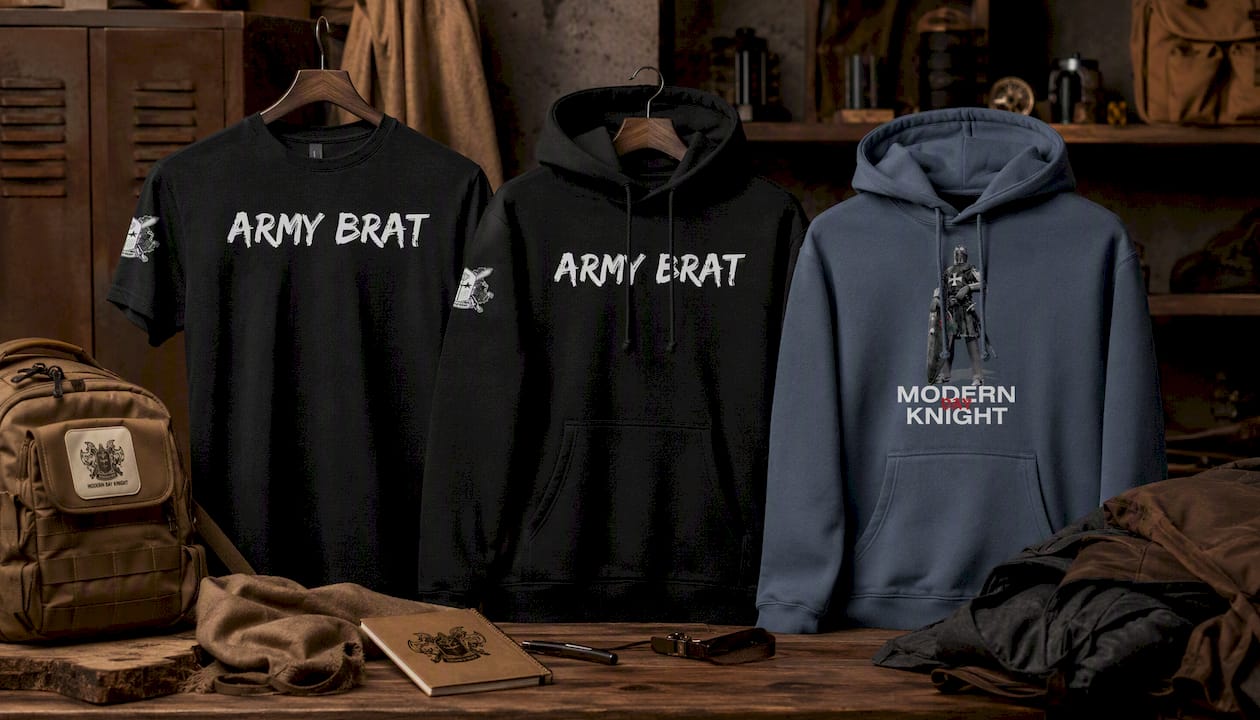
- The Army Brat Tee works as your base layer under a hoodie or field jacket, or stands alone as a mid layer on warm days paired with an open overshirt.
- The Army Brat Hoodie anchors a mid-layer role. Pair it with straight denim and clean sneakers, and let 2 to 5 centimeters of a plain tee show at the collar and cuffs for that considered layered look.
- The Modern Day Knight Old School Hoodie carries enough weight and structure to serve as either a mid layer under a field jacket or an outer layer on its own during milder weather.
| Piece | Best Layer Role | Pairs Well With |
|---|---|---|
| Army Brat Tee | Base or light mid | Field jacket, open overshirt, straight denim |
| Army Brat Hoodie | Mid layer | Denim, chore coat, minimal sneakers |
| Modern Day Knight Old School Hoodie | Mid or outer layer | Neutral trousers, boots, denim shirt |
Check the size chart on each product page before you order. A hoodie meant to anchor a mid layer needs enough room underneath for a base-layer tee without ballooning your silhouette, so size according to your layering plan, not just your usual fit.
How Do You Wash and Store Layered Pieces Without Losing Shape?
Wash cold and turn every piece inside out before it goes in the machine. This protects the printed and embroidered details that carry your message, and it keeps colors from fading into something duller than the muted tone you chose on purpose.
- Wash cold, inside out, and avoid overloading the drum
- Air-dry when you can, or use low heat, and reshape cuffs and hems while the fabric is still damp
- Rotate your heavier pieces so the same hoodie isn’t absorbing every wear, and repair small fraying at the hem before it spreads
Following cold-wash and inside-out habits protects ribbing and hem shape over time, according to care guidance from The1010Boys. A hoodie that holds its hem line is a hoodie that keeps doing its job as a mid layer instead of drooping into shapelessness after a dozen washes.
How Do You Wear Veteran Values Without Overstating Them?
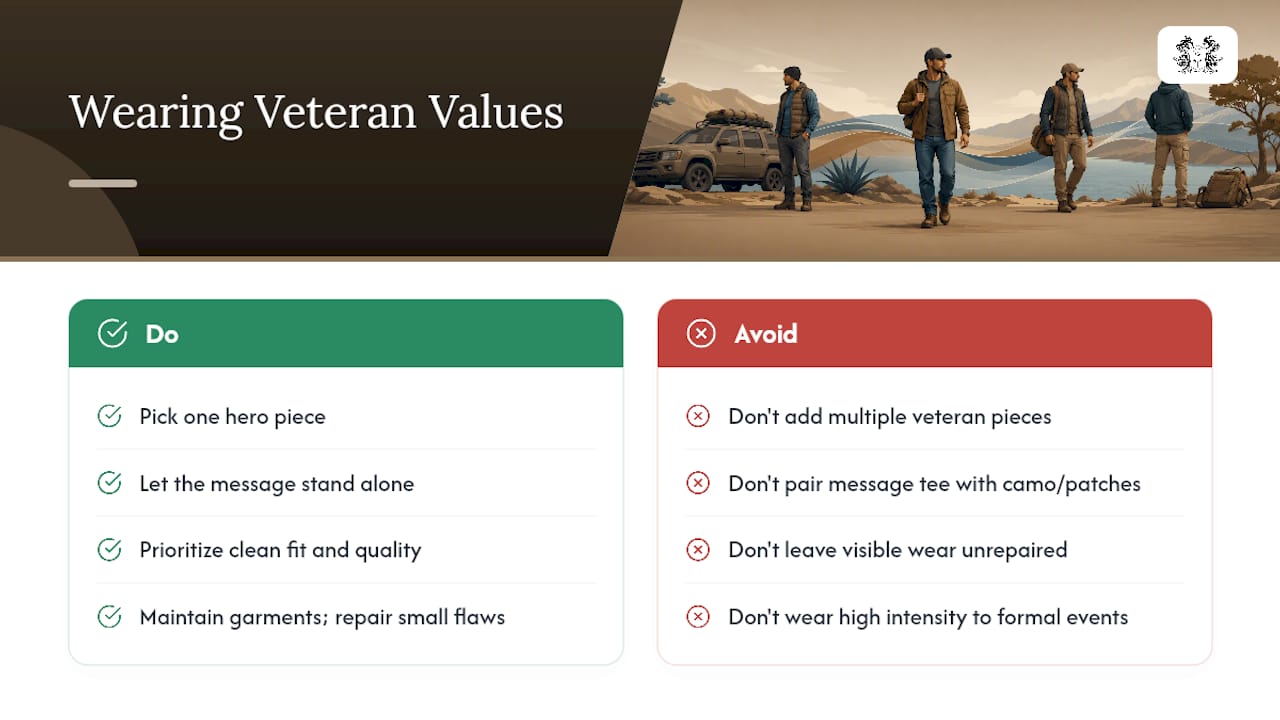
Integrity doesn’t need volume. The strongest way to carry veteran values into an outfit is restraint, not repetition. One hero piece says what needs to be said. A second, a third, and a fourth start to feel like you’re trying to convince someone, and that undercuts the very confidence you’re going for.
Think about what the piece actually communicates. A values-driven tee with a message about loyalty or strength doesn’t need camouflage pants and a patch-covered jacket standing next to it. Let the message stand on its own, backed by clean fit and quality fabric. That’s what separates a statement from a costume.
Respect also shows up in how you treat the pieces themselves. A worn hem, a stretched collar, a faded print left unrepaired all chip away at the presence you’re trying to build. Small maintenance, the kind covered above, is part of wearing these values well. It shows the same discipline the clothing represents.
Context matters, too. A shirt that reads as a quiet nod to service at a coffee shop with friends might read differently at a formal event. Match the intensity of your hero piece to the room. That’s not compromise. That’s the same situational awareness that got instilled long before any of this became about clothing.
How Do You Adapt This Layering Approach for Different Occasions?
Casual settings give you the most freedom. A field jacket over a plain knit and straight denim works for errands, coffee with friends, or a weekend outing. This is where your hero piece can be its boldest, since the setting has no formality to clash with.
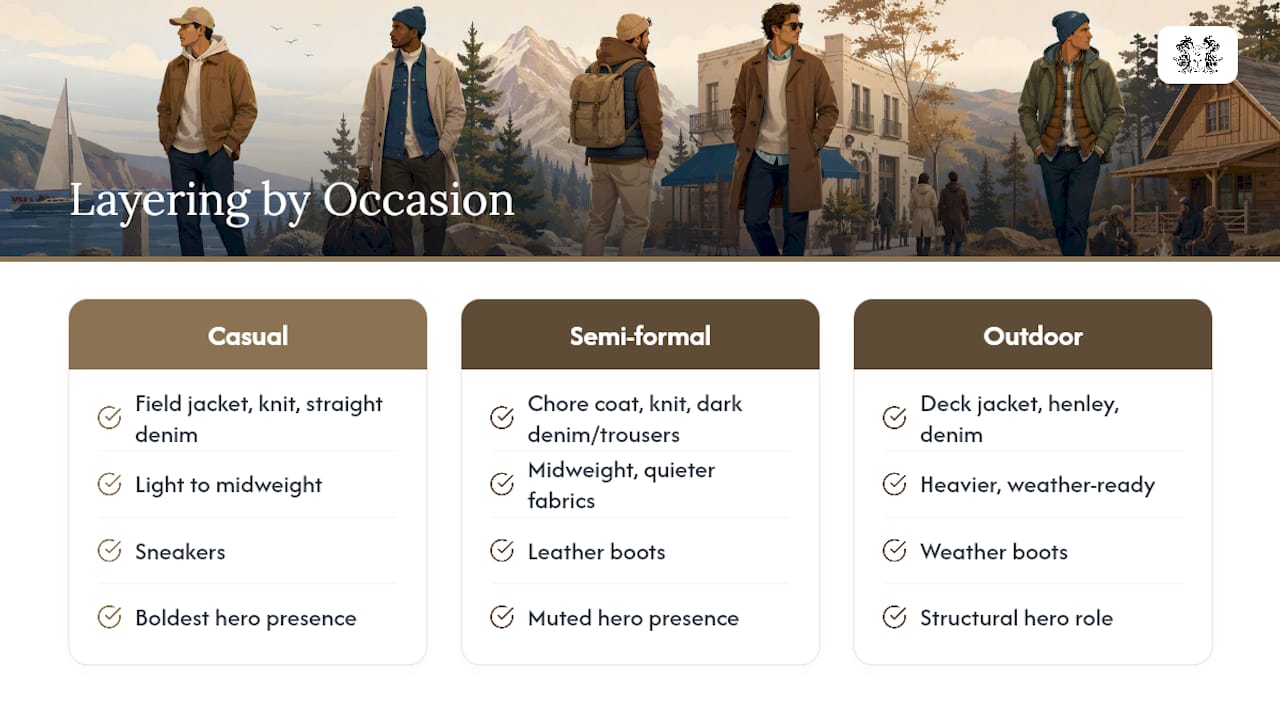
Semi-formal settings call for dialing back the hero piece’s intensity while keeping the layering structure. Swap the field jacket for a cleaner chore coat in a similar muted tone, keep dark denim or neutral trousers, and finish with leather boots instead of sneakers. The three-layer logic still applies. You’re just choosing quieter fabrics and sharper shoes.
Outdoor settings let the deck-jacket formula shine, since its structure handles wind and cold without needing a fourth layer. Swap sneakers for weather-ready boots, and consider a base-layer henley if temperatures drop. The hero piece here can lean more heavily on its structural role since outdoor settings are more forgiving of visible layering.
Across all three, the one-hero-piece rule doesn’t change. What changes is fabric weight, shoe choice, and how loudly the hero piece speaks. A deeper look at how apparel connects veterans and supporters to shared values covers how this restraint plays out across different community settings, from casual meetups to more formal veteran gatherings.
Why Subtlety, Not Costume, Honors the Uniform
We built Modern Day Knight around a simple idea: the clothing should carry the values, not imitate the uniform. Integrity, loyalty, and strength don’t need camouflage to be visible. They need fit, quality, and restraint.
That’s why every styling rule in this piece points the same direction: one hero piece, clean layers, quiet confidence. Anyone can pile on patches. Fewer people can build a look where a single detail carries the weight, and that’s the harder, more honorable version of this style. For more on how discipline shapes personal style, read Discipline and Personal Style: A Veteran’s Guide.
Where to Find These Pieces and What to Expect at Checkout
Every formula in this guide works because each piece has a defined job in the stack. The Army Brat Tee handles your base layer, the Army Brat Hoodie anchors your mid layer, and the Modern Day Knight Old School Hoodie flexes between mid and outer duty depending on the weather. None of them need a second military signal stacked on top to make their point.
Modern Day Knight is veteran-owned, and every piece is designed around the one-hero-piece principle covered in this guide rather than costume-level military signaling. If you’re building your first tactical casual stack, start with one piece and build outward: check the size chart on each product page, since fit is what makes or breaks a layered look, and reach out about sizing or returns before your order ships if anything’s unclear. Pick your hero piece today and build the rest of your stack around it.
Frequently Asked Questions
What does “layer tactical casual outfits” actually mean? It means building an everyday outfit around one military-inspired piece, then layering civilian, well-fitting garments around it in a base, mid, and outer structure. It has nothing to do with functional combat or duty gear.
How many military-inspired pieces should one outfit have? One. A single hero piece, whether it’s a field jacket, fatigue pants, or a values-driven tee, carries the message. Adding a second or third military signal tips the outfit into costume territory.
What’s the best hero piece for beginners? A field jacket is the easiest entry point, since it pairs with almost anything and works as the outer layer in most weather. Start there before experimenting with fatigue-style pants or heavier coats.
Can these outfits work for semi-formal occasions? Yes. Swap the field jacket for a cleaner chore coat in a muted tone, keep dark denim or neutral trousers, and finish with leather boots instead of sneakers, while keeping the same one-hero-piece structure.
How do I keep hoodies and tees from losing their shape? Wash cold, turn garments inside out, avoid overloading the machine, and air-dry or use low heat while reshaping cuffs and hems while the fabric is still damp.
Sources
- Drafted by design: The military’s unseen role in men’s fashion — Trillmag
- The smart man’s guide to military-inspired fashion — Attire Club
- Japaneseworkwear
- Hoodie and T-Shirt Outfit: Layer Without Losing Shape — The1010Boys
- Military Surplus in Streetwear — WEAR2AM Blog


