



The best examples of identity-driven casual wear carry a clear signal without shouting. Here are six you can build around today:
- Heritage tubular tee — a heavy combed cotton base with tubular (side-seam-free) construction; the weight and cut say permanence, not trend.
- Arabic statement crewneck — bilingual calligraphy on heavyweight cotton; the script is the identity cue, readable to those who know and striking to everyone else.
- Army Brat Hoodie (Moderndayknightco) — an honor-phrase piece from a veteran-owned brand built around integrity and loyalty; the message is the design.
- Minimalist patch cap — a single embroidered emblem on a structured crown; no wordmark, just a symbol that earns its meaning.
- Chore shirt with heritage stitching — contrast thread at the yoke and cuffs signals craft lineage without a logo in sight.
- Service-inspired overshirt — utility pockets and muted earth tones that reference a service background through silhouette, not slogan.
The Multiversity identity-fashion framework calls these pieces Artifacts — objects that express a Mode (how you move through the world) and a Character (who you are at your core). That framing is the right lens for everything that follows.
Table of Contents
- What makes casual wear truly identity-driven?
- Six identity-driven pieces examined up close
- How do you choose pieces that actually match your values?
- How to wear and care for identity-driven pieces
- How other cultures and communities express identity through casual wear
- How to mix identity-driven pieces with mainstream fashion
- Key Takeaways
- Why clothing without intent is just fabric
- Moderndayknightco identity-driven pieces worth starting with
- Sources and further reading
What makes casual wear truly identity-driven?
Identity-driven casual wear is clothing designed to signal values, heritage, or a personal code rather than chase seasonal trends or flex a logo. The difference is intent. A piece either carries meaning or it decorates. These are the characteristics that separate the two.
Design cues that communicate identity:
- Understated confidence: no oversized brand marks, no trend-reactive graphics
- Single-side printing or subtle placement graphics that concentrate meaning
- Refined, purposeful typography — a phrase, a word, a script that earns its space
- Heritage motifs: stitching details, patch placements, cultural script, service insignia
Construction standards that support long-term presence:
Practitioners who treat clothing as a signaling system note that high-quality construction keeps garments wearable and credible over time. A piece that pills, warps, or fades after washing loses its signal. The specs below are the baseline worth demanding.
| Spec | What It Means for Identity Wear |
|---|---|
| Combed cotton of sturdy weight | Holds structure and drape; resists distortion after repeated washing |
| Tubular construction | No side seams; cleaner silhouette and longer shape retention |
| Flatlock seams | Lies flat against skin; prevents print distortion at stress points |
| Silicon-coated finish | Resists lint and minor spills; preserves surface and print clarity |
| UPF treatment | Functional utility that aligns with outdoor or service-rooted identities |
Identity Clothes markets double-faced combed cotton with true flatlock seams and silicon-coated finishes specifically as presence and longevity features — not comfort add-ons.
Pro Tip: Single-side printing is a deliberate restraint. Designers who use focused typography on one face of a garment concentrate the message and make it dignified rather than loud. If a piece needs graphics on every surface to make its point, the point probably isn’t strong enough.
A shift toward quiet, purpose-led menswear is well underway — collections that prioritize presence and intent over volume. Veterans and heritage communities have been living that principle for years.
Six identity-driven pieces examined up close
Heritage tubular tee. The Ibn El Balad tee from Arab Hyphenated is a strong case study. It pairs a midweight tubular cotton base with a UPF 40 rating and a neighborhood-rooted phrase in Arabic. The construction makes it an everyday staple; the phrase makes it a statement. Garments rooted in immigrant and neighborhood stories often use exactly this formula: bold but minimal graphics on durable construction so the piece gets worn daily, not saved for occasions.
Arabic statement crewneck. Artkins’ Arabic Statement Tee pairs Arabic calligraphy with an English translation on heavyweight cotton with a relaxed unisex fit. The bilingual design works visually and linguistically — it signals cultural fluency to insiders and curiosity to everyone else. That dual register is a hallmark of well-executed identity wear.
Army Brat Hoodie (Moderndayknightco). This is the clearest example of honor-inspired clothing in the veteran-owned space. The phrase carries the identity; the construction carries the piece. Moderndayknightco builds around integrity, loyalty, and strength — the Army Brat Hoodie puts that code on your back without needing explanation. Veterans and military supporters recognize it immediately. Everyone else sees a clean, confident hoodie.
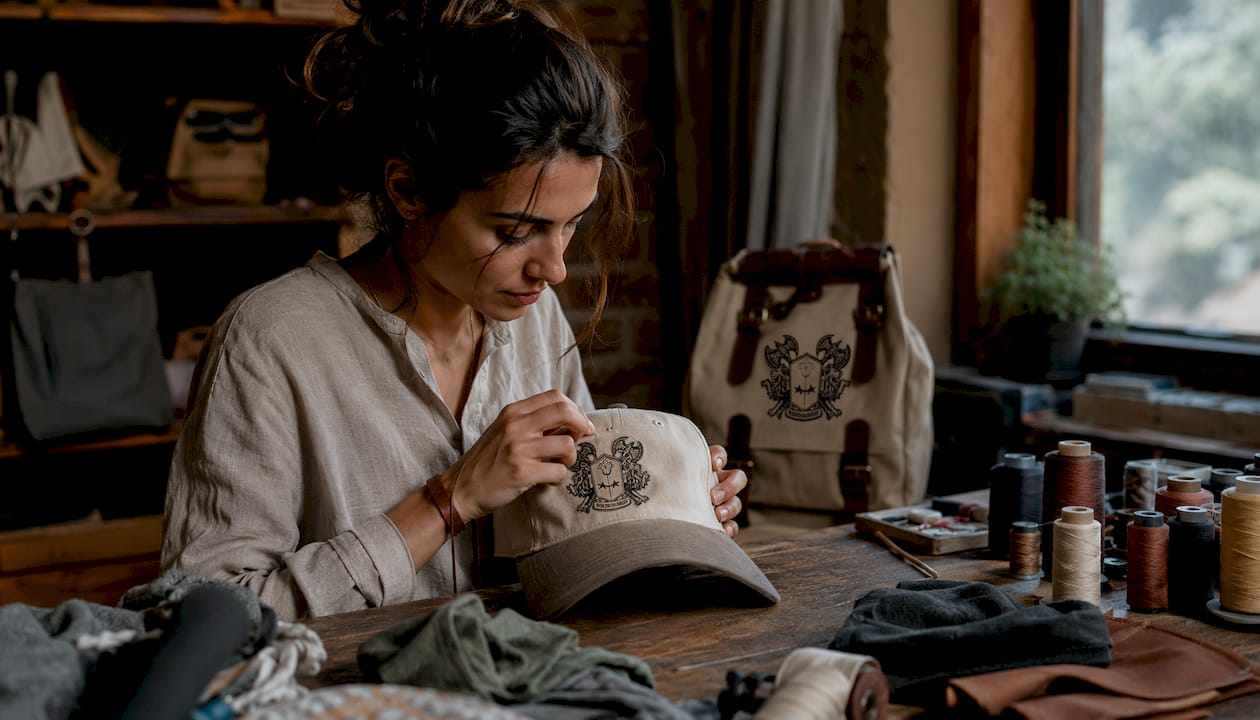
Minimalist patch cap. A single embroidered emblem on a structured crown. No brand name on the front panel, no text wrapping the brim. The patch does the work. This format rewards people who already know the symbol and says nothing to those who don’t — which is exactly the point of understated identity wear.
Chore shirt with heritage stitching. Contrast-thread detailing at the yoke, chest pockets with reinforced corners, and a boxy cut that references workwear lineage. The identity cue is craft and labor history, not a slogan. Pair it open over a tubular tee and the layering itself becomes part of the signal.
Service-inspired overshirt. Utility pockets, muted olive or sand tones, and a silhouette that references field gear without being a costume. The military values embedded in modern fashion show up here through proportion and palette, not patches.
How do you choose pieces that actually match your values?
Start with the message, not the material. If the phrase, symbol, or design on a piece doesn’t connect to your actual story, no amount of 240 GSM cotton will make it feel authentic. Here’s the checklist:
- Does the message or symbol match your story? Wear what you’ve earned the right to wear. A phrase about service means something different on a veteran than on someone chasing aesthetics.
- Are the specs present? Look for 240 GSM or heavier, tubular construction, and flatlock seams. Vague material claims (“soft cotton blend”) are a red flag.
- Can you layer it to control the signal? A tubular tee under an open overshirt lets you dial the statement up or down depending on context.
- Is production transparent? Veteran-owned, ethically sourced, or community-rooted provenance adds a layer of meaning the garment carries even when no one else sees the label.
- Does the piece age well? Check reviews for how prints hold after washing and whether the fabric maintains its weight and shape.
Red flags to avoid:
- Heavy logo reliance with no underlying message
- Trend-driven graphics that will read as dated in two seasons
- Missing or vague construction specs
- Designs that require explanation to make their point
How to wear and care for identity-driven pieces
Keep the signal readable. That means intentional layering and selective exposure, not covering the piece entirely or wearing it in contexts where the message gets lost.
Styling principles:
- Layer tubular tees under open chore shirts or overshirts; the tee’s message shows when you want it to, disappears when you don’t.
- Pair honor-phrase hoodies with neutral outerwear in olive, navy, or sand so the typography reads cleanly against the background.
- Let muted palettes do the work. When the palette is quiet, patches and script carry more visual weight.
- Mix heritage workwear with modern sneakers to balance the historical reference with contemporary ease. For more on mixing graphic tees into outfits, the layering principles transfer directly.
Care for 240 GSM cotton and treated finishes:
- Wash cold, inside out, to preserve print clarity and fabric weight.
- Low tumble dry or line dry; high heat degrades both the cotton structure and any silicon-coated finish.
- Avoid fabric softener on silicon-coated pieces — it breaks down the finish over time.
- UPF-treated garments lose their rating faster with hot washes and bleach; cold water extends the treatment’s life significantly.
Provenance is part of the garment’s identity too. Choosing pieces from veteran-owned, ethically produced, or community-rooted brands means the supply chain carries the same values as the design. That’s not marketing language — it’s the difference between wearing a statement and living one.
How other cultures and communities express identity through casual wear
The veteran and military-supporter community isn’t the only one doing this well. Communities across cultures express identity through casual wear with their own visual languages.
South Asian streetwear brands like Artkins built their entire catalog around the idea that desi culture deserves to show up in everyday objects, not just heritage events. The Brown Girl Main Character Tee uses a bold illustrated graphic and the phrase “main character energy” to speak directly to second-generation South Asian women who built their own image of confidence from scratch. The oversized boxy fit makes it layerable; the cultural reference makes it personal.
Arab-American brands use bilingual typography and neighborhood phrases to create pieces that work as both streetwear and cultural markers. The Ibn El Balad tee is a direct example: a Brooklyn-rooted phrase on a tubular cotton base that becomes a daily staple rather than an occasional statement.
Lifestyle apparel brands like BT Casual Lifestyle take a values-first approach across cultures, building collections around words like “truth,” “be kind,” and “stand strong” in multiple languages and fonts. The message is the product, regardless of the wearer’s specific heritage.
What these examples share: minimal graphics, durable construction, and a design that rewards the people who recognize the reference while remaining clean and wearable for everyone else.
How to mix identity-driven pieces with mainstream fashion
The goal is balance, not costume. Identity-driven pieces work best when they anchor an otherwise neutral outfit rather than compete with it.
One strong piece per outfit is the rule. If you’re wearing the Army Brat Hoodie, keep the rest of the outfit simple: dark jeans, clean sneakers, no competing graphics. The hoodie carries the statement; everything else supports it.
Neutral palettes are your infrastructure. Olive, navy, cream, and charcoal give identity pieces room to breathe. Loud colorblocking or busy patterns fight the message rather than frame it. For a deeper look at graphic tee styling, the same principle applies across identity-based and mainstream pieces.
Heritage workwear pieces like chore shirts and overshirts cross over naturally because their silhouettes are already mainstream. The identity signal lives in the details — stitching, patch placement, fabric weight — so the overall look reads as considered, not niche. That’s the sweet spot: a piece that fits into any casual context while still saying something specific to those who look closely.
Key Takeaways
Identity-driven casual wear works when the message, construction, and provenance all align — the Army Brat Hoodie from Moderndayknightco is a direct example of all three in one piece.
| Point | Details |
|---|---|
| Message before material | Choose pieces whose phrase, symbol, or script connects to your actual story — not just your aesthetic. |
| Demand real specs | Look for 240 GSM combed cotton, tubular construction, and flatlock seams before buying. |
| Layer to control the signal | Tubular tees under open shirts let you dial identity expression up or down by context. |
| One strong piece per outfit | Pair identity-driven items with neutral palettes so the message reads clearly without competition. |
| Moderndayknightco starting point | The Army Brat Hoodie is a veteran-owned, honor-phrase piece that meets every identity-driven criterion. |
Why clothing without intent is just fabric
Clothing that carries no intent is just covering. We believe every piece you put on should mean something — not to everyone in the room, but to you. That conviction is what built Moderndayknightco.
The veteran community has always understood this. Service members don’t wear their insignia casually. Every patch, every phrase, every color placement has a reason. When that discipline carries into civilian clothing, the result is a wardrobe that holds its meaning over years, not seasons. That’s the opposite of trend-chasing, and it’s exactly what warrior culture brings to modern fashion.
What most people miss about identity-driven fashion is that restraint is the hardest part. Loud branding is easy. A single phrase on a clean garment, backed by honest construction and a real community, takes conviction. The pieces that last in your wardrobe are the ones that were worth wearing in the first place.
Moderndayknightco identity-driven pieces worth starting with
Moderndayknightco’s apparel collection is built on the same criteria this article lays out: values-first messaging, honest construction, and designs that carry meaning without needing to shout. Every piece comes from a veteran-owned brand committed to integrity, loyalty, and strength — which means the provenance is part of the product.
The Army Brat Hoodie is the right place to start. It carries an honor-phrase design on a heavyweight cotton build, fits the layering principles covered above, and speaks directly to the military-community identity without requiring explanation. Browse the full collection and find the piece that matches your code.
Sources and further reading
- Identity Clothes — material specs including 240 GSM combed cotton, tubular construction, flatlock seams, and silicon-coated finishes
- Multiversity: Identity-Based Fashion & Streetwear — Modes, Characters, and Artifacts framework for identity-driven design
- Arab Hyphenated: Ibn El Balad Tubular Cotton Tee — heritage tee case study; UPF 40, tubular construction, neighborhood-rooted phrase
- Artkins: Arabic Statement Tee — bilingual calligraphy design on heavyweight cotton; cultural identity cues
- Celeb Spotlight: Metro by Casual Billionaires — understated confidence and purpose-led menswear trends
- Moderndayknightco: What Is Honor-Inspired Clothing? — definition and criteria for honor-inspired apparel
- Moderndayknightco: Military Values in Modern Fashion — how veteran values translate into styling choices
- Moderndayknightco: Why Warrior Culture Inspires Modern Fashion — warrior culture aesthetics and values in contemporary wear


