



Warrior culture inspires modern fashion because its garments are built on symbols of authority, resilience, and identity that never lose their power. The trench coat worn by WWI officers, the Khanda symbol on Sikh streetwear, and the Joseon warrior silhouettes reimagined for global K-pop tours all carry the same core message: what you wear declares who you are. This is not nostalgia. It is a deliberate design language that connects the wearer to something larger than a trend. Understanding why warrior culture inspires modern fashion means understanding how clothing functions as armor, signal, and statement all at once.
What historical military garments built modern menswear
Modern menswear is a softened archive of military innovation, with iconic garments like trench coats, bomber jackets, and double-breasted blazers originating directly from military uniforms. That origin is not incidental. It explains why these silhouettes carry an inherent authority that purely decorative fashion rarely achieves.
The trench coat was engineered for British officers in the trenches of World War I. Aquascutum and Burberry both supplied versions to the military before the garment crossed into civilian life. Its belted waist, storm flap, and deep pockets were functional solutions to battlefield conditions. Today those same features signal command and composure on a city street.
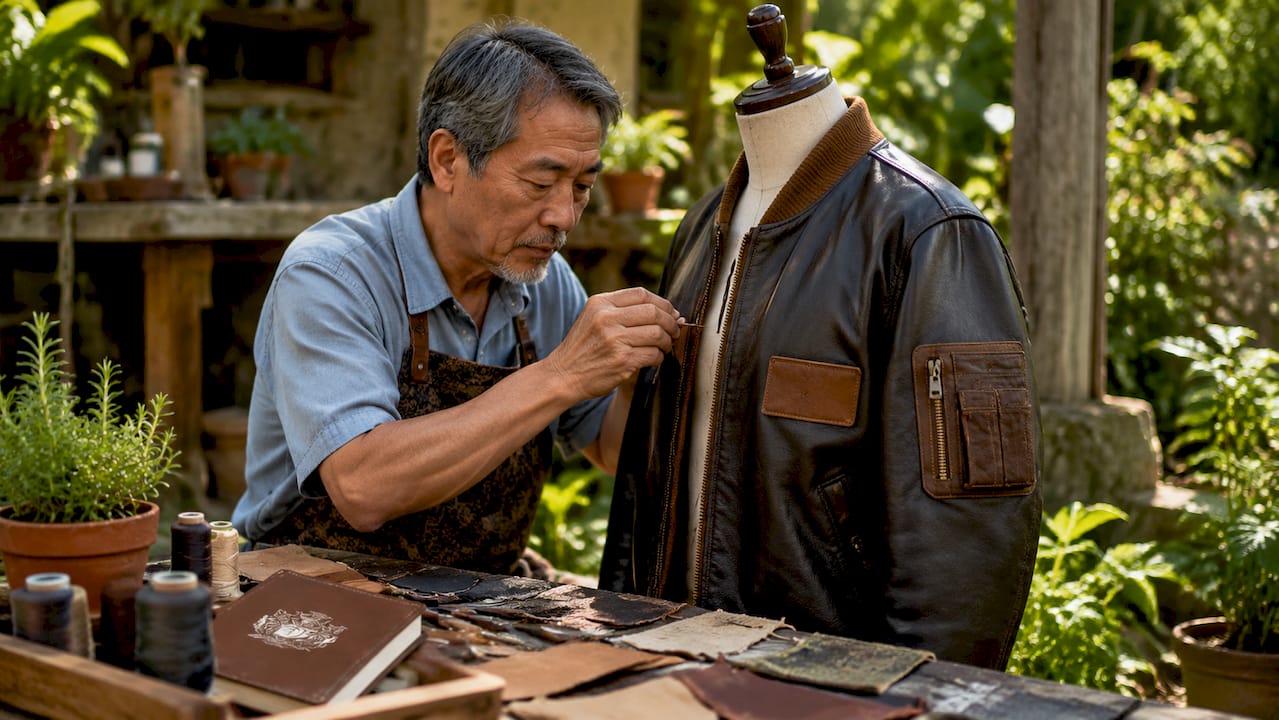
The bomber jacket followed a parallel path. Developed for U.S. Army Air Corps pilots in the 1930s and 1940s, its ribbed cuffs and zip-front design kept aviators warm at altitude. The MA-1 variant became a streetwear staple by the 1980s, adopted by subcultures from skinheads to hip-hop artists. Each group used it to project toughness and group identity.
Here is a quick look at how key warrior garments made the transition from battlefield to wardrobe:
| Garment | Military Origin | Fashion Signal |
|---|---|---|
| Trench coat | WWI British officer gear | Authority, composure |
| Bomber jacket | WWII U.S. aviation uniform | Toughness, group loyalty |
| Double-breasted blazer | Royal Navy dress uniform | Status, formality |
| Ghurka pants | British Indian Army colonial gear | Rugged refinement |
| Cargo pants | WWII combat trousers | Utility, readiness |
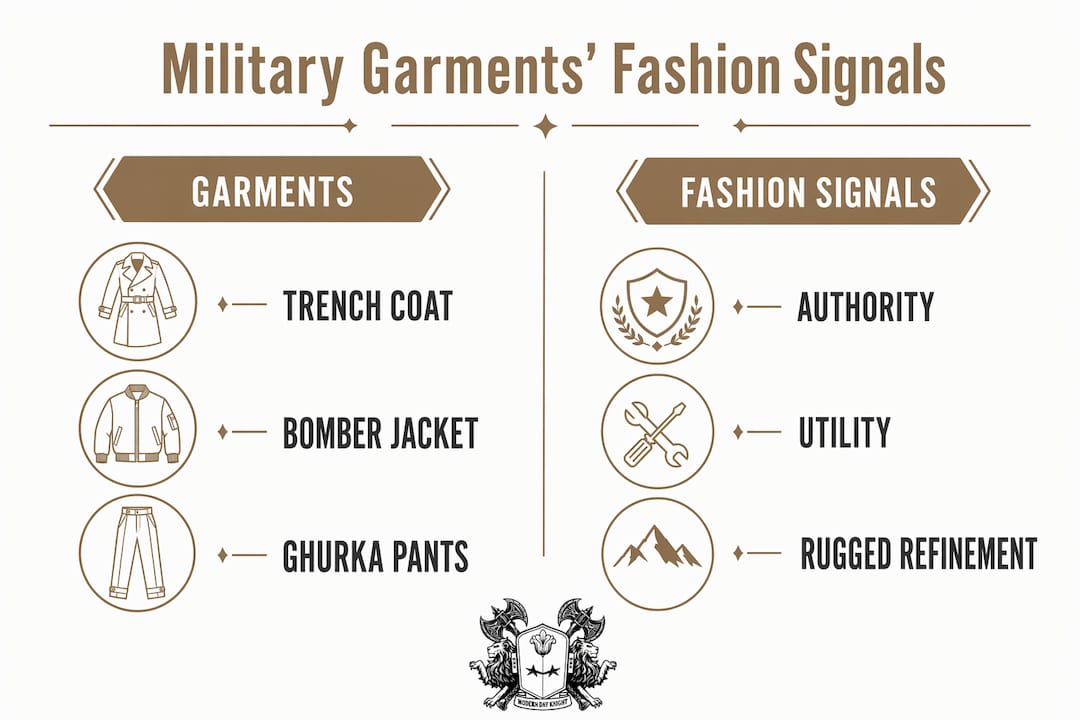
Ghurka pants evolved from colonial military gear into global fashion staples that signal rugged refinement. That evolution took decades, but the silhouette survived because it solved a real problem: it looked structured while allowing full movement.
Fabric technology followed the same logic. NATO cotton-nylon blends balance breathability with durability, and that standard now shapes the structural integrity of contemporary military-inspired fashion. Designers do not just borrow the look. They borrow the engineering.
Pro Tip: When building a wardrobe around warrior-inspired pieces, start with one anchor garment that has a documented military origin, such as a genuine MA-1 bomber or a Burberry trench. Authenticity in one piece gives the entire outfit credibility.
How indigenous warrior garments reclaim cultural identity
Warrior-inspired fashion is not only a Western military story. Across Africa, South Asia, and the diaspora communities they have shaped, traditional warrior garments are being reclaimed as deliberate acts of cultural pride.
Ghana’s Fugu smock, also called the Batakari, is the clearest current example. Movements like ‘Fugu Friday’ promote African identity and bolster local textile industries while asserting a heritage that colonial fashion systems long marginalized. The smock was historically worn by warriors and chiefs in northern Ghana. Wearing it today is a political and cultural statement, not a costume.
“Fashion becomes a form of cultural diplomacy when a garment carries the memory of a people’s strength and survival.” This is the core logic behind every warrior-inspired cultural revival in contemporary clothing.
Sikh streetwear follows the same principle. Designers and community members incorporate the Khanda and Nishan Sahib, both symbols of Sikh warrior tradition, into hoodies, caps, and graphic tees. Sikh streetwear incorporates Khanda and Nishan Sahib symbols to assert heritage in spaces where that identity has historically been invisible or misrepresented.
The impact extends beyond symbolism:
- Local textile industries in Ghana gain economic momentum when Fugu Friday drives demand for handwoven smocks.
- Global diaspora communities use warrior-symbol garments to maintain cultural continuity across generations.
- Younger wearers connect to ancestral identity without needing to speak a heritage language or live in a heritage country.
- Fashion brands that engage authentically with these traditions build trust with communities that have long been exploited by trend-chasing labels.
This is the warrior culture fashion movement explained at its most human level. Clothing becomes the carrier of memory, resistance, and pride when the original warriors are no longer present to speak for themselves.
What psychological factors make warrior fashion so compelling
The appeal of warrior-inspired clothing is not purely visual. Enclothed cognition theory explains that wearing warrior-themed clothing can boost confidence, focus, and a disciplined mindset, effectively serving as physical armor for cognitive performance. The garment’s symbolic meaning transfers to the wearer’s mental state through consistent association.
This is one of the most underreported benefits of warrior mindset fashion. You are not just choosing an aesthetic. You are choosing a psychological posture.
Here is how that process works in practice:
- Choose a garment with clear symbolic weight. A piece bearing a military insignia, a heritage pattern like tartan, or a warrior-culture motif carries pre-loaded meaning that generic clothing does not.
- Wear it with intention and consistency. Ritualized wearing anchors the mindset, intercepting procrastination and building confidence over time. The ritual matters as much as the garment.
- Understand the symbol you are wearing. Enclothed cognition works most powerfully when the wearer knows what the symbol means. Ignorance of the symbol weakens the psychological effect.
- Connect the garment to a specific context. Wearing a warrior-inspired piece to a high-stakes meeting, a training session, or a public appearance reinforces the association between the clothing and peak performance.
Tartan, originally used in warrior contexts, represents textile subversion, repurposed repeatedly from Jacobite rebels to punk culture to project boldness and defiance. That layered history is exactly what makes it psychologically potent. When you wear tartan, you wear centuries of resistance.
Military-inspired fashion thrives in politically tense environments, signaling power and control even when stripped of its original political significance. Designers balance fascination with authority and the practical utility embedded in military garments. The result is clothing that feels serious without requiring the wearer to explain why.
Pro Tip: Build a morning ritual around your warrior-inspired piece. Put it on with intention before a demanding day. Over time, the act of wearing it becomes a mental trigger for focus and resolve.
How global fashion movements are using warrior culture right now
Warrior culture influence in fashion is not a historical footnote. It is active, global, and accelerating in 2026.
The clearest high-profile example is the ‘Lyrical Armor’ design concept, which reimagines traditional Joseon warrior wear for global tours, turning Korean national heritage into authoritative fashion statements that reach worldwide audiences. BTS used this concept to make a cultural argument through clothing at a scale that few political speeches could match. Heritage became armor. Armor became fashion.
Here is how warrior aesthetics show up across different fashion contexts today:
| Fashion Context | Warrior Influence | Key Example |
|---|---|---|
| K-pop performance wear | Joseon warrior silhouettes | BTS ‘Lyrical Armor’ concept |
| Streetwear | Military utility and insignia | Cargo silhouettes, patch culture |
| Luxury runway | Structured military tailoring | Balenciaga, Givenchy utility coats |
| Cultural streetwear | Heritage warrior symbols | Sikh Khanda hoodies, Fugu smocks |
| Veteran-owned brands | Code of honor and identity | Moderndayknightco apparel collections |
Military-inspired fashion reflects societal tensions, serving as a visual language that balances desire for power with aesthetic expression. Ukraine’s civilian population wearing military-pattern clothing during the 2022 conflict was not a fashion trend. It was a declaration of collective identity under pressure. Fashion absorbed that signal and amplified it on runways and in streetwear within months.
Moderndayknightco sits at the intersection of this movement and lived experience. As a veteran-owned brand, it translates the warrior code of honor into wearable identity, not as a costume but as a commitment. The History Matters Hoodie and the Army Brat Tee are not just garments. They are statements of loyalty to something real.
The common thread across all these examples is intentionality. The most powerful warrior-inspired fashion is never accidental. Every silhouette, symbol, and fabric choice carries a deliberate message about who the wearer is and what they stand for.
Key takeaways
Warrior culture inspires modern fashion because its garments carry symbols of authority, resilience, and identity that function as psychological armor and cultural declaration simultaneously.
| Point | Details |
|---|---|
| Military garments built menswear | Trench coats, bombers, and Ghurka pants evolved from battlefield utility into enduring fashion authority. |
| Cultural reclamation is active | Fugu smocks and Sikh warrior symbols in streetwear assert heritage as deliberate pride, not trend. |
| Enclothed cognition is real | Wearing warrior-themed clothing with ritual intention boosts confidence and focus through symbolic association. |
| Warrior fashion reflects social tension | Military-inspired styles surge during politically charged periods, signaling power and collective identity. |
| Intentionality separates fashion from costume | The most powerful warrior-inspired pieces carry known symbols worn with purpose, not just aesthetic appeal. |
The code you wear is the code you live
We have spent years thinking about what it means to wear something that stands for something. At Moderndayknightco, we are not designing costumes. We are building a uniform for people who have already decided what they believe.
Here is what most fashion commentary misses: the warrior garments that endure are not the ones that look the most aggressive. They are the ones that carry the clearest code. A Burberry trench coat endures because it signals composure under pressure. A Fugu smock endures because it carries the memory of a people’s dignity. The MA-1 bomber endures because it says you belong to something that demands loyalty.
The inner warrior in fashion is not about looking tough. It is about wearing your values where everyone can see them. That is a harder thing to do than it sounds. Most people dress to blend in. The warrior tradition in clothing has always been about standing out with purpose.
What I have observed, both in the veteran community and in the broader cultural conversation around warrior-inspired style, is that the people who wear these pieces most powerfully are the ones who know exactly why they are wearing them. They are not following a trend. They are declaring an allegiance.
That is the code. Wear what you believe. Mean it every time you put it on.
— Modern Day Knight
Wear the values, not just the look
Warrior culture in fashion is a movement built on meaning. If you are ready to wear that meaning, Moderndayknightco has built a collection specifically for people who understand the difference between clothing and conviction.
Every piece in the warrior-inspired apparel collection is designed to carry the values of integrity, loyalty, and strength. The Army Brat Hoodie honors the military family experience. The Old School Hoodie carries the modern knight code forward. And the hats collection gives you a way to signal your allegiance every single day. This is veteran-owned, values-driven fashion. Join the movement.
FAQ
What is the core reason warrior culture influences fashion?
Warrior culture influences fashion because its garments embody authority, utility, and identity in physical form. These symbols carry psychological weight that purely decorative clothing cannot replicate.
What does inner warrior mean in fashion?
The inner warrior in fashion refers to wearing garments with deliberate symbolic intent to reinforce personal values like discipline, resilience, and honor. Enclothed cognition research confirms that clothing with known symbolic meaning shapes the wearer’s mindset and behavior.
What are common warrior culture fashion mistakes?
The most common mistake is wearing warrior-inspired pieces as pure aesthetic without understanding their symbolic origin. Enclothed cognition works only when the wearer knows and respects the meaning behind the garment.
How do warrior values translate to everyday fashion?
Warrior values translate through silhouette, symbol, and material. Structured cuts signal discipline, heritage patterns like tartan signal resistance, and utility fabrics signal readiness. Each choice communicates a specific value without a single word.
Which modern brands best represent the warrior culture fashion movement?
Veteran-owned brands like Moderndayknightco represent the warrior culture fashion movement most authentically by grounding design in lived experience and a defined code of honor rather than trend cycles.


