



Discipline, in the veteran sense, is not a grooming habit. It is a code. It is the commitment to integrity, loyalty, and strength that shapes every decision, including what you wear. The role of discipline in personal style means turning your wardrobe into a daily cue that reinforces who you are and what you stand for. Research into enclothed cognition confirms that wearing garments linked to a specific role or code of conduct actively shapes behavior and self-perception. Moderndayknightco was built on exactly that principle: every piece is a statement of ideals, not just fabric. The Stolen Valor Act sets the legal boundary for misuse of military insignia, so provenance and intent matter from day one.
Three things you can do right now:
- Reserve one piece of clothing specifically for your morning routine and wear it with intention.
- Build around durable neutral staples: olive, charcoal, navy, and natural canvas.
- Display one authentic symbol that carries real meaning, earned or brand-stated, not novelty.
Table of Contents
- How discipline shapes your personal style and identity
- What clothing elements actually communicate discipline
- When is military-inspired apparel appropriate?
- How to use military aesthetics ethically
- How to build a disciplined capsule wardrobe
- Key Takeaways
- Why discipline-led apparel matters to us
- Moderndayknightco: wear your code every day
- Useful sources
How discipline shapes your personal style and identity
Wearing discipline-driven apparel improves a veteran’s sense of purpose and sharpens how others read you. That is not opinion. Studies on attire and social perception show that responsibility-linked clothing increases perceived trustworthiness. When your clothes signal a code, people respond to the code.
The mechanism is enclothed cognition. Research from the Australian Army Journal shows that wearing military-related items increases an individual’s sense of agency in voluntary decision-making. The garment does not just cover the body; it activates the role. A field jacket worn with intention is not the same as one worn carelessly, even if they are identical.
Values-aligned apparel choices are also linked to greater life satisfaction and a stronger sense of purpose. When what you wear matches what you believe, the internal and external align. That alignment is what separates a disciplined wardrobe from a fashionable one.
Scholars also caution that values-messaged apparel alone is not enough. A garment paired with lived commitment carries weight. A garment worn as a substitute for it does not.
What clothing elements actually communicate discipline
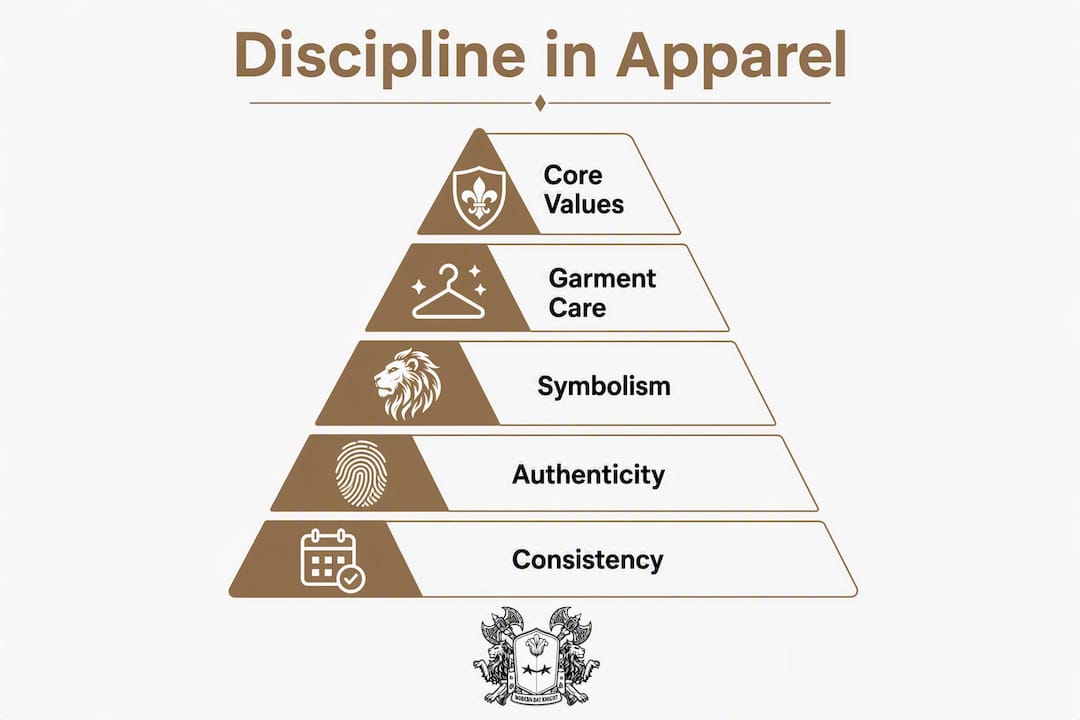
Specific elements of an outfit are the language that communicates a code of honor. Fit, material, construction, color, and symbols each carry a signal. Together, they either reinforce discipline or undercut it.
The visual vocabulary of a disciplined wardrobe includes:
- Fit: Structured and intentional. A tailored hem on a field jacket reads readiness. A sloppy silhouette reads indifference.
- Material: Natural, durable fabrics. Heavy cotton, canvas, and wool signal function over trend.
- Construction: Reinforced stitching, purposeful pockets, and hardware that works. Details that serve a purpose communicate that the wearer values purpose.
- Color palette: Muted earth tones, matte finishes, and restrained contrast. Noise in color signals noise in character.
- Symbols: Earned insignia, values-focused patches, and brand statements that carry a story. Military jewelry and small symbolic items carry equal or more emotional weight than broader trend pieces because they signal personal story and belonging.
The symbolic power of clothing is well-documented: garments transform the wearer into a role. A well-maintained pair of boots, repaired and cared for over years, communicates resilience more clearly than any slogan. A signet ring with a unit-inspired motif says something a novelty patch never could. Learn more about military-inspired apparel as a lifestyle statement and how specific design choices carry meaning.
Pro Tip: Before adding a symbol to your wardrobe, ask two questions: Where does it come from? And does it belong to you? Prefer pieces from veteran-owned brands with a stated design story, or items tied to your own service record. Novelty patches with no provenance dilute the signal.
When is military-inspired apparel appropriate?
Context determines whether a military-inspired element reads as respectful or tone-deaf. The default is always respect and provenance. Intentional dressing means reading the room before you leave the house.
Context guide:
- Formal commemorations: Reserved symbols only. No decorations you have not earned. Understated outerwear, clean silhouettes.
- Everyday civic life: Values-focused tees, sober outerwear, and caps with meaning. This is where military values in modern fashion translate most naturally.
- Workplaces: Toned-down silhouettes without service identifiers. A quality henley or structured jacket communicates discipline without claiming rank.
- Veteran gatherings: Earned symbols are appropriate and respected. Provenance matters among peers.
- Public spaces: Values messaging is welcome. Impersonation of rank or service is not.
Before leaving the house, run this check:
- Who is present, and does this context call for restraint or expression?
- Is this symbol official, and have I earned the right to display it?
- Does this piece respect the function and history it references?
The Stolen Valor Act creates legal risk for impersonating military service or wearing decorations under false pretense. The ethical line is simpler: if you did not earn it, do not wear it as though you did.
How to use military aesthetics ethically
Ethical choices begin with intent and provenance. Discipline-led style must reflect respect for service and history, not a trend cycle. Veterans often criticize the fashion industry’s casual use of military aesthetics precisely because context and function are stripped away.
Ethical rules for wearing military-inspired apparel:
- Verify provenance before purchasing. Ask: Is this brand veteran-owned? Does it have a stated design story?
- Avoid impersonation. Never wear rank insignia, unit patches, or medals you have not earned.
- Reject novelty soldiering. Camouflage worn as irony disrespects the people who wore it in earnest.
- Prioritize veteran-authored or veteran-owned brands. Their design decisions come from lived experience.
- When using service imagery, consider supporting a veteran cause alongside the purchase.
Just as everyday cultural dressing carries meaning beyond aesthetics, military apparel carries a history that demands the same respect. Read more about honoring service through fashion and what authentic presentation actually requires.
Pro Tip: When evaluating a brand, ask three things: Is it veteran-owned and operated? Does it explain the story behind its designs? Does it support veteran communities? Transparency on all three is the mark of a brand worth wearing.
How to build a disciplined capsule wardrobe
Start with durable, neutral staples and one meaningful symbolic piece. That is the foundation. Everything else builds from there.
Shopping checklist:
- Structured jacket or field coat in olive, charcoal, or navy
- Quality boots, leather or canvas, built to last and worth repairing
- Heavy-duty tee or henley with values-focused messaging
- Durable cap with a clean silhouette and purposeful branding
- One symbolic accessory: a signet ring, a meaningful patch, or a veteran-affiliated item
What each piece communicates:
- Boots: Resilience. A repaired boot says more than a new one.
- Jacket: Readiness. Structure signals that you show up prepared.
- Values tee: Commitment. The message you wear is the message you carry.
- Cap: Belonging. A clean, meaningful cap signals community without noise.
- Symbolic accessory: Heritage. Small tokens carry the deepest personal story.
Care and maintenance are part of the discipline signal. A well-kept garment communicates that you respect what you own. Repair over replace. Store pieces properly. Let intentional wear show, not neglect.
Build your capsule in four steps:
- Audit your current gear. Remove anything that contradicts your code.
- Select three anchor pieces: jacket, boots, and a values tee.
- Add one symbolic item that carries a personal or service-connected story.
- Invest in tailoring and care. Fit and maintenance are non-negotiable.
Pro Tip: Clothing reserved for specific routines reinforces the internal code through habit. Wear your discipline uniform during intentional mornings and the garment becomes a cue, not just a cover.
Key Takeaways
Discipline as a code of honor turns clothing into a daily practice of integrity, loyalty, and purpose that shapes both self-perception and how others read you.
| Point | Details |
|---|---|
| Enclothed cognition is real | Wearing role-linked garments increases your sense of agency and reinforces the values they represent. |
| Provenance determines respect | Only display symbols you have earned or that come from brands with a transparent, veteran-connected story. |
| Fit and maintenance signal discipline | A tailored, well-maintained piece communicates readiness; neglect signals the opposite. |
| Context always governs intensity | Formal commemorations call for restraint; veteran gatherings allow earned symbols; workplaces favor clean silhouettes. |
| Moderndayknightco | A veteran-owned brand offering values-driven apparel and accessories designed to translate discipline into daily wear. |
Why discipline-led apparel matters to us
Most apparel brands ask what looks good. We ask what it stands for. At Modern Day Knight, the design process starts with the code: integrity, loyalty, strength. Every piece we make is built to carry that code into daily life, not just onto a hanger.
Veterans use clothing as a transitional tool after service. The uniform is gone, but the values are not. A trusted jacket, a ring with meaning, a tee that states a commitment — these are not replacements for the uniform. They are continuations of the identity it represented. We build for that moment. The moment when a veteran walks into a civilian world and still needs to know who they are.
We are veteran-owned and operated. That is not a marketing line. It means every design decision is made by people who understand what these symbols cost and what they mean. We do not borrow military aesthetics for trend. We carry them forward with respect.
Moderndayknightco: wear your code every day
Moderndayknightco offers apparel and accessories built to translate discipline into daily wear, for veterans and supporters who refuse to leave their values at the door.
The apparel collection covers the full capsule: values-messaged tees and henleys, structured outerwear, durable caps, and symbolic accessories. Each category is designed around a specific discipline signal. The tees carry the message. The outerwear carries the structure. The accessories carry the story. Every piece is veteran-owned in origin and values-first in design.
Sizing runs true to function. Order your standard size for a clean, structured fit, or size up for layering over base pieces. Care is simple: cold wash, hang dry, and repair rather than replace. That care routine is itself a discipline practice.
Trust signals matter here. Moderndayknightco is veteran-owned and operated. The brand’s educational content on integrity as a design element and ways apparel honors military service reflects a commitment to transparency that goes beyond the checkout page. Browse the collection and wear what you believe in.
Useful sources
These sources ground the psychology, ethics, and cultural context behind discipline-driven personal style. They cover enclothed cognition research, social perception studies, veteran perspectives on military aesthetics, and the philosophical limits of values-messaged apparel.
| Source | What it supports |
|---|---|
| Frontiers in Psychology: Enclothed Cognition Study | Mechanism behind how wearing role-linked garments shapes behavior and self-concept |
| PMC: Attire and Social Perception | Evidence that responsibility-linked clothing increases perceived trustworthiness |
| Australian Army Journal: Military Uniforms | Enclothed cognition in military contexts; sense of agency and identity |
| Religions Journal: Messaged Apparel | Philosophical caution against treating values garments as substitutes for lived commitment |
| UnalienableRights: Outfit and Beliefs | Values-aligned apparel linked to life satisfaction and purpose |
| Military Times: Military Aesthetics and Context | Veteran perspectives on provenance, respect, and the limits of borrowed aesthetics |
| The Jewelry Republic: Military Jewelry Psychology | Symbolic weight of small tokens and accessories in veteran identity |
| Letters from the Old World: Symbolic Power of Clothing | How garments transform the wearer into a role through symbolic and cognitive mechanisms |
| Psychology Today: Stolen Valor and Military Symbols | Legal and ethical context for misuse of military insignia in the U.S. |
This article is general information about values-driven personal style, not legal advice. For questions about the Stolen Valor Act or use of military insignia, consult a qualified legal professional or the relevant U.S. federal statutes directly.


