



Dressing to inspire daily discipline is the practice of using clothing choices as a deliberate mental cue to build focus, integrity, and purposeful habits. Psychologists call the underlying mechanism enclothed cognition, the process by which the symbolic meaning of clothing shapes how you think and behave. Research confirms that intentional dressing boosts focus by signaling readiness to the brain and reducing mental distractions. Organizations like Dress for Success have built entire programs around this principle, assisting over 1.3 million women) worldwide through professional attire and development tools. What you wear is not decoration. It is a decision about who you are choosing to be.
How does clothing influence mindset and daily discipline?
Clothing shapes behavior through a psychological process called enclothed cognition. When you put on a structured outfit, your brain receives a signal that work has begun. That signal shifts your mental state from leisure to focus, often before you have done anything else productive.
Wearing clothes aligned with your goals signals the brain to concentrate, improving mood, motivation, and discipline. The outfit creates a mental boundary between rest and responsibility. Without that boundary, the brain stays in a relaxed state longer, and discipline suffers.
A 2026 study confirmed a measurable link between dress code adherence and self-discipline among university students. Environmental expectations communicated through attire directly influenced student behavior. That finding matters because it shows clothing does not just reflect discipline. It actively produces it.
“Casual clothing often produces relaxed attitudes that undermine discipline. Dressing formally can boost productivity more than comfort attire because it signals professionalism and encourages sharper focus.”
The key benefits of intentional dressing include:
- Mental readiness: Structured clothing tells your brain the day has started with purpose.
- Reduced distraction: A clear outfit removes one more variable from your morning.
- Stronger self-perception: Wearing values-aligned clothing reinforces your identity as someone who shows up with integrity.
- Accountability: Looking the part creates internal pressure to act the part.
Clothing that reflects your values, such as apparel built around honor and strength, does more than cover your body. It reminds you of your code every time you look in the mirror.
What do you need before building a discipline wardrobe?
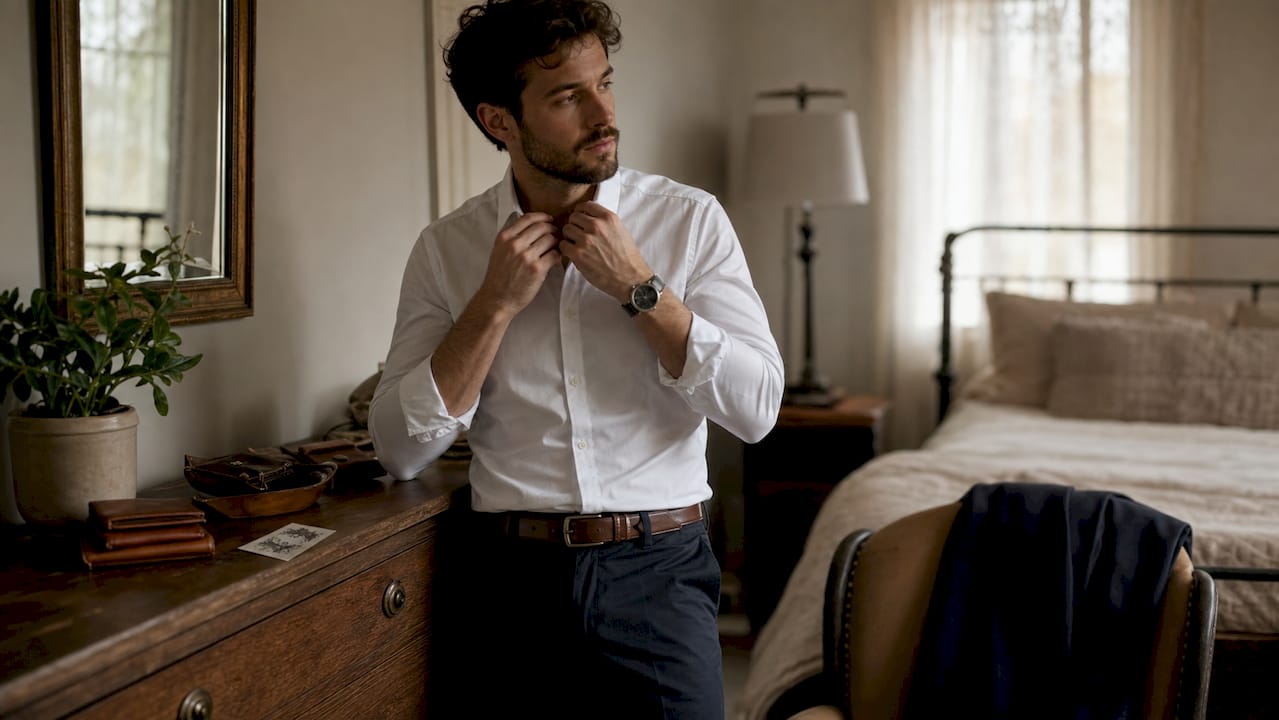
The first prerequisite is self-awareness. Enclothed cognition is highly subjective, meaning you must identify which specific clothing triggers your work mindset versus your rest mindset. A military-style jacket might signal focus for one person and nostalgia for another. You need to know which is which for you.
The second prerequisite is a curated wardrobe. Clutter creates friction. Friction creates decision fatigue. Capsule wardrobes and personal uniforms reduce outfit choices to a small, tested set, compressing decisions and saving mental energy for actual work. The goal is not fewer clothes. The goal is fewer bad choices.
Pro Tip: Before buying anything new, identify three outfits you already own that make you feel focused and capable. These are your baseline outfit formulas. Build from them, not from scratch.
The third prerequisite is a signature style. A signature style is a consistent visual identity built from pieces that combine well with each other. Structural cohesion, meaning pieces that actually work together, is what makes a signature style practical rather than theoretical.
| Tool or prerequisite | Purpose |
|---|---|
| Personal clothing audit | Identify which pieces trigger focus vs. rest |
| Outfit formulas | Pre-named combinations that eliminate morning decisions |
| Capsule wardrobe | A small, cohesive set of pieces that all work together |
| Signature style | A consistent visual identity that reflects your values |
| Decision fatigue awareness | Understanding why fewer choices produce better mornings |
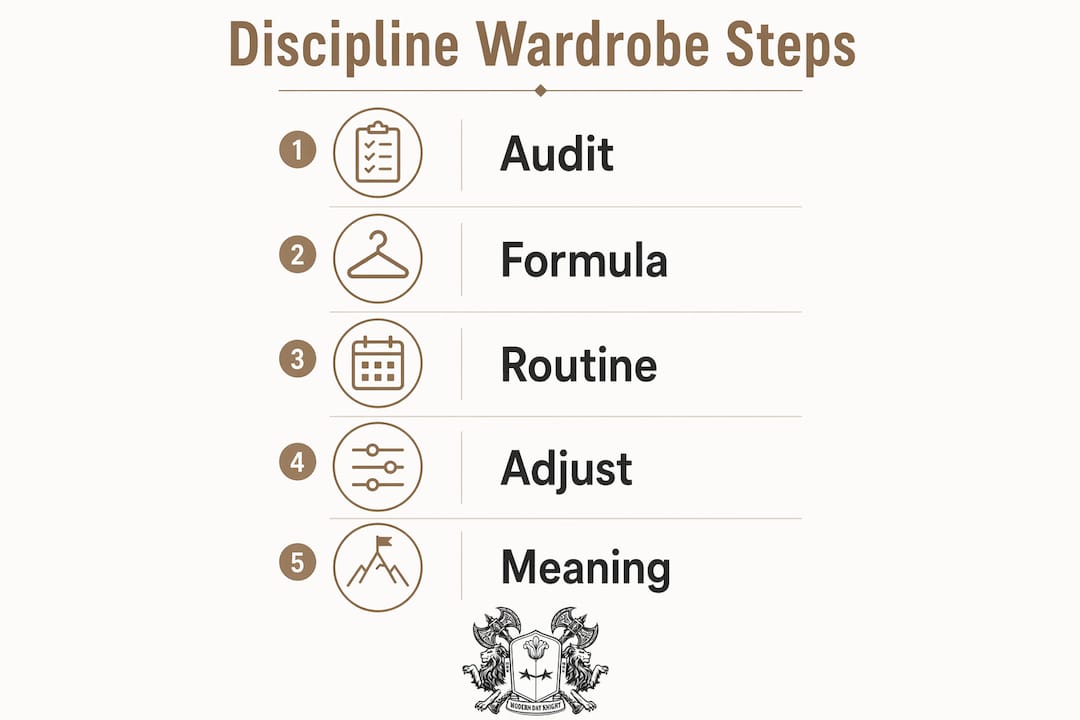
How to build a disciplined wardrobe routine step by step
Step 1: Audit your wardrobe for cohesion
Pull everything out. Keep only pieces that fit well, reflect your values, and combine with at least two other items you own. Discard or donate the rest. This is not about minimalism for its own sake. It is about removing the noise so the signal comes through clearly.
Step 2: Build and name outfit formulas
Explicitly naming outfit formulas simplifies morning decisions from complex choices to quick selection. A formula named “Mission Ready” might mean dark trousers, a structured tee, and clean boots. A formula named “Honor Day” might mean a fitted hoodie with a values-based graphic and straight-leg pants. The name carries meaning. The meaning carries motivation.
Step 3: Create a daily dressing routine
Consistency is the mechanism. Set a specific time each morning to dress with intention. Treat it like a ritual, not a chore. The routine itself becomes a mental cue. Over time, the act of dressing signals your brain that discipline has begun, regardless of how you feel when you wake up.
Step 4: Adjust for occasion without losing focus
Purpose-driven clothing works across contexts. A purpose-driven outfit for casual events still carries structure and meaning. You do not need a suit to signal discipline. You need intentionality. Swap the trousers for clean dark jeans, keep the values-aligned top, and the mental cue remains intact.
Step 5: Integrate meaningful apparel items
Clothing with a message reinforces your code. A graphic that speaks to loyalty, strength, or service is not just decoration. It is a daily reminder of what you stand for. This is the principle behind military values in modern fashion, where apparel becomes a statement of identity rather than a style choice.
Pro Tip: Lay out your outfit the night before and name it silently. That 30-second act primes your brain for the next morning before you even go to sleep.
| Wardrobe strategy | Best for | Key benefit |
|---|---|---|
| Capsule wardrobe | Minimalists and busy professionals | Maximum cohesion, minimum decisions |
| Personal uniform | High-discipline routines | Eliminates choice entirely |
| Outfit formula system | Those who want variety with structure | Named combos reduce friction while allowing flexibility |
| Values-aligned wardrobe | Purpose-driven individuals | Clothing reinforces identity and integrity daily |
What are the most common mistakes when dressing for discipline?
The biggest mistake is inconsistency. Dressing with intention three days a week and reverting to whatever is closest on the other four days breaks the mental cue entirely. Discipline is a daily practice, not a weekend project.
The second mistake is wardrobe clutter. Too many options create decision fatigue before the day even starts. Clothing reduces decision fatigue only when it is curated into a coherent, named signature style. A crowded closet is the enemy of a focused morning.
Common mistakes and how to fix them:
- Inconsistent dressing: Set a non-negotiable morning routine. Treat dressing as the first act of discipline each day.
- Keeping clothes that undermine focus: If a piece makes you feel lazy or sloppy, remove it. It is costing you more than closet space.
- Ignoring personal associations: Enclothed cognition’s effect is individual. Some people need highly structured outfits to shift mindset. Others need only subtle changes. Test what works for you.
- Dressing too casually by default: Casual attire signals the brain to stay relaxed. Reserve comfort-first clothing for rest, not for days when you need to perform.
- Outfit fatigue from repetition: Rotate between three to five named formulas. Variety within structure prevents boredom without sacrificing discipline.
The mindset shift that fixes most of these mistakes is simple. Stop thinking of your wardrobe as a collection of clothes. Start thinking of it as a collection of decisions you already made. Every morning, you are just executing the plan.
How does disciplined dressing support broader life goals?
Disciplined dressing reinforces self-image. When you consistently show up looking like the person you want to be, your brain begins to accept that identity as real. That is not vanity. That is behavioral psychology working in your favor.
The effect extends outward. How you present yourself shapes how others perceive your integrity and professionalism. A person who dresses with clear intention signals that they take their commitments seriously. That signal builds trust before a single word is spoken.
Clothing also creates accountability. When you wear something that reflects your values, you are less likely to act against them. Apparel that carries meaning, whether through a graphic, a color, or a cut, functions as a daily reminder of your warrior spirit and the standards you hold yourself to.
The broader benefit is a purposeful lifestyle. Intentional dressing is one of the simplest daily habits you can build. It costs no extra time when the system is in place. It requires no special skill. And it compounds. Each disciplined morning builds the identity of someone who shows up with purpose, and that identity spills into every other area of life.
Key Takeaways
Clothing is a daily behavioral tool. Used with intention, it builds the discipline, integrity, and focus that define a purposeful life.
| Point | Details |
|---|---|
| Enclothed cognition is real | Clothing shapes mindset; identify which outfits trigger your focus state. |
| Decision fatigue is the enemy | A curated wardrobe with named outfit formulas removes morning friction. |
| Consistency is the mechanism | Daily intentional dressing builds a mental cue that discipline has begun. |
| Values-aligned clothing reinforces identity | Wearing what you believe in holds you accountable to your own standards. |
| Discipline in dressing compounds | One focused morning habit strengthens every other area of your daily life. |
What I have learned from dressing with intention every day
Moderndayknightco has spent years watching people underestimate what they put on in the morning. The common assumption is that clothing is the last thing that affects performance. The truth is it is often the first.
When we started paying attention to enclothed cognition, the biggest revelation was not that formal clothes help. It was that personal meaning is what does the heavy lifting. A structured outfit you feel nothing about does less than a simple tee that reminds you of your code. The psychological trigger is not the fabric. It is the association.
The signature style concept changed our mornings completely. Reducing the decision to a named formula, something like “Honor Day” or “Mission Ready,” sounds almost too simple to work. It works precisely because it is simple. The brain does not have to negotiate. It just executes.
The hardest lesson was accepting that comfort and discipline are not opposites. You do not have to be uncomfortable to be focused. You have to be intentional. A well-fitted hoodie worn with purpose beats a stiff collar worn with resentment every single time. Build a wardrobe that you respect and that respects your values. The discipline follows naturally.
— Modern Day Knight
Apparel that carries your code, every single day
Moderndayknightco builds clothing for people who live by a code. Every piece in our apparel collection is designed to carry meaning, not just style. These are not clothes you throw on. They are clothes you choose with purpose.
The Army Brat Hoodie and the Army Brat Tee are built for people who understand that discipline starts before the day does. Comfortable enough for real life, structured enough to signal that you mean business. Each piece reduces your morning decision to one clear choice: wear what you believe in. That is the Moderndayknightco standard. Veteran-owned, values-driven, and built for those who refuse to settle for ordinary.
FAQ
What is enclothed cognition?
Enclothed cognition is the psychological process by which the symbolic meaning of clothing influences the wearer’s mindset and behavior. Wearing clothes associated with focus and professionalism actively shifts your mental state toward discipline.
How does dressing intentionally reduce decision fatigue?
A curated wardrobe with pre-named outfit formulas eliminates complex morning choices, preserving cognitive energy for meaningful work. Capsule wardrobes and personal uniforms are the most effective formats for achieving this.
Does casual clothing really hurt productivity?
Casual attire signals the brain to stay in a relaxed state, which undermines focus and discipline. Dressing with structure, even in comfortable clothes, creates the mental boundary between rest and productive work.
How do I start building a discipline-focused wardrobe?
Audit your current wardrobe, keep only pieces that combine well and reflect your values, then build three to five named outfit formulas. Lay out your chosen outfit the night before to prime your mindset for the next morning.
Can clothing really reflect personal integrity?
Clothing aligned with your values functions as a daily behavioral cue that holds you accountable to your own standards. When what you wear matches what you believe, your actions follow more naturally.


