



Apparel honors military service best through subtle symbolic design, veteran-led provenance, ethical boundaries, and purchases that deliver real support to those who served. Three anchors make this concrete right away: the VFW tartan, whose colors encode sacrifice and valor; the RED Friday tradition of wearing red to Remember Everyone Deployed; and Moderndayknightco, a veteran-owned brand built on integrity, loyalty, and strength. These aren’t just style choices. They’re statements of who you are.
Six ways to start today:
- Wear red on Fridays to honor deployed troops
- Choose veteran-owned brands with transparent impact metrics
- Buy items with clear, named donation policies
- Avoid official insignia, rank patches, and name tapes
- Add discreet accessories: lapel pins, tartan scarves, embroidered mottos
- Select durable, function-forward fabrics that reflect military values
The sections below explain symbolism, legal limits, brand trust signals, styling, gifting, and a pre-purchase checklist.
Table of Contents
- What are the most respectful ways apparel honors military service?
- What should you avoid to stay legal and respectful?
- How do you pick a veteran-owned brand that genuinely supports service members?
- Can apparel purchases actually support veterans beyond fashion?
- When and how should you wear military-inspired apparel respectfully?
- How do you gift military-inspired apparel in a way that feels meaningful?
- A quick checklist to vet any brand before you buy
- Key Takeaways
- Why subtlety and provenance matter more than most people realize
- Moderndayknightco: apparel built on the code, not just the aesthetic
What are the most respectful ways apparel honors military service?
Small, deliberate choices carry the most weight. The VFW tartan’s five colors, red, gold, white, navy, and infantry blue, each represent a specific value: sacrifice, valor, integrity, vigilance, and the infantry. Wearing a scarf or accessory in those colors signals awareness, not imitation. RED Friday red items work the same way: one red tee or pin communicates solidarity without claiming service. Veteran apparel carries narrative weight that connects civilians and veterans through shared recognition.
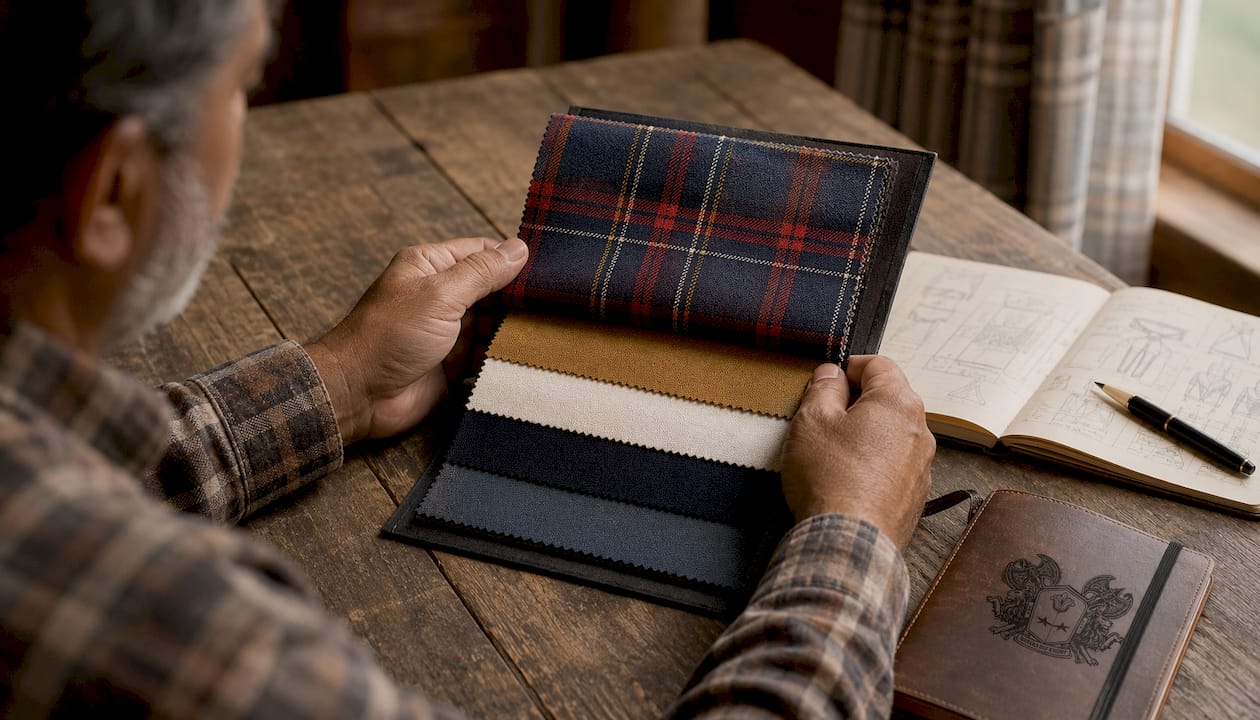
Subtlety is the operating principle. A single lapel pin, a pocket embroidery with a meaningful date, or an interior lining printed with a service motto all function as conversation starters. They invite questions rather than make claims. Service-appropriate colors like olive, navy, and khaki reinforce the aesthetic without crossing into uniform territory. Reinforced stitching and field-jacket silhouettes honor the functional ethos of military design.
Acceptable placements and design language:
- Pocket embroidery with dates or mottos (not rank or unit)
- Interior linings with meaningful text
- Tonal patches with no official insignia
- Lapel pins in branch colors or symbolic shapes
- Tartan accessories using authorized color palettes
Pro Tip: Choose items that include a narrative hangtag or product card explaining the symbol. When someone asks about your scarf or pin, a one-line provenance answer (“This uses the VFW tartan colors representing sacrifice and valor”) turns a fashion moment into a genuine tribute.
What should you avoid to stay legal and respectful?
The clearest rule: never wear official insignia, rank patches, authentic service emblems, or complete uniform pieces in a way that could be mistaken for active service. Under 32 CFR § 53.2, wearing a uniform or any part of it outside specific authorized occasions is prohibited for most former members. The Stolen Valor Act of 2013 targets false claims made for material gain, but the ethical line runs well ahead of the legal one.
Two distinct risks exist. First, legal and regulatory sensitivity around official emblems. Second, the social harm of implying service you didn’t perform. Both matter to the people who did serve.
Simple avoidance rules:
- Strip name tapes and unit patches from any surplus piece before wearing it
- Never wear exact replicas of service dress or mess uniforms as fashion
- Do not buy or make counterfeit emblems or medals
- Avoid head-to-toe military kit combinations that read as a uniform
When buying genuine surplus, that jacket served with a real person. Removing their name and rank is the respectful move, full stop.
Pro Tip: Convert surplus to civilian style by removing name tapes and replacing them with a neutral patch or leaving the space blank. The silhouette honors the tradition; the blank space honors the person.
How do you pick a veteran-owned brand that genuinely supports service members?
Prefer brands with transparent impact metrics over those that simply use military imagery. A veteran-founder bio, verifiable donation amounts or percentages, documented partnerships with named veteran organizations, and clear product details (materials, sizing, returns) are the signals that separate mission-driven brands from marketing-driven ones. Veteran-owned brands often hire veterans, donate to causes, and use clothing as a platform for storytelling, creating real economic and cultural impact.
Trust signal checklist:
- Veteran-founder story with verifiable background
- Donation policy with specific dollar amounts or percentages and a named partner
- Documented veteran hiring practices
- Customer reviews that mention community impact
- Clear materials, durability specs, sizing charts, and return policies
- No official insignia on products
Moderndayknightco checks these boxes. The Army Brat Tee and Army Brat Hoodie are concrete examples to evaluate against this list: veteran-owned provenance, values-driven messaging, and apparel built for people who carry military identity as a family legacy. Run them through the checklist yourself. That’s exactly how it should work.
“Supports veterans” is marketing language. “10% of net sales donated to named partner]” is a verifiable commitment. Prioritize the second every time. For guidance on selecting mission-aligned brands across categories, the framework used for [faith-based clothing brands applies equally here: look for stated values, transparent practices, and community accountability.
Can apparel purchases actually support veterans beyond fashion?
Yes, when the brand commits to specific mechanisms. Direct donations, veteran hiring, and transition programs are the three models with real impact. Transition apparel uses narrative-driven garments to support veterans moving into civilian life, maintaining cultural identity while funding reintegration services.
Concrete support models to look for:
- Percentage-of-proceeds donations to named nonprofits
- Buy-one-donate-one programs tied to veteran causes
- Revenue earmarked for veteran employment or scholarship funds
- Advocacy campaigns connected to specific legislation or community programs
- Hiring practices that prioritize veteran employees
Verify impact through publicized partnerships, named nonprofit partners, and annual transparency reports. A brand that publishes donation totals and names its partners is one you can trust. One that uses vague language about “giving back” without specifics is one to question. Honoring service through fashion means the purchase does something real, not just something symbolic.
When and how should you wear military-inspired apparel respectfully?
Context determines how strong a military cue should be. Casual and commemorative settings welcome bolder choices. Workplaces and formal events call for subtler signals.
Setting-by-setting guidance:
- Weekend casual: Field jacket over a plain tee and jeans. One military piece, civilian everything else.
- Commemorative events: Tartan scarf or red item for RED Friday, lapel pin for Veterans Day.
- Workplace: Discreet lapel pin or tonal embroidery on a neutral shirt.
One military-inspired piece anchors an outfit without overdoing the theme. The one-piece rule is practical and respectful: a field jacket over a t-shirt works; a field jacket, cargo pants, and combat boots together reads as a uniform. Have a short provenance line ready when someone asks. “I bought this from a veteran-owned brand that donates to transition services” is a complete, honest answer.
Pro Tip: Pair a bomber jacket over a crisp button-down or linen shirt. The look reads civilian-first and honors second, which is exactly the right order.
How do you gift military-inspired apparel in a way that feels meaningful?
Choose personalization that recognizes service without implying specific military status. Dates, family roles like “Army Brat,” and campaign names (when verified and appropriate) are safer than rank or unit insignia. The goal is to honor the connection, not to replicate the credential.
Safe customization options:
- Embroidered initials or family role (“Army Brat,” “Proud Military Family”)
- Service-appropriate colors without official emblems
- Date or theater of service, with the recipient’s permission
- Memorial text handled with care and specificity
- Custom hangtags explaining the design’s meaning
Ask family members about preferences before ordering. Avoid gifting uniform replicas. For group orders, request proof samples and confirm sizing against military-format measurements, which pair width and length rather than standard S/M/L. Durable fabrics matter here: a gift that lasts five years carries more meaning than one that fades after six months.
A quick checklist to vet any brand before you buy
Seven points. Run through them on the brand’s About page and product pages before checkout.
- Veteran-founder proof: Named founder with verifiable background
- Donation specifics: Dollar amount or percentage, not vague language
- Named nonprofit partner: Searchable, real organization
- Veteran hiring info: Stated policy or published numbers
- Product materials and durability: Fabric content, construction details
- No official insignia: Inspired design only, no regulated emblems
- Customer reviews citing impact: Real people mentioning veteran support
Scan the footer and About page first. Then check product pages for materials and provenance. Look up the named nonprofit partner independently. Read recent reviews.
Pro Tip: When a brand claims donations, search for the partner organization and look for published totals. A real partnership leaves a paper trail. Silence on specifics is the red flag.
Key Takeaways
Choosing apparel that honors military service means prioritizing subtle symbolism, verified impact, and ethical boundaries over marketing language.
| Point | Details |
|---|---|
| Subtle symbolism wins | Lapel pins, tartan colors, and RED Friday red items honor service without implying it. |
| Avoid official insignia | Strip name tapes and rank patches from surplus; never wear regulated emblems as fashion. |
| Verify brand impact | Look for named nonprofit partners and specific donation amounts, not vague “supports veterans” claims. |
| Apparel can fund real support | Veteran hiring, percentage-of-proceeds donations, and transition programs create measurable impact. |
| Moderndayknightco as a model | The Army Brat Tee and Army Brat Hoodie reflect veteran-owned provenance and values-driven design. |
Why subtlety and provenance matter more than most people realize
Most people think honoring military service through clothing means going bold: flags, camo, branch logos. That instinct is understandable. It’s also where most people get it wrong.
The veterans we respect most tend to be the quietest about their service. A brand that understands that truth builds differently. It chooses a meaningful color palette over a loud graphic. It puts the story inside the garment, not on the chest in 72-point type. It earns trust through transparency about where the money goes, not through patriotic imagery alone.
At Moderndayknightco, the code of honor isn’t a slogan. It’s the operating principle behind every design decision. Integrity means the donation policy is specific and searchable. Loyalty means the veteran-hiring commitment is real, not aspirational. Strength means the fabric holds up, because a garment that falls apart after a season doesn’t honor anything. Military values in modern fashion are worth wearing only when the brand behind them lives by the same code.
The civilian who wears a piece with genuine provenance, who can explain what it means and where it came from, does more for the veteran community than a hundred people in camo they bought because it was trending.
Moderndayknightco: apparel built on the code, not just the aesthetic
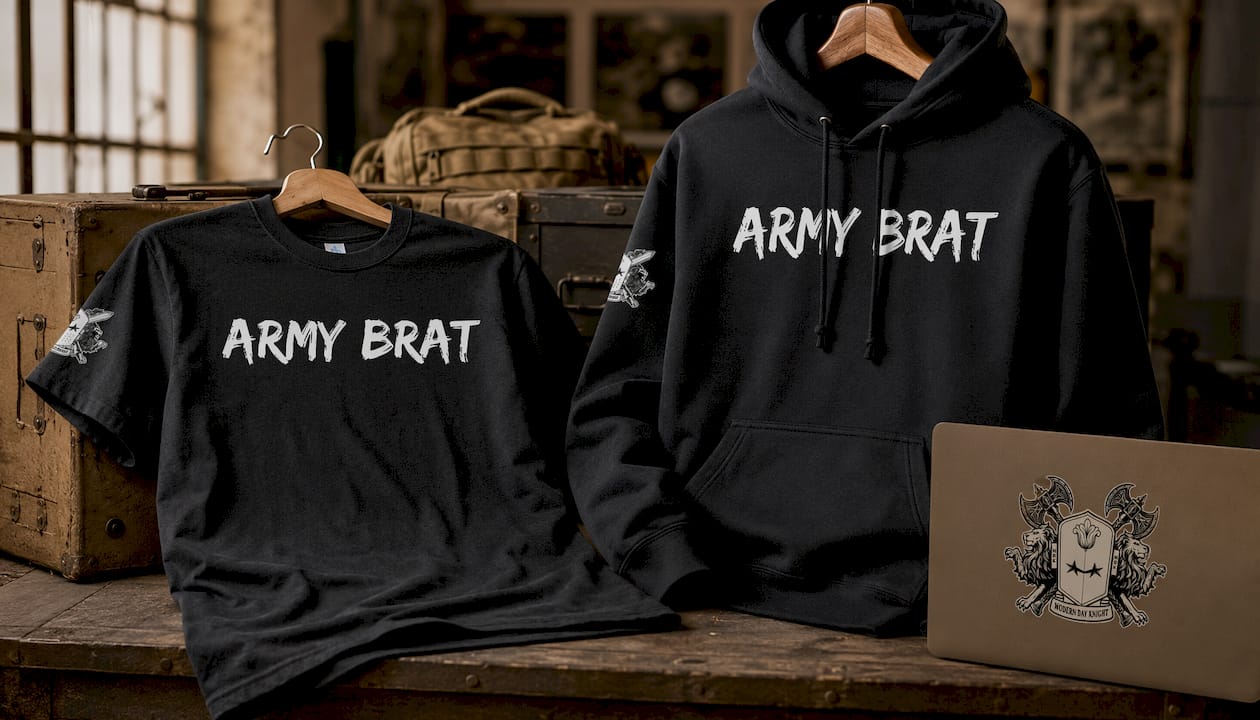
Moderndayknightco is the veteran-owned alternative for customers who want lifestyle apparel that carries real meaning, not just military imagery. Every piece is built around a modern code of honor: integrity, loyalty, and strength. That’s not a tagline. It’s the standard the brand holds itself to on provenance, materials, and community commitment.
The Army Brat Tee and Army Brat Hoodie are designed for people who grew up in military families and carry that identity with pride. They honor the family connection without misrepresenting rank or service. Run them against the seven-point checklist in this guide. Veteran-owned. Values-driven. Clear on what they stand for.
Visit the product pages, review the details, and decide for yourself whether they meet your standard. That’s the kind of purchase that actually honors service.


