



Yes, preshrunk cotton still shrinks. Expect roughly 0.5% to 4% additional shrinkage depending on the weave, weight, and finish, with the biggest drop happening in the first hot wash and dry. Sanforized® wovens sit at the tight end of that range; loose knits sit at the wide end. The single most important move you can make: wash cold and skip the high-heat dryer setting.
TL;DR:
- Preshrunk cotton typically shrinks an additional 0.5% to 3% in wovens and up to 4% in knits, mostly during the first three washes.
- The level of shrinkage depends on the fabric weight, knit structure, finishing quality, and fiber blend, with heavier, well-finished fabrics shrinking less.
- Proper care, including cold washing and low-heat drying, can significantly reduce further shrinkage and help maintain the garment’s fit.
- Fully preshrunk cotton with processes like sanforization offers more reliable size stability, but some residual shrinkage is inevitable.
- To ensure the best fit, always test wash a sample before committing to bulk purchases or home shrinking attempts.
Table of Contents
- Preshrunk Cotton Shrinkage: What “Preshrunk” Actually Means
- How Much Does Preshrunk Cotton Shrink?
- Why Cotton Still Changes Size Even When It’s Preshrunk
- How to Avoid Additional Shrinkage in Preshrunk Cotton
- Can You Intentionally Shrink Preshrunk Cotton at Home?
- Shopping Checklist: How to Buy Cotton That Won’t Surprise You
- Modern Day Knight’s Approach to Cotton Care and Durability
- Fit Rules Worth Living By
- Get Cotton That Holds Its Shape, Not Just Its Message
- Sources
- FAQ
Preshrunk Cotton Shrinkage: What “Preshrunk” Actually Means
“Preshrunk” is not a certification. It is a marketing term, and mills apply wildly different amounts of rigor to earn it. Understanding what happens on the factory floor before a garment ever reaches you explains why two shirts labeled “preshrunk” can behave completely differently in your washer.
The gold standard is sanforization, a mechanical process that feeds woven fabric through rollers to compress the threads before cutting and sewing. Done to the Sanforized® specification, this process holds residual shrinkage within defined tolerances in woven and knit cotton, according to the Sanforization process standard. That’s a real, measurable tolerance, not a vague promise.
Other finishing methods work alongside or instead of sanforization:
- Compacting adjusts loop geometry in knit fabric, tightening it before it ever hits your body.
- Heat-setting stabilizes fibers using controlled heat during finishing, locking in dimensions.
- Mercerization treats cotton with a chemical bath (usually sodium hydroxide) to strengthen fibers and improve dye uptake, with a secondary stabilizing effect.
Woven fabrics generally hold their finish better than knits, because knit loops have more give and more surfaces exposed to moisture and heat. A brand that stamps “preshrunk” on a tag without naming a process or a trademark could mean anything from a full industrial treatment to a single test wash. Cotton Incorporated’s technical guidance on shrinkage performance in cotton fabrics notes that combining mechanical and chemical finishing methods gives mills the most reliable control, but plenty of manufacturers skip that step entirely.
How Much Does Preshrunk Cotton Shrink?
Here’s the number-first answer you’re looking for: preshrunk woven cotton typically shrinks another 0.5% to 3% after purchase, while preshrunk knits can run as high as 4%, according to aggregated lab and consumer testing from TextileTuts. That gap is the entire reason preshrinking exists.
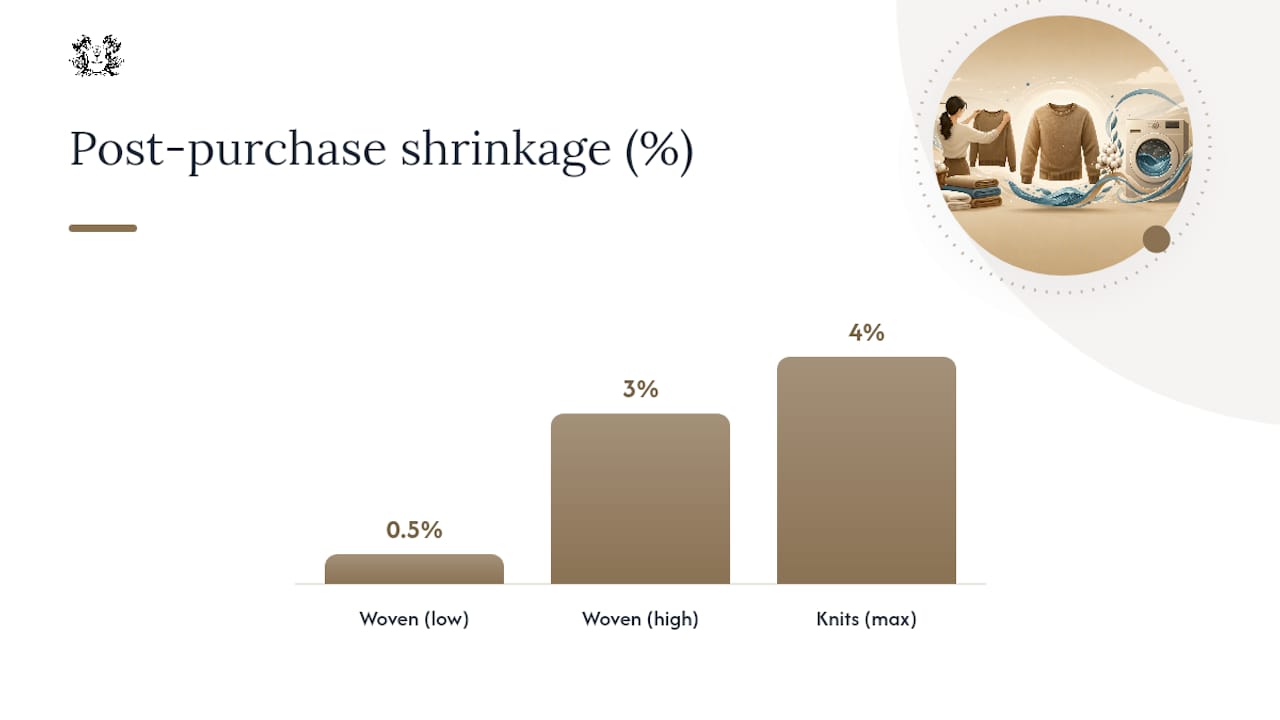
A 3% shrink on a men’s large tee shifts the chest measurement by roughly half an inch and the body length by close to an inch. Small on paper, noticeable on your body, especially in a fitted cut.
A few things push those percentages up or down:
- Fabric weight (GSM): heavier cotton (180 GSM and up) tends to hold its shape better than lightweight jersey.
- Knit structure: looser knit loops relax more than tight ribbing or interlock construction.
- Finish quality: a well-compacted knit or a properly sanforized woven stays near the low end of the range; a poorly finished one drifts toward the high end.
- Blend content: cotton blended with polyester or spandex shrinks less than 100% cotton, because synthetic fibers barely respond to heat and moisture the way natural fibers do.
Most of that shrinkage doesn’t happen all at once. Industry testing shows the majority occurs in the first one to three washes, with dimensional stability typically reached by the fifth wash cycle. If your shirt still fits differently after wash five, something else is going on, likely water temperature or dryer heat, not the fabric settling into its natural state.
Why Cotton Still Changes Size Even When It’s Preshrunk
Three separate mechanisms drive dimensional change in cotton, and preshrinking only neutralizes one of them completely.
Relaxation shrinkage happens when fibers stretched during weaving or knitting return to their natural, unstressed state the first time they get wet. This is largely what preshrinking targets, and it’s why a properly finished garment shrinks the least on wash one.
Consolidation shrinkage is the slower process of fibers packing more tightly together with repeated exposure to heat and moisture. Even a well-preshrunk shirt keeps consolidating a little with every wash and dry cycle, which is why fit continues to shift slightly through those first five washes.
Elastic shrinkage shows up almost entirely from mechanical agitation and heat rather than water alone, meaning your dryer, not your washer, does most of the damage.
- Cold water triggers relaxation shrinkage but rarely much else.
- Hot water and tumble-dry heat accelerate consolidation.
- Agitation in the dryer drum causes elastic shrinkage, especially in loose knits.
Mills can chemically crosslink cotton fibers or apply deeper compaction to resist all three mechanisms, but there’s a trade-off. Heavier finishing treatments can stiffen the hand-feel of the fabric and, in some cases, reduce tensile strength, according to Textile Exchange’s guidance on finishing trade-offs. That’s why ultra-soft, minimally processed cotton tees often shrink more than stiffer, heavily finished ones. Softness and shrink resistance sit on opposite ends of a spectrum, and every mill has to pick where on that line to land.
How to Avoid Additional Shrinkage in Preshrunk Cotton
Care habits, not fabric quality alone, decide how much more your garment shrinks after you buy it. Follow these steps in order of impact.
- Wash cold, always. Water between 68°F and 86°F (20°C to 30°C) triggers minimal relaxation shrinkage compared to hot water, according to TextileTuts. This single change does more to protect your fit than anything else on this list.
- Use a gentle cycle. Reduced agitation means less mechanical stress on the fibers, which directly limits elastic shrinkage.
- Skip the high-heat dryer setting. Air-drying is the safest option. If you need a dryer, use the lowest heat setting available.
- Reshape knits while damp. Pull a tee or hoodie back into its original dimensions right after the wash cycle, before any fibers set in a smaller shape.
- Lay knits flat to dry. Hanging wet, heavy cotton stretches the shoulders and neckline out of shape, which creates its own fit problem in the opposite direction.
- Use a gentle, enzyme-free detergent. Harsh detergents and bleach weaken cotton fibers over time, making them more prone to shrinking with each wash.
- Wash inside a mesh laundry bag if the garment has embroidery or a heavy print, to reduce friction against the drum.
- Follow the care label exactly. Manufacturers test their own fabric and finish combinations, and the label reflects what actually keeps that specific garment stable.
Pro Tip: Keep a $5 tape measure in your laundry room. Measure chest width and body length on a new tee before the first wash, then check again after wash three. That data tells you exactly how much your specific cotton moves, so you’re never guessing on the next order.
Can You Intentionally Shrink Preshrunk Cotton at Home?
Sometimes a shirt runs a little large and you want it snugger. It’s possible to coax a bit more shrinkage out of preshrunk cotton, but temper your expectations. Because the fabric has already been through mechanical preshrinking, you’re mostly triggering leftover consolidation shrinkage, not a dramatic size change.
- Wash in hot water (as hot as the care label allows), then tumble-dry on high heat.
- Repeat once if the first round didn’t get you close enough to the fit you want.
- Expect only a small additional gain, typically another 1% to 3% beyond what has already happened.
The risks are real. Heat and agitation are your only real levers here, and both carry consequences: uneven shrinkage across different fabric sections, cracked or peeling screen prints, weakened stitching around embroidery, and noticeable color fading. Stop after two rounds. If the fit still isn’t right, the fabric has likely reached its practical limit, and further attempts mostly just risk damage.
For anything with heavy embroidery or a fitted silhouette that has to land exactly right, a tailor or professional heat-set service will get you a more predictable result than a home dryer ever will.
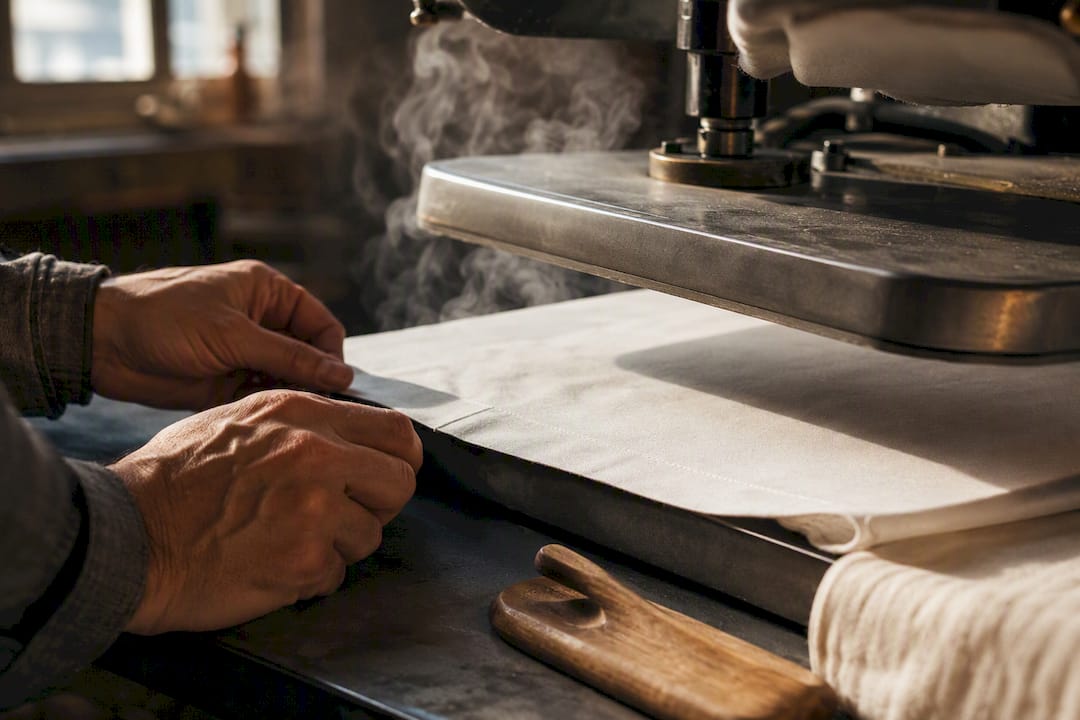
Pro Tip: Test your shrink method on one garment before running your whole order through hot water and high heat. A single ruined tee is a lesson. A ruined stack of five is an expensive one.
Shopping Checklist: How to Buy Cotton That Won’t Surprise You
Reading a product description before you buy saves you the entire headache of home shrink-fixing later. A few specifics to look for:
- The Sanforized® trademark or a stated residual-shrinkage tolerance (ideally under 3%), which signals the manufacturer actually tested and controlled for shrinkage rather than just slapping “preshrunk” on the tag.
- Mercerized, compacted, or heat-set finishing mentioned explicitly in the product description.
- Long-staple or combed ring-spun cotton, which tends to hold its shape better than shorter, cheaper cotton fibers.
- Blended construction (cotton with polyester or a tri-blend), since synthetic fiber content resists shrinkage far better than 100% cotton.
- GSM and knit-versus-woven details, both of which affect how much movement to expect.
If a listing doesn’t mention any of this, it’s worth asking the seller directly before you order in bulk or buy a fitted cut.
Modern Day Knight’s Approach to Cotton Care and Durability
This brand is built on the principle that you should know what you’re standing on before you commit to it. That applies to values, and it applies to fabric.
Our care content walks through the real trade-offs behind fabric choice and maintenance, including how tri-blend fabric compares to cotton for shrink resistance and print longevity, and a full care routine for heavier garments like our hoodies.
A few recommended habits to maintain tees and hoodies include:
- Always cold wash, regardless of fabric blend.
- Skip the dryer when a garment has embroidered detail to protect stitching.
- Check the specific care label on each product page, as weight and finish vary by style.
Fit Rules Worth Living By
If a garment is fitted, size up or preshrink one test piece before committing to the rest. For casual, relaxed cuts, accept 1% to 3% of residual change as normal and expected. Always test a single item before running heat or hot water across your whole order.
— Modern Day Knight
Get Cotton That Holds Its Shape, Not Just Its Message
There are other ways to chase a good fit, guessing on generic cotton tees or running every new shirt through a risky home shrink test before you even know if you like it. This brand takes a more direct route: its shirts and hoodies come with documented care guidance built for the specific fabric and finish used, so you are not left improvising with hot water and a dryer dial.
Our SHIRTS collection and HOODIES collection each carry product descriptions built to tell you what you’re actually buying, not just what you’re wearing. Pieces like the Global Citizen Tee, Accountability Hoodie, and Army Brat Tee carry the same values-first design philosophy across every fit, cotton, tri-blend, or heavyweight fleece. Before you order, check the product description for fabric composition and care instructions, and cross-reference our guide to embroidered military apparel care if the piece you want carries detailed stitching.
Ready to wear something with a code behind it? Browse the full APPAREL collection and find the piece that fits your fit, and your values.
Sources
- Guide to improved shrinkage performance of cotton fabrics — Cotton Incorporated (ISP-1009)
- Does preshrunk cotton shrink? — TextileTuts
- Sanforization — Wikipedia
FAQ
Will Preshrunk Cotton Still Shrink?
Yes. Preshrunk cotton typically still shrinks a small amount, usually 0.5% to 3% in wovens and up to 4% in some knits during the first few wash cycles. Preshrinking reduces the shrinkage dramatically compared to untreated cotton, but it doesn’t eliminate it.
Does 100% Cotton Shrink? Should I Size Up?
Untreated 100% cotton can shrink 5% to 10% or more, while preshrunk 100% cotton usually stays under 4%. For a fitted cut in preshrunk cotton, sizing up one step is a reasonable precaution; for a relaxed or oversized fit, the normal residual shrinkage rarely justifies it.
Is 100% Preshrunk Cotton Good?
100% preshrunk cotton, especially fabric finished with sanforization, offers a strong balance of comfort, breathability, and predictable fit. Look for a stated residual-shrinkage tolerance or the Sanforized® trademark on the label as a sign the mill actually tested and controlled the finish.
Will a 90% Cotton Shirt Shrink in the Dryer?
Tumble-drying on low heat or air-drying keeps that number as close to zero as possible.
How Many Washes Until a Preshrunk Shirt Stops Shrinking?
Most preshrunk cotton reaches dimensional stability by the third to fifth wash cycle. If a garment keeps changing size after five washes, the cause is usually wash temperature or dryer heat rather than the fabric itself.


