



The skull emblem, as Modern Day Knight uses it, stands for integrity, loyalty, strength, and resilience. It is a mark of the modern warrior ethos, not a symbol of death or rebellion. Every design carrying it is meant to be worn as a statement of character. That is the scoped meaning behind this article, and it shapes every product recommendation and wearing guideline that follows.
TL;DR:
- Most skull apparel signifies support and shared values, not claims of personal military rank or service, so pairing with clear intent is essential.
- Different skull designs, such as integrated with unit insignia or floral motifs, carry distinct meanings like readiness or remembrance, influencing their appropriateness for various settings.
- Careful selection of quality garments, proper washing, and storage practices help maintain the graphic’s integrity and longevity over time.
- Wearing skull apparel with a deliberate message backed by honest values distinguishes respectful tribute from potentially offensive or VFW-inappropriate looks.
- Modern Day Knight’s products embody a code of integrity, loyalty, strength, and resilience, emphasizing character over trend in the design philosophy.
Table of Contents
- What Does the Skull Emblem Mean in a Military Context?
- Why Do Veterans and Supporters Wear Skull Imagery?
- How Should You Wear and Choose Skull-Design Apparel?
- How Modern Day Knight Defines and Builds Around This Emblem
- Where Did the Skull Symbol Come From Outside the Military?
- Are There Controversies Around Skull Symbolism?
- What Do Different Skull Symbol Variations Mean?
- How Do You Care for Skull-Design Apparel?
- Our Take: The Skull Means What You Put Behind It
- Find Skull-Emblem Apparel Built on Honor
- Sources
- FAQ
What Does the Skull Emblem Mean in a Military Context?
The skull earned its place on uniforms and flags long before it landed on a hoodie. Its military lineage runs through some of history’s toughest units, and that lineage is exactly why the symbol carries weight today.
Royal Navy submarine crews in World War I flew the Jolly Roger after a successful mission), turning a pirate symbol into proof of a job done right under pressure. Naval aviation squadrons picked up the same imagery for unit identity, a tradition that stuck because it communicated something plain: this crew gets it done and doesn’t advertise how. European cavalry units carried skull badges even earlier. The Totenkopf insignia traces back to 18th century Hussars, worn by regiments who wanted a mark that signaled elite standing and a willingness to face death without flinching.
Those roots translate into values that still matter:
- Grit — the willingness to keep moving when the mission gets hard.
- Readiness — a signal that the wearer is prepared for what comes.
- Esprit de corps — a shared mark that binds a unit or a community together.
- Sacrifice — an acknowledgment that real strength sometimes costs something.
Not every institution has embraced the imagery, and that history is worth knowing. The Australian Defence Force restricted certain death-themed symbols in 2018, citing a conflict with the values it wanted to build. That decision doesn’t erase the emblem’s history. It’s a reminder that context and intent decide whether a symbol reads as honor or as something else entirely. This brand’s use sits firmly on the honor side of that line: the skull here is shorthand for character, not a claim of violence or rank.
Why Do Veterans and Supporters Wear Skull Imagery?
Veterans and supporters gravitate toward skull designs for a simple reason: the image says a lot without a single word. A small graphic on a chest or sleeve can carry an entire story of service, sacrifice, or solidarity, and everyone in the community reads it instantly. Veteran apparel functions as a compressed language this way, trading long explanations for a shared visual shorthand.
Three things drive that choice:
- Identity signaling. A skull on a hoodie tells other veterans, “I get it,” without a conversation.
- Belonging. Shared imagery creates instant common ground, whether at a VFW hall or a grocery store parking lot.
- Contrast with mainstream fashion. Skulls have become a staple of pop culture and fashion runways, with designers like Alexander McQueen popularizing the motif for style alone. Veteran apparel uses the same image with a different intent behind it, one rooted in tribute rather than trend.
Overt designs work well for gatherings, reunions, and events where the wearer wants the message loud and clear. Subtler treatments, small emblems, muted colors, a skull worked into a larger design, fit office settings, family events, or anywhere a quieter statement makes more sense.
Pro Tip: If you’re unsure whether a design reads as too aggressive for the setting, ask whether you’d be comfortable explaining it to a stranger’s grandmother. If not, size it down or pick a subtler piece.
How Should You Wear and Choose Skull-Design Apparel?
Buying the shirt is easy. Wearing it with the right intent takes a little more thought, especially since skull apparel sits close to territory that matters a great deal to the people who earned it.
Run through this checklist before you buy:
- Confirm support versus service claims. A design should indicate admiration or support, not imply you personally earned a decoration or rank you didn’t hold. Guidance from veteran-apparel writers is consistent on this point: wear what supports, not what impersonates.
- Check placement and wording. A phrase or badge that mimics an official unit patch can cross a line that a generic skull graphic never approaches.
- Look at build quality. Screen printing that cracks after three washes undercuts the message on the shirt. Check fabric weight and stitching before you commit.
- Get the fit right. A hoodie that’s too tight or too loose distracts from the design instead of letting it speak.
Watch for red flags, too. Steer clear of any design that borrows extremist symbolism dressed up as “edgy,” claims medals or qualifications the wearer never earned, or leans on slogans that read as offensive rather than proud. Morale patch culture draws a clean line here: tactical humor and unit pride are fair game, false claims of service are not.
For daily wear, a well-made hoodie or tee in muted tones works almost anywhere. Save bolder graphics for events where the crowd already shares the context.
How Modern Day Knight Defines and Builds Around This Emblem
The company is veteran-owned, and that ownership shapes exactly how the skull gets used across the catalog. The emblem isn’t decoration here. It is shorthand for a code: integrity first, loyalty to the people beside you, strength that holds under pressure, and resilience when things get hard. Every product is built to carry that code, not just a graphic.
Here’s how a few pieces map to the meaning:
- Army Brat Hoodie — built for the sons and daughters who grew up moving base to base, carrying loyalty they never chose but never abandoned either.
- Army Brat Tee — a lighter, everyday way to wear that same family loyalty without making a loud statement.
- Modern Day Knight Old School Hoodie — classic styling paired with the emblem, built for anyone who wants the code visible in a straightforward, no-frills way.
The chivalric metaphor behind the brand isn’t accidental. A knight’s code and a veteran’s code both run on the same fuel: honor kept even when nobody’s watching.
Where Did the Skull Symbol Come From Outside the Military?
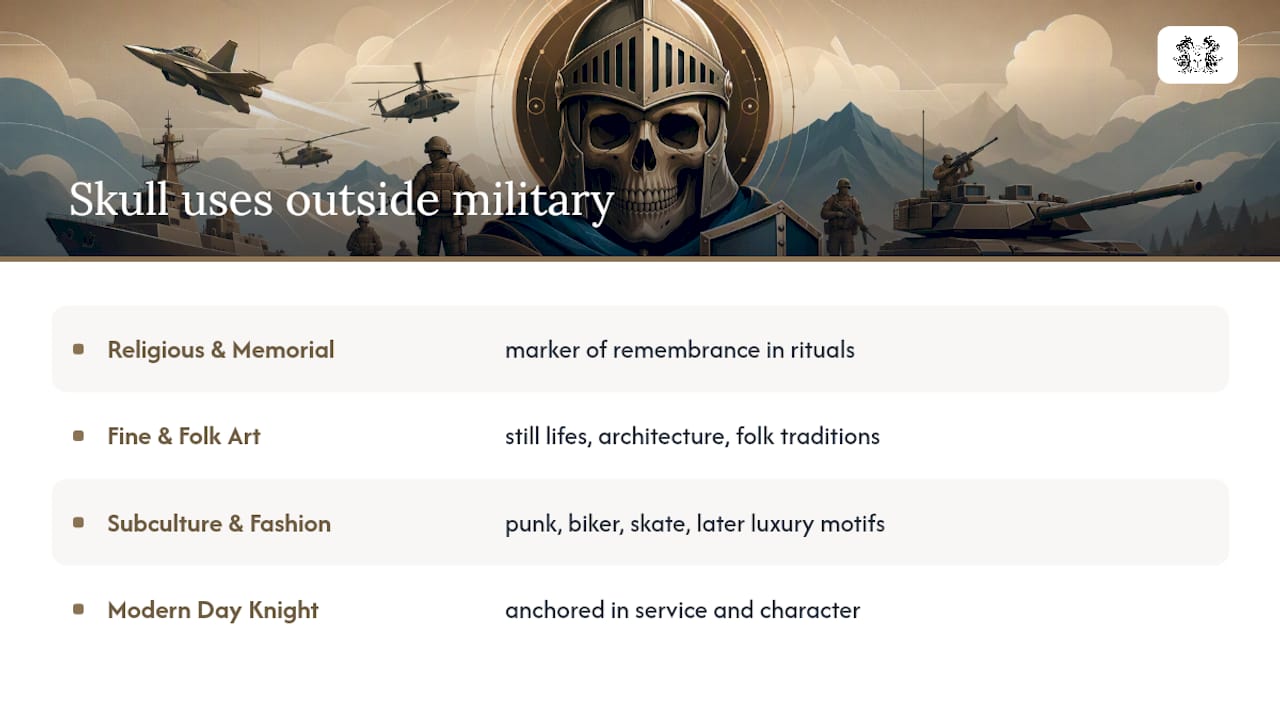
The skull’s history stretches far beyond battlefields and naval flags. Long before any army adopted it, cultures across the world used skull imagery in religious art, memorial traditions, and public ceremony, treating it as a marker of remembrance rather than menace.
Artists have leaned on the skull for centuries as a subject that forces a viewer to stop and think. It shows up in still-life paintings, carved into architecture, and worked into folk art traditions across continents. That staying power is part of why the image carries such recognizable weight today: a single shape has done centuries of visual work across wildly different cultures and eras.
Fashion picked up the thread more recently, with skull graphics becoming a fixture in punk, biker, and skate culture that inspire modern streetwear trends. By the late 20th century, skull graphics had become a fixture of punk, biker, and skate culture, each subculture bending the image toward its own message of rebellion or independence. Later, high fashion houses incorporated skull motifs, making them part of luxury design elements.
That broad cultural footprint is exactly why context matters so much when a skull shows up on a shirt. The same shape can read as memorial, rebellion, high fashion, or tribute, depending entirely on where it’s worn and who’s wearing it. Modern Day Knight’s use sits apart from all of those, anchored instead in service and character rather than shock value or trend.
Are There Controversies Around Skull Symbolism?
Skull imagery carries a genuinely mixed reputation, and pretending otherwise would be dishonest. Because the shape has been used by outlaw motorcycle clubs, extremist groups, and horror media alike, some people see a skull graphic and assume the worst before they know anything about the wearer.
That reaction isn’t baseless. Certain skull variants really have been co-opted by groups whose values have nothing to do with honor or service, which is part of why some military organizations have moved to restrict death-themed symbols in official use. The confusion usually traces back to a failure to separate intent from imagery. A skull worn as a tribute to sacrifice looks identical, at a glance, to one worn purely for shock value.
The fix isn’t avoiding the symbol. It’s being deliberate about design and pairing. A skull paired with branch insignia, service-oriented text, or brand messaging rooted in honor reads entirely differently than a bare skull with an aggressive slogan. Buyers who care about the distinction should look for apparel that makes its values explicit rather than leaving the symbol to speak alone, since ambiguity is exactly what invites the wrong interpretation.
What Do Different Skull Symbol Variations Mean?
Not every skull graphic sends the same message, and knowing the differences helps you pick apparel that says what you actually mean.
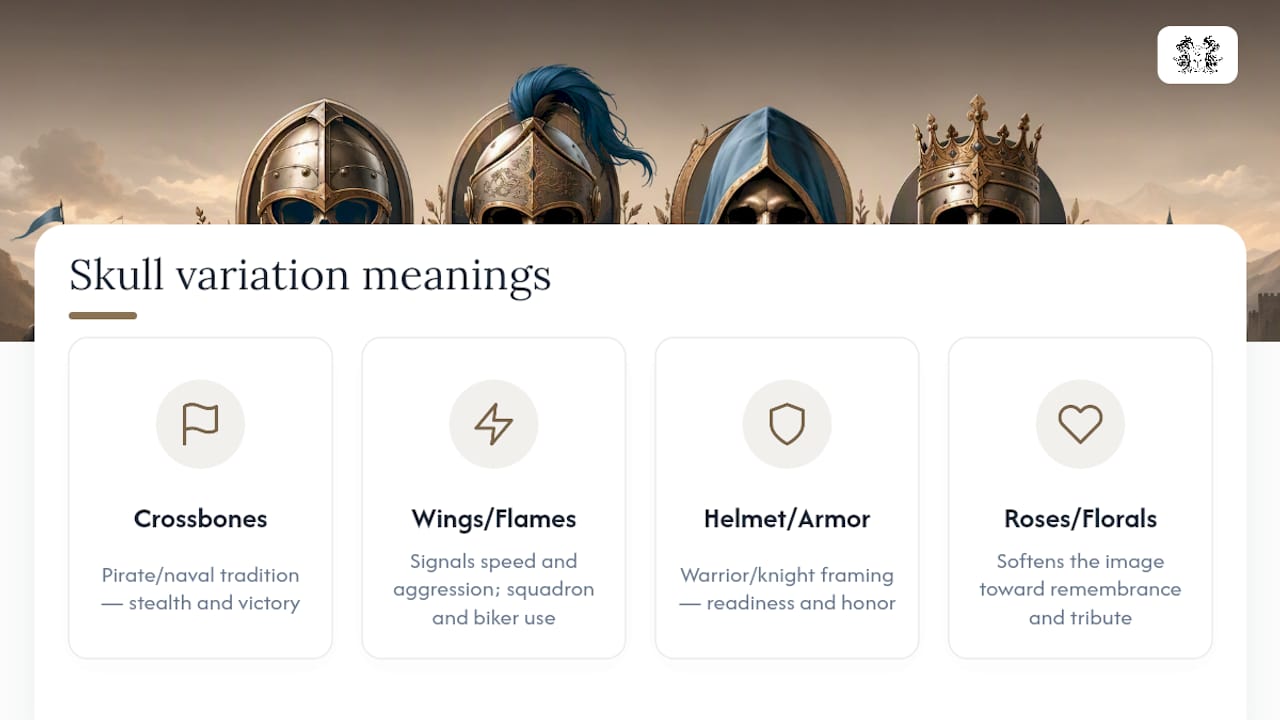
A bare skull and crossbones leans toward the pirate and naval tradition, tied historically to stealth and victory rather than menace. A skull with wings or flames usually signals speed, aggression, or a more aviation-flavored identity, common in squadron patches and biker culture alike. A skull integrated with a helmet or armor motif, closer to what Modern Day Knight uses, points toward the warrior and knight framing: readiness and honor rather than rebellion. A skull paired with roses or florals softens the image toward remembrance and tribute, common in memorial designs. A skull with a jaw removed or stylized minimally often shows up in streetwear purely as an aesthetic choice, stripped of any deeper symbolism at all.
Reading a design before you buy takes a few seconds and saves you from wearing something that doesn’t match your intent. If a piece pairs the skull with branch insignia, service language, or brand values you actually hold, you’re on solid ground. If the pairing leans aggressive or vague with no clear message behind it, it’s worth a second look before checkout.
How Do You Care for Skull-Design Apparel?
A cracked, faded graphic undercuts the message it’s supposed to carry, so a little care goes a long way toward keeping the emblem sharp for years.
Wash skull-printed hoodies and tees inside out in cold water. Heat and friction are what break down screen prints fastest, and turning the garment inside out cuts down on both. Skip the dryer when possible, or use a low-heat setting if you need speed. High heat is the single fastest way to crack a print or shrink a heavyweight hoodie out of shape.
Avoid fabric softener on printed garments. It leaves a residue that weakens the bond between ink and fabric over repeated washes. Skip bleach entirely, even on white shirts. It degrades print colors faster than almost anything else in a laundry room.
Store hoodies folded rather than hung on thin wire hangers, which stretch the shoulders and distort the graphic over time. Check quality before you buy, too. A well-constructed piece with reinforced stitching and quality ink will simply outlast a cheap print job, no matter how carefully you wash it. Treat the garment the way you’d treat the meaning behind it: with a little discipline, it holds up.
Our Take: The Skull Means What You Put Behind It
Most articles on skull symbolism try to cover mortality, rebellion, and spirituality all at once, and end up saying nothing useful to anyone. That approach misses what actually matters to the people buying this apparel. Veterans and supporters aren’t shopping for a meditation on death. They’re shopping for a way to say something true about who they are.
The conventional advice, “know your symbols,” is fine but incomplete. The better advice is: know your intent, then match the design to it. A skull worn with no context is just a shape. A skull worn deliberately, paired with honest values and worn with some restraint in the wrong setting, becomes a statement people actually respect.
Here’s what we’d prioritize first: buy from brands that tell you plainly what the symbol means to them. Vague marketing around “edge” or “attitude” tells you nothing. A clear statement of values tells you everything. That clarity is what separates apparel with staying power from a graphic tee that ends up in a donation bin within a year.
— Modern Day Knight
Find Skull-Emblem Apparel Built on Honor
Every piece this brand makes carries the meaning laid out here: integrity, loyalty, strength, and resilience, worn plainly. That’s the difference between this apparel and a mass-market graphic tee chasing a trend: the design is anchored in a code, not a season’s aesthetic.
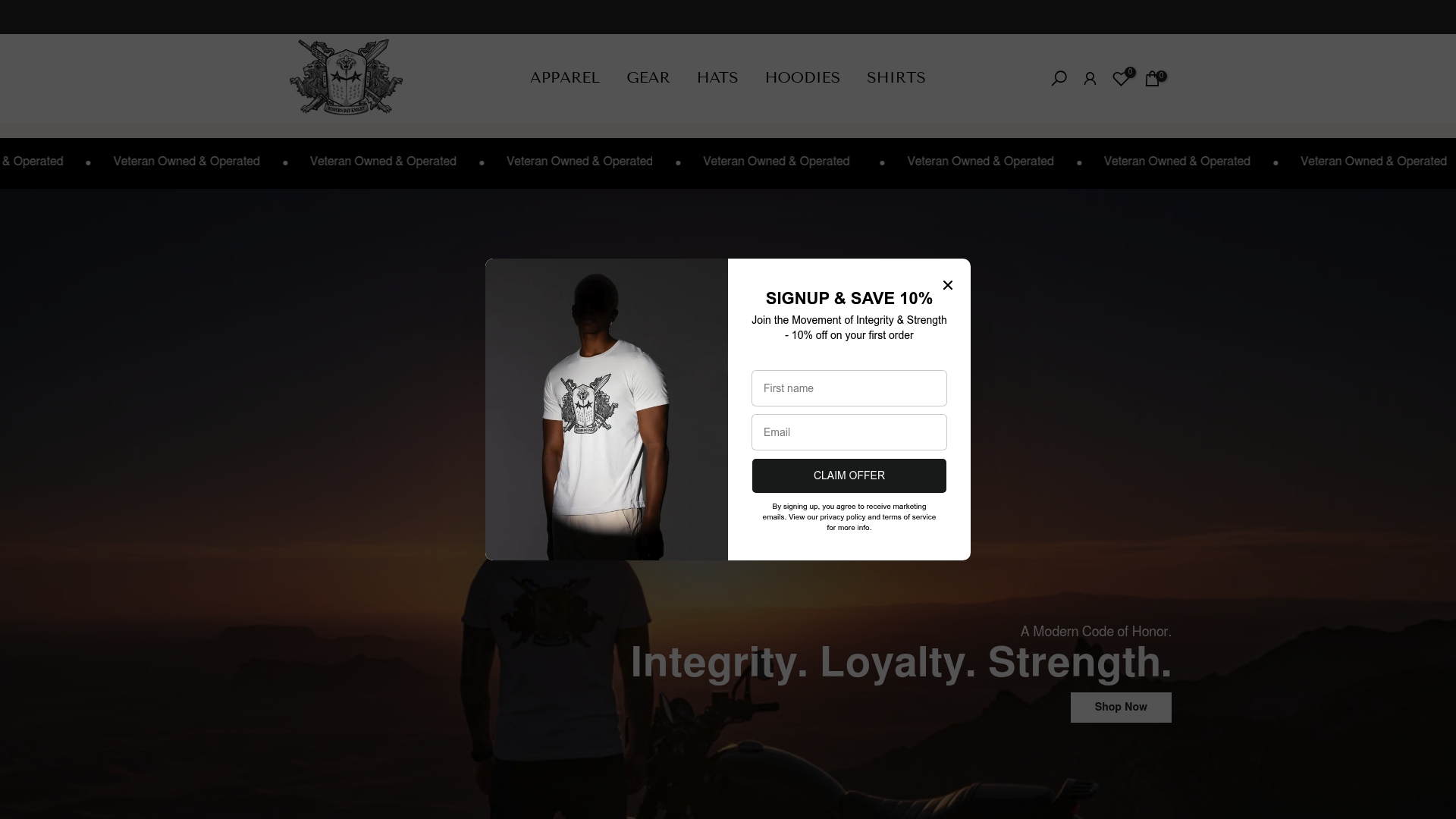
The Army Brat Hoodie fits anyone who grew up carrying loyalty they didn’t choose, and it wears well as a daily layer through cooler months. The Army Brat Tee offers the same family tribute in a lighter, everyday piece for warmer weather or under a jacket. The Old School Hoodie keeps things classic, pairing the emblem with straightforward styling for anyone who wants the code visible without noise.
Check the size chart before you order. Sizing runs true to standard measurements, and easy returns mean a mismatched fit is never the end of the story. Pick the piece that matches your story, and wear it as part of a community built around honor rather than trend.
Sources
FAQ
What does the skull symbol mean on veteran apparel?
On Modern Day Knight apparel, the skull represents integrity, loyalty, strength, and resilience, the core traits of the modern warrior ethos rather than a symbol tied to death or rebellion.
Is it disrespectful for a non-veteran to wear skull apparel?
No, as long as the design clearly signals support rather than claiming earned service, rank, or decorations you don’t hold.
What’s the difference between a morale skull patch and an official insignia?
A morale patch expresses unit culture or personal identity informally, while an official insignia represents a specific earned role or unit designation and shouldn’t be imitated by non-service members.
Why do veterans prefer skull imagery over other symbols?
Skull imagery works as compressed shorthand. A small graphic communicates toughness, sacrifice, and camaraderie instantly, without requiring a lengthy explanation among people who already share the context.
How do I pick the right skull-design piece for everyday wear?
Choose muted colors and simpler graphics like the Army Brat Tee for daily settings, and save bolder pieces like the Modern Day Knight Old School Hoodie for events where the message can be loud and clear.


