



OD stands for “olive drab,” a muted grayish-olive color historically used for military uniforms and equipment. It sits between green and brown, favoring neither, which is exactly why armies adopted it. The shade hides better than bright colors and wears honestly through mud, dust, and years of service.
TL;DR:
- OD green, also known as olive drab, varies significantly based on era, fabric, and dye lot, making exact color matching reliant on physical color swatches or Standard color references.
- Military adoption of OD green was driven by the need for concealment in combat, with standards established during World War I and expanded through World War II, solidifying its association with discipline and readiness.
- The color symbolizes resilience, unity, and subtle strength, with shades and terminology evolving over time but remaining rooted in functionality rather than aesthetics.
- Variations like Ranger green and FDE are distinct in tone and purpose, so precise identification is important for matching gear or apparel in professional or restoration contexts.
- Modern brands like Modern Day Knight incorporate OD green in purpose-driven apparel that reflects military values, emphasizing heritage and understated strength over fashion trends.
Table of Contents
- What Does “Olive Drab” Actually Mean?
- Military Origins: How OD Green Became a Standard
- Why OD Green Comes in So Many Shades
- What OD Green Symbolizes, Beyond the Uniform
- OD Green in Modern Gear, Apparel, and Design
- OD Green vs. Ranger Green, Coyote, and FDE
- What OD Green Means to Modern Day Knight
- Wear the Values Behind the Color
- Sources
- FAQ
What Does “Olive Drab” Actually Mean?
Olive drab is not one exact hex code. It’s a descriptive term for a color family, and dictionaries treat it that way. Merriam-Webster defines olive drab as a grayish olive color, while also recognizing it as the name of the fabric and uniforms made from that shade. Reference sources describe the same hue as a brownish-green, grayish-olive, or dull, fairly strong gray-green depending on the light and the material it’s printed on, a range documented on Wikipedia’s overview of olive as a color).
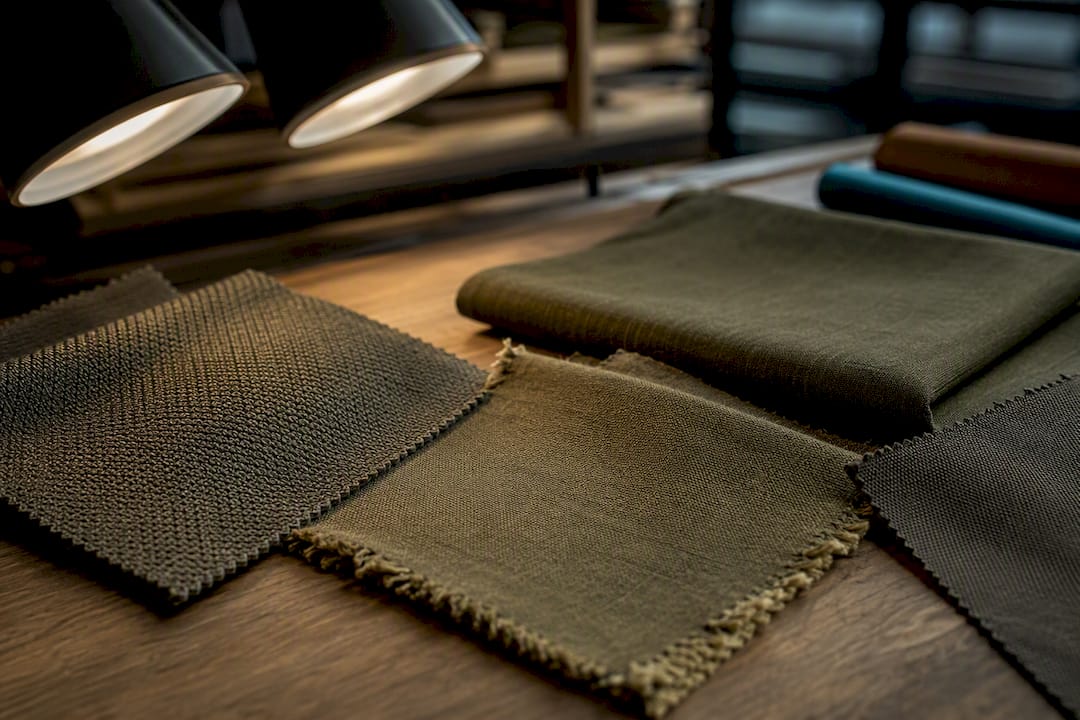
The “drab” half of the name carries its own story. The word traces back to the French term “drap,” meaning cloth, according to the Online Etymology Dictionary. Undyed or lightly processed cloth carried a dull, brownish-gray cast, and “drab” came to describe that flat, subdued tone long before it got paired with “olive.” Put the two words together and you get a name that literally means “olive colored cloth,” which explains why the term still shows up as both a color and a fabric reference.
A few clarifications matter here:
- “Olive drab,” “olive green,” and the shorthand “OD” get used interchangeably in casual conversation, but they aren’t always identical.
- Olive green tends to lean brighter and more saturated, closer to a ripe olive fruit.
- OD green (olive drab) usually reads flatter, grayer, and more subdued, tuned for camouflage rather than aesthetics.
- The “drab” in the name is doing real work. It signals dullness by design, not a lack of imagination in naming.
Military Origins: How OD Green Became a Standard
The switch to muted uniform colors didn’t happen because someone found olive drab attractive. It happened because bright uniforms were causing soldiers to get killed. Militaries watched fighters in vivid red, white, and blue coats get spotted and shot from long range during conflicts like the Anglo-Boer War, and that lesson traveled fast through the world’s armies, a shift covered in Chase Tactical’s history of the color.
The timeline unfolded roughly like this:
- Early 1900s: Armies begin phasing out ornamental colors in favor of subdued field tones suited to camouflage rather than parade-ground display.
- World War I: Olive drab becomes standard-issue for field uniforms among multiple nations, prioritizing concealment over ceremony.
- World War II: The U.S. military expands olive drab across uniforms, vehicles, and equipment, cementing it as the default field color.
- 1950s to 1980s: The U.S. Army catalogs the color under designations including OG-105 and OG-107, terms tied to specific fabric and dye specifications used through the Korean and Vietnam eras. Army confirms OD stands for olive drab and traces these catalog codes directly.
- Late 20th century onward: Manufacturing shifts, synthetic dyes, and new fabric blends nudge the exact shade in different directions, even as the name “OD green” stays constant.
That last point matters more than it sounds. Dye lots changed, cotton gave way to poly blends, and each shift altered how the color actually looked once light hit it. The name held steady. The pigment didn’t.
Why OD Green Comes in So Many Shades
Ask five people to picture “OD green” and you’ll likely get five slightly different colors in their heads, and none of them would be wrong. Historical labels like OD7, OG-105, and OG-107 don’t describe one fixed shade. They mark different eras, different fabrics, and different manufacturing runs, each producing its own version of “olive drab” depending on dye chemistry and cloth type, a variance documented across reference sources on olive as a color.
For anyone who needs precision, an actual reference standard exists. Federal Standard 34087 identifies a specific “Dark Olive Drab” used in military and industrial painting, and equipment restorers reference numbered Federal Standard color chips rather than guessing from memory. Whether you need that level of precision depends entirely on the project. Matching a vehicle restoration calls for the exact FS number. Buying a hoodie does not.
- OD7, OG-105, and OG-107 reflect specific eras and materials, not interchangeable synonyms for the same green.
- Federal Standard 34087 gives painters and restorers an exact “Dark Olive Drab” reference point.
- Photos and screens distort color constantly, so a hex code pulled from an image is a guess, not a match.
Pro Tip: If you’re trying to match OD green gear or paint exactly, skip the hex code entirely. Order a physical swatch or reference a Federal Standard chip. Screens and camera sensors shift green tones more than almost any other color family, and what looks right on your monitor can look completely off in person.
What OD Green Symbolizes, Beyond the Uniform
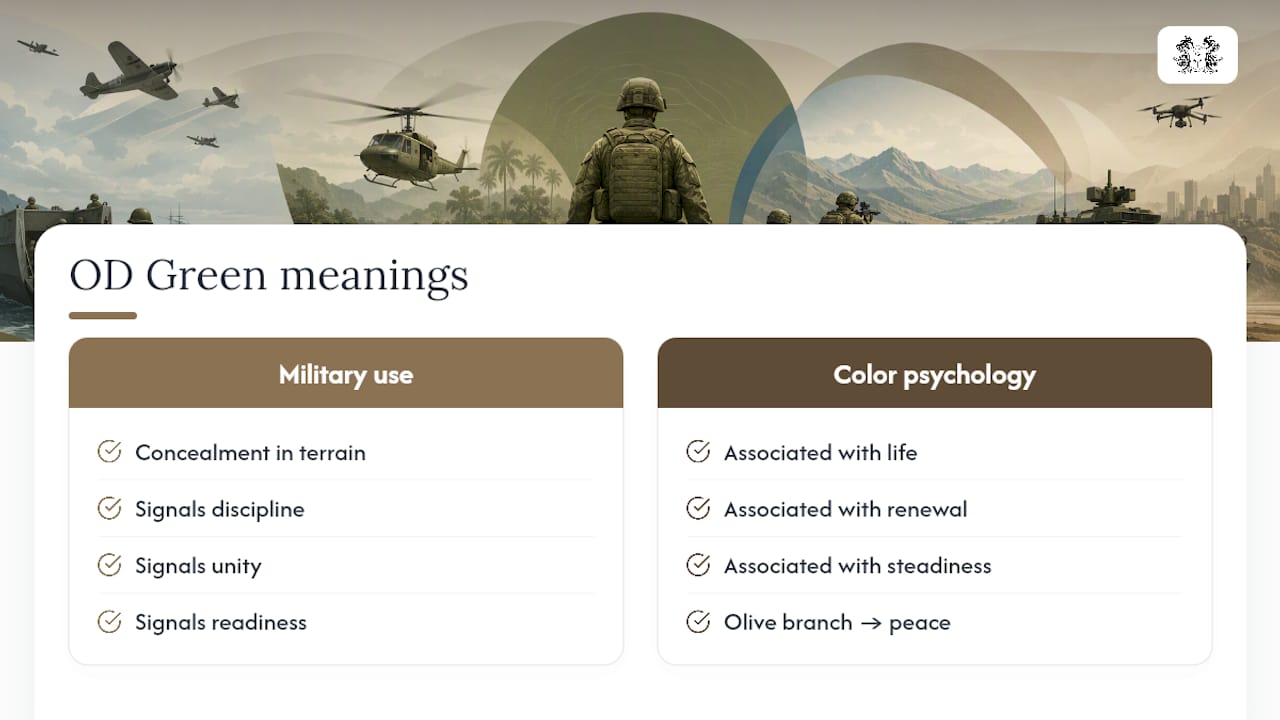
OD green earned its meaning through function first, symbolism second. Militaries chose it to disappear into terrain, not to make a statement, and that utilitarian purpose became the statement. Wearing OD green signals discipline, unity, and readiness. It says the wearer values substance over display.
Color psychology backs this up from a different angle. Green as a family is tied to associations with life, renewal, and steadiness, patterns explored in Verywell Mind’s breakdown of green in color psychology. Olive specifically carries an added layer through the olive branch, a symbol of peace stretching back thousands of years. That combination, resilience paired with an undertone of peace, gives OD green a rare double meaning: strength without aggression. On a jacket or a cap, that reads less like a fashion choice and more like a quiet statement of values.
OD Green in Modern Gear, Apparel, and Design
OD green never really left, a legacy well reflected in stories like “Shot, Stalked, & Stranded: Just Another Day for a Green Beret”. It shows up on tactical backpacks, streetwear jackets, work boots, and everyday accessories, and its staying power comes down to versatility. The color pairs with almost anything, reads as understated rather than flashy, and carries just enough history to feel intentional instead of trendy.
Styling it well isn’t complicated:
- Pair an OD green jacket or hoodie with neutral denim or black pants to let the color do the work.
- Use OD tees as a base layer under flannel or utility jackets for a grounded, functional look.
- Add an OD trucker hat or cap as the one accent piece in an otherwise muted outfit.
- Expect slight shade variation between fabric types and dye batches, the same way military manufacturers always did.
If you want a deeper look at building these outfits, practical styling examples for military-inspired pieces walk through combinations that avoid looking like a costume, and a guide on layering tactical casual pieces covers how to mix OD tones with civilian basics without overdoing it.
OD Green vs. Ranger Green, Coyote, and FDE
These names get used loosely, and that’s where confusion creeps in. Here’s the practical difference:
- OD green (olive drab): Grayish-olive, historically tied to standard-issue uniforms and gear.
- Ranger green: A deeper, denser green with less gray in it, common in more modern tactical apparel.
- Coyote and FDE (flat dark earth): Belong to the tan and brown family entirely, not green at all, despite sometimes getting grouped with “military colors” casually.
When precision matters, like ordering gear that needs to match existing equipment, use the specific name rather than a general “military green” label. When you’re just describing a vibe, the loose terms are fine. Know which situation you’re in before you commit to a word.
What OD Green Means to Modern Day Knight
OD green’s story is our story in miniature. The color exists because someone decided function matters more than flash, that what protects you matters more than what impresses people. That’s the same principle behind everything we build at Modern Day Knight.
We’re veteran-owned, and we didn’t pick that identity as a marketing angle. It shapes how we think about apparel. A piece of clothing can either be decoration or it can be a statement of what you stand for: integrity, loyalty, strength. OD green already carries that weight from a century of service. We just give people a way to wear it on purpose, not by accident.
— Modern Day Knight
Wear the Values Behind the Color
OD green earned its meaning through decades of service, not marketing. Modern Day Knight designs apparel with a purpose behind the color, not just a look.
Our Global Citizen Hoodie carries that same understated strength OD green has always represented, built for anyone who wants their clothing to say something true. If you’d rather make a statement about where you came from, the History Matters Hoodie does exactly that. And if you want the message without the extra layer, the Global Citizen Hat delivers the same values in a smaller package. The brand offers apparel for people who want their wardrobe to reflect their values. Browse the full collection and find the piece that matches your code.
Sources
FAQ
What is OD green color?
OD green, short for olive drab, is a muted grayish-olive or greenish-brown color historically used for military uniforms and equipment, as confirmed by Army.mil’s history of the term.
Are OD green and olive green the same?
Not exactly. Olive green tends to be brighter and more saturated, while OD green (olive drab) reads flatter and grayer, since it was designed for camouflage rather than appearance.
What’s the difference between OD green and Ranger green?
OD green is grayish-olive and tied to older, standard-issue uniforms, while Ranger green is a deeper, denser green used in more modern tactical gear with less gray undertone.
Which color is better, FDE or OD green?
Neither is objectively better. FDE (flat dark earth) is a tan and brown tone suited to arid or desert environments, while OD green suits temperate and wooded terrain, so the right choice depends on the setting and the look you want.
Does Modern Day Knight sell OD green apparel?
Yes. Modern Day Knight offers hoodies, tees, and hats in values-driven designs, including options in olive drab and related tones, available through the full collection.


