



Clothing is one of the most direct ways military community gets built, sustained, and recognized. A unit tee at a veteran meetup signals shared history before a single word is spoken. A morale patch on a range bag opens a conversation that lasts an hour. A commemorative hoodie gifted at a transition ceremony tells a service member: you still belong to something. The Australian Army Journal frames uniforms as an “outer expression” of ideology that creates group identity and reduces internal friction. The Havok Journal adds veteran testimony: patches and emblems preserve the warrior spirit and sustain connection to former teammates long after service ends. Moderndayknightco is built exactly on that truth.
Three quick actions that work right now:
- Wear a unit-inspired tee to your next veteran meetup to signal shared identity without saying a word
- Use a morale patch on your gear to spark conversations and invite others into your story
- Offer commemorative hoodies at transition events to give separating service members a tangible anchor to the community they are leaving
Table of Contents
- How does clothing signal membership and build trust in military groups?
- What types of clothing and items create the strongest military community?
- Why does wearing shared clothing create lasting psychological bonds?
- How can organizations use clothing to strengthen military community?
- What are the policy and ethical limits of military-themed apparel?
- How Moderndayknightco models values-driven community apparel
- Key Takeaways
- Clothing as community is a choice, not a coincidence
- Wear what you stand for with Moderndayknightco
- Useful sources and further reading
How does clothing signal membership and build trust in military groups?
Clothing works as a community signal because it is visible, repeatable, and immediate. Before rank is spoken or a handshake exchanged, a uniform, patch, or unit shirt communicates: I have been where you have been. Military OneSource confirms that uniforms create consistency, camaraderie, and easy identification of rank and leadership. These are not soft benefits. They are the practical architecture of cohesion.
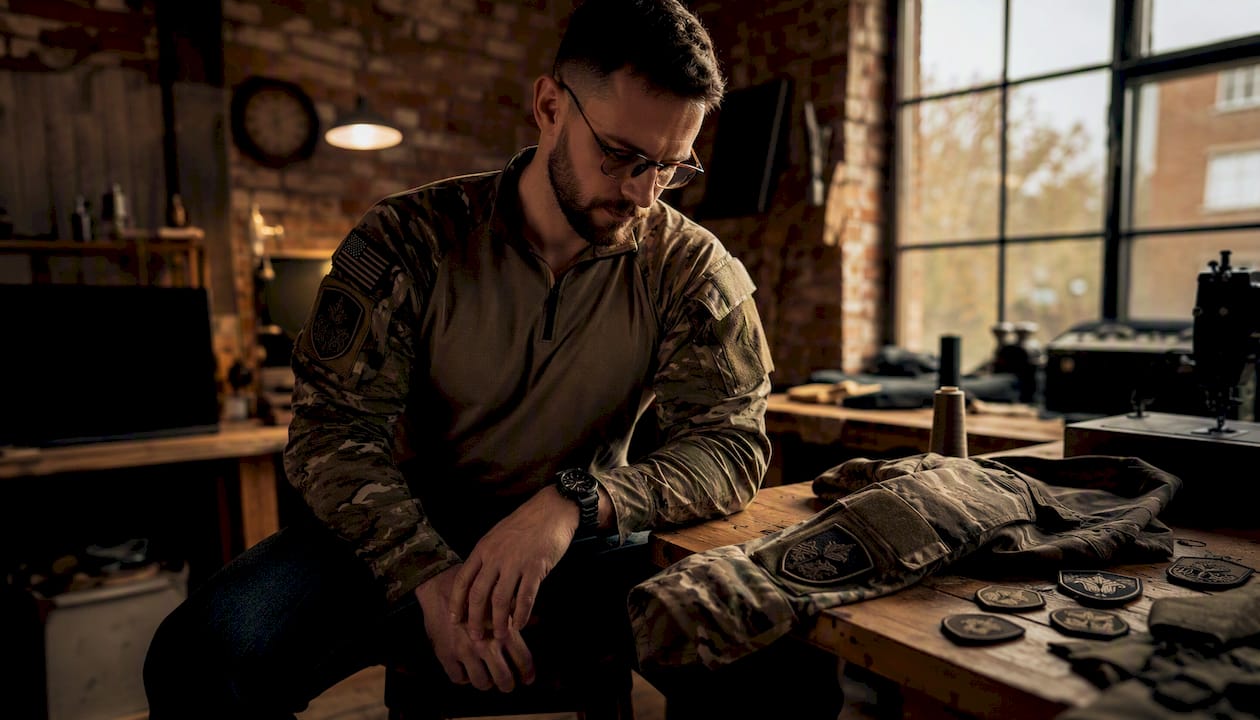
The trust dimension runs deeper than recognition. From the Green Notebook describes uniform adherence as a “visible promise of trust,” where appearance signals discipline, care, and readiness to teammates. When someone shows up in a well-maintained uniform or a values-driven piece of apparel, they are making a non-verbal commitment to the group’s standards.
Ritualized behaviors reinforce these signals. Trading patches, repairing insignia, and wearing unit shirts to civilian events are all acts that keep symbols alive and meaningful. Each repetition deepens the bond.
What types of clothing and items create the strongest military community?
Not all apparel carries equal weight. The item category, the context, and the level of personalization each shape how much community a garment can generate.
| Item Category | Visibility | Personalization | Formality | Best Distribution Channel |
|---|---|---|---|---|
| Official uniform | High | Low | High | Issued/institutional |
| Unit insignia | High | Low | High | Issued/institutional |
| Morale patches | Medium | High | Low | Trading events, online |
| Custom tees/hoodies | Medium | High | Low | Events, gifting, e-commerce |
| Commemorative garments | Medium | Medium | Medium | Transition events, reunions |
| Stickers and accessories | Low | High | Low | Online, swap events |
Official uniforms and unit insignia carry the highest institutional authority. They signal rank, branch, and service history at a glance. Off-base, their power shifts: a veteran wearing a unit shirt at a civilian gathering is making a deliberate choice to carry that identity into a new space.
Morale patches occupy a unique position. DVIDS documents how patch trading rituals turn brief encounters into shared physical history, converting a short interaction into a durable social memory. Custom tees and hoodies extend that logic to larger groups, especially during transitions when official uniforms are no longer worn daily.
- Commemorative garments work best at reunions, memorials, and transition ceremonies where collective memory is already activated
- Stickers and accessories lower the barrier to entry for supporters who want to signal affiliation without full apparel commitment
- Custom hoodies are the most versatile off-base item: warm, visible, and personal enough to carry a message
Why does wearing shared clothing create lasting psychological bonds?
The mechanism is social identity theory in action. When individuals share a visible marker, they categorize themselves as part of a group, and that categorization reduces the psychological distance between strangers. The Australian Army Journal’s analysis frames the uniform as a psychological tool that lowers personal differences and redistributes individual identity into the collective. That redistribution is what makes a room full of strangers feel like a unit.
For veterans specifically, clothing also functions as a memory anchor. The Havok Journal notes that emblems and clothing items sustain a sense of team membership in memory and help reduce isolation after service. A patch from a deployed unit is not just decoration. It is a portable piece of shared history that says: this happened, and we were there together.
Storytelling is the third mechanism. Visible insignia invite questions, and questions open stories. Those stories build trust faster than almost any other social interaction. Military Dispatches notes that uniforms promote unity, pride, and group cohesion in both routine and combat settings. The same dynamic carries into civilian life when veterans wear values-driven apparel.
Pro Tip: When designing community apparel, leave deliberate space for personal expression alongside shared symbols. A unit name on the chest paired with a blank sleeve for a personal morale patch gives wearers both group identity and individual voice.
The same principle applies to visible identity through clothing in faith communities, where shared markers create belonging across contexts.
How can organizations use clothing to strengthen military community?
A clear process prevents wasted effort and budget.
Design first. Use symbols that are readable at distance. Avoid overcrowding a design with text. Respect the distinction between official insignia (mandatory, hierarchical, regulated) and morale-style graphics (custom, unofficial, expressive). When in doubt, lean toward values-based language and original artwork rather than replicating protected military seals.
Distribute with intention. Gifting at transition ceremonies creates the strongest emotional anchor. Sales with proceeds directed to veteran causes build community credibility. Patch swap events, modeled on the trading rituals documented by DVIDS, accelerate connection between people who have never met. Pair physical distribution with a hashtag or community board so the story travels online.
Measure what matters. Track event attendance before and after introducing branded apparel. Watch repeat purchaser rates and membership referrals. These numbers tell you whether the clothing is doing community work or just filling a closet.
What are the policy and ethical limits of military-themed apparel?
Boundaries exist, and respecting them is part of honoring the community you are trying to build.
- Impersonation risk: Wearing official military uniforms or rank insignia without authorization can violate federal law. The ICRC’s analysis of military uniforms and the law of war confirms that international humanitarian law and military regulations prohibit unlawful wearing of uniforms and insignia.
- Base-specific rules: Active-duty service members face appearance regulations that govern what can be worn on and off base. Organizations producing apparel for active-duty audiences should consult current branch regulations before distributing.
- Trauma sensitivity: Not every veteran wants their service memorialized on a garment. Always offer opt-in rather than opt-out when creating commemorative items. Ask before you print a name, unit, or deployment on anything.
- Exploitative fundraising: Apparel sold “for veterans” must direct proceeds transparently. Vague claims erode trust faster than no claim at all.
Label products clearly. Distinguish values-driven civilian apparel from official military dress. Use respectful design language that acknowledges the weight of the symbols without appropriating protected insignia.
How Moderndayknightco models values-driven community apparel
Moderndayknightco is veteran-owned and built around a single conviction: clothing should be a statement of who you are, not just what you wear. Every product in the line, from graphic tees to signature hoodies, carries messaging rooted in integrity, loyalty, and strength. That is not marketing language. It is the operating code.
| Product Type | Values Message | Community Use Case |
|---|---|---|
| Values hoodie | Integrity, loyalty, strength | Gifting at transition events, reunions |
| Graphic tee | Warrior ethos, honor | Meetups, everyday wear, conversation starter |
| Sticker/accessory | Identity signal | Gear, vehicles, community boards |
The brand’s approach to design respects the line between official insignia and original expression. Moderndayknightco creates warrior culture-inspired apparel that lets veterans carry their values into civilian life without impersonating rank or branch. Limited runs create scarcity and shared ownership. Community events and gifting programs turn products into rituals.
Key Takeaways
Clothing builds military community because it makes shared values visible, repeatable, and portable across every stage of a service member’s life.
| Point | Details |
|---|---|
| Clothing signals identity instantly | A unit shirt or morale patch communicates shared history before a word is spoken. |
| Uniforms reduce internal friction | Academic research shows uniforms redistribute individual identity into the group, lowering barriers between members. |
| Patches sustain belonging after service | Veterans report that emblems and apparel items reduce isolation by anchoring team membership in memory. |
| Intentional distribution amplifies impact | Gifting at transition events and patch swap rituals accelerate community bonds more than passive sales alone. |
| Moderndayknightco | Veteran-owned brand offering values-driven hoodies, tees, and accessories designed to honor service and build connection. |
Clothing as community is a choice, not a coincidence
Here is what most people miss about military apparel: the garment itself is neutral. A hoodie is cotton and thread. What makes it a community signal is the intention behind it. When a brand, a unit, or an individual chooses to put a value on a chest, they are making a commitment. They are saying: this is what we stand for, and we are willing to be seen standing for it.
The brands and organizations that get this right do not treat apparel as merchandise. They treat it as a ritual object. They think about who will wear it, when, and what story it will tell. They respect the weight of the symbols they use. And they understand that the real product is not the hoodie. It is the moment two veterans recognize each other across a room because they are wearing the same thing.
That is the work. Clothing does not build community by accident. It builds community because someone decided it should.
Wear what you stand for with Moderndayknightco
Values-driven apparel that honors service does not require a compromise between quality and meaning. The Global Citizen Hoodie and the Accountability Hoodie are built for veterans and supporters who want clothing that carries a code, not just a logo. Both are designed for gifting at transition events, unit reunions, and everyday wear that keeps the warrior ethos visible.
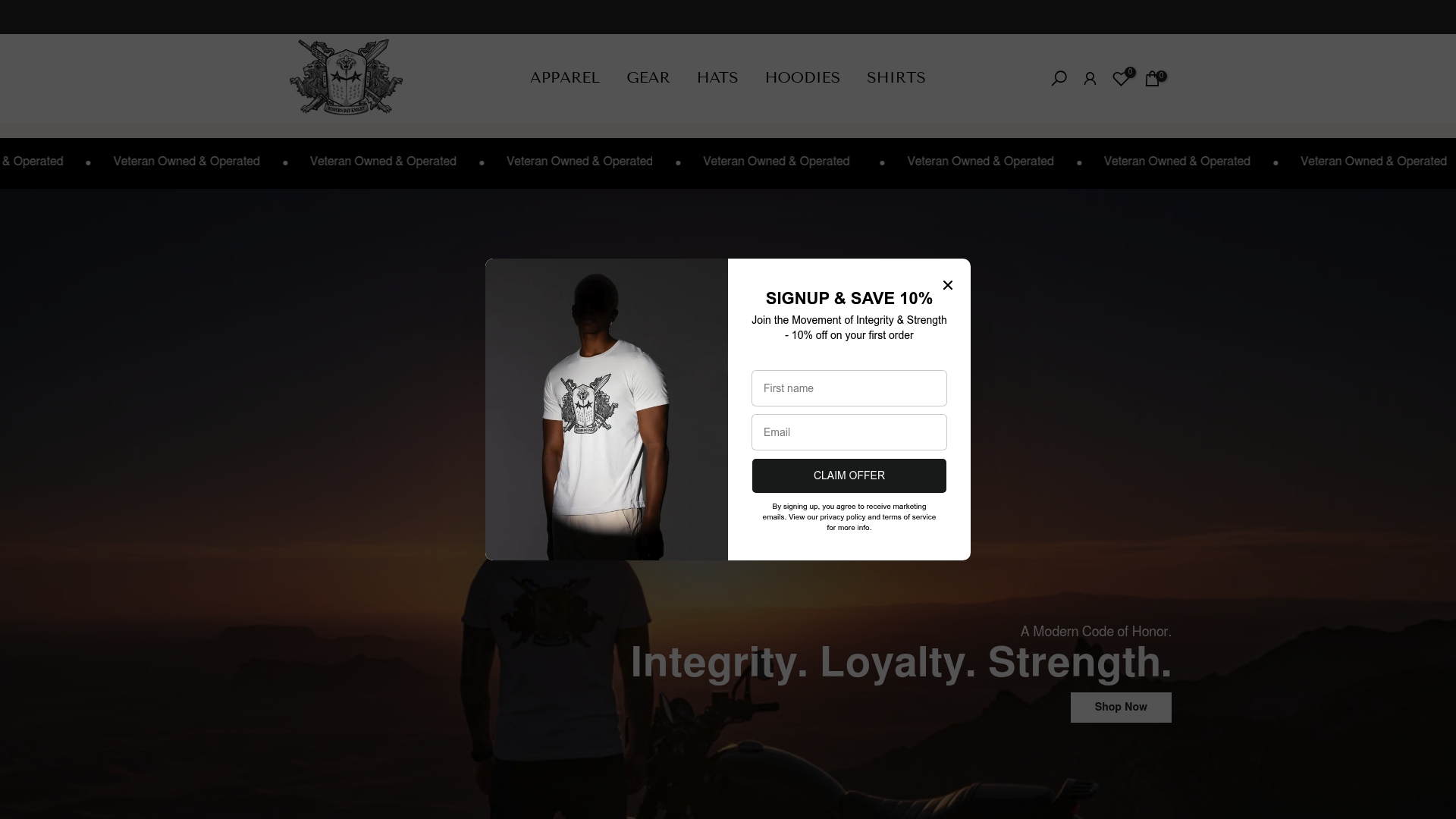
Moderndayknightco’s full apparel collection includes tees, hoodies, and accessories built around integrity, loyalty, and strength. Bulk gifting options are available for organizations running transition programs or veteran community events. Browse the collection and wear what you believe in.
Useful sources and further reading
- Military uniforms and the law of war — ICRC/IRRC: International humanitarian law guidance on lawful and unlawful wearing of military uniforms and insignia.
- The Power of a Patch — The Havok Journal: Veteran testimony on how patches and emblems sustain connection and reduce isolation after service.
- Military Uniforms Questions & Answers — Military OneSource: Practical guidance on uniform functions, camaraderie, and rank identification for service members and families.
- Patch trading and social rituals — DVIDS: Documentation of patch trading as a social mechanism that converts brief encounters into shared physical history.
For legal guidance on insignia use, consult your branch’s current uniform regulations and the ICRC resource above. For veteran support programs that pair apparel with community services, contact your local Veterans Service Organization.


