



Most “Viking runes meanings” guides show you the 24-rune Elder Futhark, but actual Vikings wrote with the leaner, 16-rune Younger Futhark. That’s not a contradiction. It’s a timeline. Rune names and their short meanings come from medieval rune poems and stone inscriptions, while the deeper symbolic layers you see today are largely modern additions. Use the Elder Futhark list below for general meanings, and check the Younger Futhark section if historical accuracy for the Viking Age matters to you.
TL;DR:
- The Elder Futhark has 24 runes used mainly for divination and symbolism, while the Younger Futhark has 16 runes, used during the Viking Age for practical writing.
- Most modern rune interpretations are based on medieval rune poems and inscriptions, not on a continuous ancient tradition, which limits historical accuracy.
- Confusing the two systems or relying on “reversed” rune meanings can lead to misinterpretation and misapplication, especially for tattoos or artifacts.
- Authentic Viking runes are those actually used during the Viking Age, with the 16 Younger Futhark characters, not the expanded Elder Futhark alphabet.
- When choosing runic symbols, verify the alphabet, confirm the transliteration, and avoid symbols associated with extremist groups or modern misappropriations.
Table of Contents
- Viking Runes Meanings: Which Alphabet Should You Use?
- The 24 Elder Futhark Runes and Their Meanings
- What Actually Changed With Younger Futhark
- How We Actually Know What Runes Mean
- Getting Runic Symbols Right (And Avoiding Common Mistakes)
- Rune Symbolism and What It Says About Character
- Why Getting the History Right Matters
- Shop With Purpose: Rune-Inspired Apparel
- Sources
- FAQ
Viking Runes Meanings: Which Alphabet Should You Use?
The alphabet you need depends on what you’re doing with it. Runologist Stephen Flowers and other scholars distinguish between two major systems, and mixing them up is the single biggest source of confusion in rune interpretation.
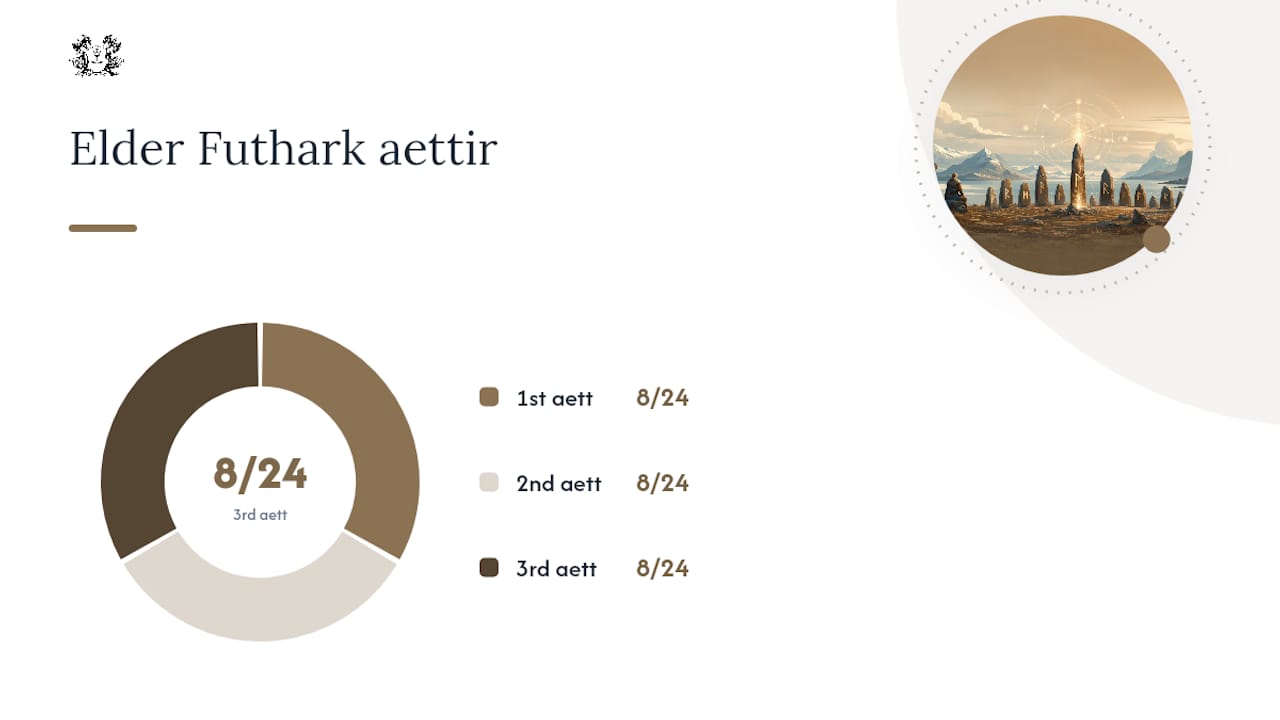
Elder Futhark ran from roughly the 2nd to the 8th century. It has 24 characters, split into three groups of eight called aettir, and it’s the alphabet nearly every modern meaning guide, tattoo shop, and divination deck actually uses.
Younger Futhark took over during the Viking Age itself, starting around the 9th century, and trimmed the alphabet down to just 16 runes.
Here’s how to pick:
- Want general symbolic meanings or a divination set? Use Elder Futhark. It’s richer, better documented in popular sources, and what most rune poems reference.
- Want historical accuracy for something set specifically in the Viking Age (roughly 793 to 1066)? Use Younger Futhark.
- Getting a tattoo or engraving a gift? Decide first whether you want “authentic to the Viking Age” or “broadly Norse,” because the letterforms differ.
The 24 Elder Futhark Runes and Their Meanings
Each entry below reflects meanings drawn from rune poems and reference scholarship, with a short note on how the symbol gets used today.
Fehu (ᚠ) means wealth or cattle, the ancient measure of a person’s worth. Modern readings treat it as a sign of earned prosperity and abundance.
Uruz (ᚢ) represents the wild ox, standing for raw physical strength and vitality. It’s one of the most requested runes for strength and protection designs today.
Thurisaz (ᚦ) points to a thorn or giant, carrying a sense of controlled aggression and defense. Some rune poems frame it as dangerous but necessary force.
Ansuz (ᚨ) is tied to Odin and the power of speech, wisdom, and divine communication.
Raidho (ᚱ) means “ride” or journey, symbolizing travel, movement, and the right order of things.
Kenaz (ᚲ) represents a torch or controlled fire, associated with knowledge, creativity, and illumination.
Gebo (ᚷ) simply means “gift,” standing for generosity, partnership, and balanced exchange.
Wunjo (ᚹ) signals joy and harmony, often read as a reward for enduring hardship.
Hagalaz (ᚺ) is hail, representing disruptive natural force and uncontrollable change.
Nauthiz (ᚾ) means need or constraint, tied to hardship that forces growth.
Isa (ᛁ) is ice: stillness, a pause, or a challenge that must be waited out rather than fought.
Jera (ᛃ) means harvest or a full year’s cycle, symbolizing reward that comes through patience.
Eihwaz (ᛇ) is the yew tree, connected to endurance, death, and rebirth in rune poem tradition.
Perthro (ᛈ) remains one of the most debated runes; its meaning is uncertain in the sources but often linked to fate, chance, or hidden knowledge.
Algiz (ᛉ) is widely read as protection and defense, frequently paired with elk or a raised hand warding off harm. It’s one of the most common choices for Norse symbols of strength.
Sowilo (ᛋ) is the sun, representing guidance, success, and life force.
Tiwaz (ᛏ) honors the god Tyr and stands for justice, honor, and self-sacrifice for a greater cause.
Berkano (ᛒ) relates to the birch tree and symbolizes growth, fertility, and new beginnings.
Ehwaz (ᛖ) means horse, representing partnership, trust, and steady progress.
Mannaz (ᛗ) stands for humankind, community, and the self in relation to others.
Laguz (ᛚ) is water, tied to intuition, emotion, and the unknown depths of the psyche.
Ingwaz (ᛜ) connects to the god Freyr and represents fertility, internal growth, and potential energy.
Dagaz (ᛞ) means “day,” symbolizing breakthrough, awakening, and transformation from darkness to light.
Othala (ᛟ) represents ancestral property and heritage, tied to home, legacy, and inherited values.
Reliable attestation for these glosses comes primarily from rune poem translations recorded in medieval Scandinavian and Anglo-Saxon manuscripts, not from a single unbroken oral tradition.
What Actually Changed With Younger Futhark
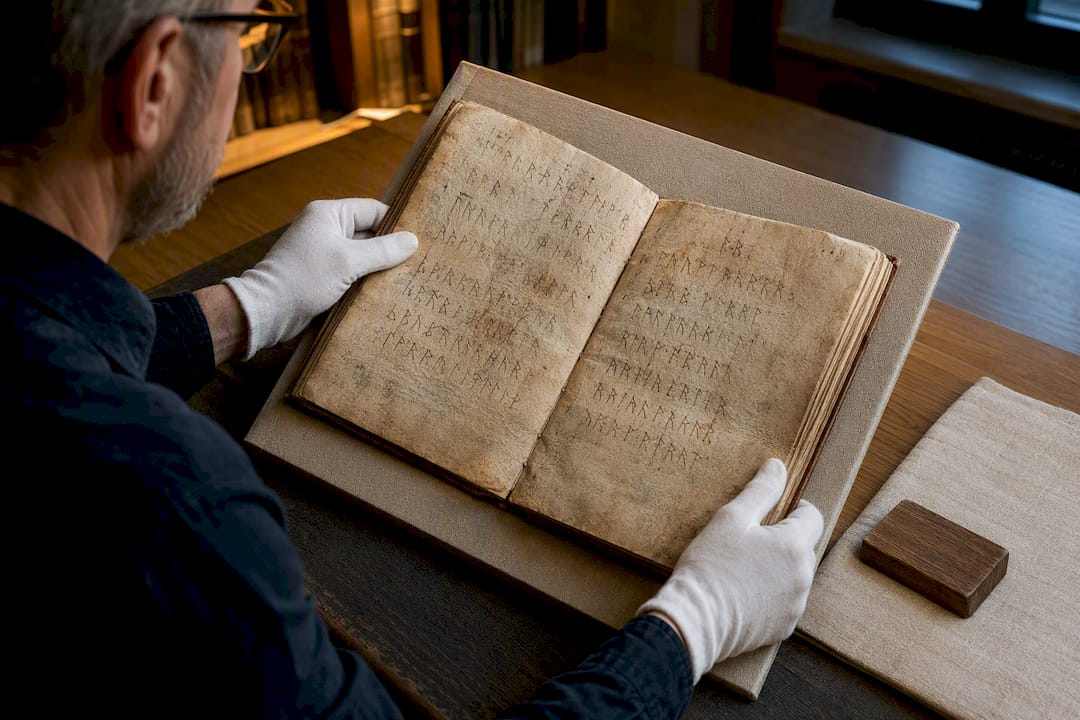
The Viking Age didn’t add complexity to the writing system. It stripped it down. Norse speakers reduced 24 Elder Futhark characters to just 16 in the Younger Futhark, even though their spoken language had grown more complex, not less.
That reduction forced multiple sounds to share single runes. A few consequences worth knowing:
- The same rune stood for both “k” and “g” sounds, so readers relied on context to know which was meant.
- Vowel distinctions collapsed too, meaning one symbol could represent several vowel sounds depending on the word.
- Museum sources note that Younger Futhark runes functioned as everyday phonetic writing on the Viking Ship Museum’s education pages, used for practical notes, not just ceremonial carving.
The biggest chart error you’ll find online: sites that label Elder Futhark symbols as “authentic Viking runes.” Vikings themselves used the 16-character set, and that mismatch is worth checking before you trust any chart.
How We Actually Know What Runes Mean
Three types of evidence support what you just read, and each has real limits.
Rune poems are the backbone. Old English, Old Norwegian, and Old Icelandic rune poems record names and short verse-glosses for each character, and they’re the closest thing to a primary dictionary that survives. Runestones and carved objects supply direct evidence too, showing runes used for memorials, ownership marks, and short messages, though inscriptions are often too brief to reveal deeper symbolism.
Mythic sources add context rather than definition. The Hávamál describes Odin hanging on the World Tree Yggdrasil to win knowledge of the runes, a story that explains their sacred status without spelling out individual meanings.
- Rune poems: names plus short glosses, the strongest historical evidence
- Runestones: real usage, but limited context
- Sagas and mythology: cultural weight, not literal dictionaries
- Modern divination: 20th century onward, built on the above but expanded well past it
Getting Runic Symbols Right (And Avoiding Common Mistakes)
A few mistakes show up constantly, and they’re easy to avoid once you know what to check.
- Using an Elder Futhark chart labeled “Viking runes.” Fine for symbolic meaning, misleading for historical claims about the Viking Age itself.
- Believing in “reversed” or “merkstave” rune meanings. This idea comes from modern tarot influence, not medieval sources.
- Assuming every popular symbol is ancient. The Ægishjálmr, or Helm of Awe, appears in sagas and later magical texts, but its exact medieval meaning and appearance are debated among scholars.
Before buying or inking anything runic, confirm the alphabet, verify the transliteration, and check that the symbol isn’t among those co-opted by extremist groups in recent decades. Context matters as much as accuracy.
Pro Tip: Search the specific rune name alongside “rune poem” before you commit to ink or engraving. If a source can’t point you to a medieval attestation, treat the meaning as modern interpretation, not historical fact.
Rune Symbolism and What It Says About Character
Tiwaz stands for justice and sacrifice for something greater than yourself. Fehu speaks to earned prosperity. Algiz represents protection and standing your ground. These aren’t just design elements. They reflect values like loyalty, integrity, and strength that such apparel brands often emphasize. Before buying rune-themed apparel, confirm which alphabet the design pulls from and whether the meaning behind it holds up, the same way you’d want your own loyalty symbols to hold up.
Why Getting the History Right Matters
Symbols carry weight. When we put a rune on a shirt, we owe it to the wearer to get the history straight, not just the aesthetic. Choose meaning over trend every time. If you want more on how Norse imagery translates into modern apparel, our piece on warrior spirit in everyday apparel goes deeper.
— Modern Day Knight
Shop With Purpose: Rune-Inspired Apparel
Moderndayknightco builds apparel around meaning, not just imagery, so you’re not left guessing whether a symbol on your chest actually stands for something. Certain apparel items carry values-driven messaging built for people who grew up in, or stand behind, military family life. These pieces often reflect a code of honor that runs through Norse symbolism: loyalty, resilience, strength earned rather than claimed.
Before you buy any rune-themed piece anywhere, run it through the checklist above: right alphabet, accurate transliteration, no misused symbols. Browse the Army Brat Hoodie or the Army Brat Tee product pages for full details, or check the full apparel collection if you’re after more options. For readers who also care about authenticity in Nordic-style home goods, this Nordic sheepskin buying guide covers similar ground on getting the details right.
Sources
- Younger Futhark — Wikipedia
- The Meanings of the Runes — Norse Mythology for Smart People
- Runes — Viking Ship Museum
- Rune Meanings: All 24 Elder Futhark Runes | Ask the Runes
FAQ
What do the different Viking runes mean?
Each rune carries a name and a core concept, from Fehu (wealth) to Algiz (protection) to Tiwaz (justice and sacrifice), drawn primarily from medieval rune poems rather than a single ancient dictionary.
What are the most powerful Viking runes?
Algiz, Tiwaz, and Thurisaz are the runes most often cited for strength and protection, though “powerful” is a modern framing rather than a medieval ranking system.
How do I find my Viking rune?
There’s no historical practice of a personal “birth rune.” Most people instead choose the rune whose attested meaning, like Uruz for strength or Ansuz for wisdom, matches the quality they want to represent.
How do you say “I love you” in Viking runes?
Runes are phonetic symbols, not a direct translation tool, so “I love you” would need to be transliterated sound by sound from Old Norse, not pulled from a single symbol or glyph.


