



A loyalty symbol is a visible emblem that signals chosen, continuing commitment. Most people picture an unbroken ring or infinity loop, clasped hands, a faithful dog, an anchor, or the Claddagh’s crowned heart. These images show up in jewelry, tattoos, and art because they compress a promise into something you can see and wear.
TL;DR:
- Loyalty symbols emphasize continuity and reciprocal commitment, with their meaning heavily influenced by cultural context and specific usage.
- The Claddagh ring uniquely combines love, friendship, and loyalty into one design, with wearing conventions indicating relationship status or commitment level.
- Modern tattoos and apparel serve as flexible, non-permanent loyalty signals, with placement and design choices affecting the message conveyed.
- The strength of a loyalty symbol lies in its meaningful story and personal relevance, not in its age, permanence, or cultural origin.
Table of Contents
- Historical Symbols of Loyalty Across Cultures
- The Claddagh and Other Named Jewelry Tokens
- Loyalty Symbols in Tattoos, Art, and Apparel
- How to Choose a Loyalty Symbol That Fits You
- Why Modern Day Knight Writes About Loyalty Symbols
- The Psychology Behind Why These Symbols Stick
- How Loyalty Symbols Shift Across Cultures and Faiths
- Loyalty Symbols in Contemporary Life
- Common Myths About Loyalty Symbols You Should Ignore
- Our Take: Meaning Beats Permanence Every Time
- Wear the Values, Not Just the Symbol
- Sources
Historical Symbols of Loyalty Across Cultures
Loyalty symbols survive across centuries because they encode a repeatable act, not a one-time gesture. An unbroken circle doesn’t just look nice on a finger. It visually refuses to have a start or an end, which is exactly the point.
The eternity ring, built around an unbroken loop of stones or metal, borrows that same logic for betrothal and memorial jewelry. So does the modern infinity symbol, which shows up everywhere from wedding bands to tattoo sketches because it makes an abstract idea (endless commitment) into a shape a jeweler can actually cut.
Clasped hands carry a longer paper trail. The fede motif, Italian for “faith,” traces back through medieval rings straight to Roman betrothal customs, where a handshake carved in metal stood in for a legal bond. Gimmel rings took the idea further, splitting into two or three interlocking bands that only formed a complete picture when joined, a literal design for two lives fitting together.
Dogs earned their symbolic role the hard way, through centuries of actual behavior. Western art frequently uses the dog to personify fidelity), placing them in wedding portraits and on tomb sculptures to mark marital or feudal loyalty. Jan van Eyck’s Arnolfini Portrait is the textbook example, a small dog sitting at the couple’s feet as a quiet witness to their vows. The connection runs deep enough that the Latin root ficus, meaning faithful, gave us both the word “fidelity” and the classic dog name Fido.
Sailors gave the world the anchor as a loyalty symbol for a practical reason: it’s the one piece of gear that keeps a ship from drifting when conditions turn hostile. That’s why the anchor reads differently than a heart. It represents chosen resistance, staying put under strain, according to archetypal research on symbolic meaning.
Common threads run through these forms:
- Rings and knots without visible ends, signaling continuity
- Clasped hands, signaling reciprocal agreement
- Dogs and anchors, signaling active endurance rather than passive feeling
- Paired birds like turtle doves and swans, signaling a bonded pair that mates for life
The survey of loyalty symbolism from MyMythos notes that these motifs appear from Roman sarcophagi to modern wedding tokens for the same reason: they emphasize reciprocity and resistance to separation, not just affection.
The Claddagh and Other Named Jewelry Tokens
No single object explains loyalty symbolism better than the Claddagh ring. Named for the fishing village near Galway, Ireland, where it originated, the ring packs three distinct meanings into one design: a heart for love, hands for friendship, and a crown for loyalty, according to the Claddagh ring’s traditional description.
The wearing convention matters as much as the design itself:
- Worn on the right hand with the heart facing outward means the wearer is single
- Worn on the right hand with the heart facing inward means the wearer has a partner
- Worn on the left hand with the heart facing inward signifies a committed or lifelong relationship
That layered structure is part of why the Claddagh has lasted as a family heirloom rather than a passing trend. A ring with three meanings gives a family more reasons to keep passing it down than a ring with one.
Other jewelry traditions deserve a mention. Posy rings carried short engraved verses, hidden messages of devotion meant to be read only by the wearer. Lockets held a portrait, a lock of hair, or a keepsake close to the body. Myrtle and rosemary, worn or woven into wedding and funeral wreaths, marked constancy and remembrance in ceremonial settings tied to fidelity symbolism. Each token does a slightly different job: engagement, friendship, or memory.
Loyalty Symbols in Tattoos, Art, and Apparel
Tattoos turn loyalty symbols into something permanent by design, which changes how people choose them. Modern tattoo practice favors a short list of motifs precisely because they read clearly at a glance and carry centuries of established meaning.
- Infinity loop. The most common choice for couples, siblings, or lifelong friendships. It says “no end” without needing a caption.
- Anchor. Popular with veterans and sailors, and increasingly with anyone who wants to signal steadiness through hard periods rather than easy affection.
- Wolf or dog figures. Chosen for pack loyalty and protective instinct, often paired with family names or a small group of matching tattoos.
- Matching halves. Two people each tattoo one half of a design, a heart, a puzzle piece, a broken coin pattern, so the image only completes when the pair stands together.
- Roman numerals. Dates rendered in numerals let someone mark a specific commitment (a wedding day, an anniversary, a discharge date) without spelling out a name in ink.
Placement changes the message too. A small anchor on the wrist reads as personal and private. The same anchor across the ribs or back reads as a bigger, more public statement. According to tattoo artists who work with loyalty motifs, the strongest designs pair a familiar symbol with a personal detail, a date, a coordinate, an initial, rather than relying on the symbol alone.
Apparel and keepsakes simplify these same icons for group signaling. A printed anchor or crest on a hoodie doesn’t need the permanence of a tattoo to communicate the same values to a room full of strangers.
Pro Tip: Artists routinely advise against tattooing someone’s actual name. Relationships change even when loyalty as a value doesn’t, so a symbol tends to age better than a name ever will.
How to Choose a Loyalty Symbol That Fits You
Start with the person or principle you’re actually pledging to, not the design you saw first. A symbol chosen because it looked good on someone else’s arm rarely carries the same weight once the excitement fades.
Ask yourself what story sits behind the symbol before you commit to it anywhere permanent. An anchor means something different to a Navy veteran than it does to someone who just likes boats. Origin matters, and borrowing a culturally specific symbol like the Claddagh without understanding its Irish roots risks flattening a heritage marker into a fashion accessory.
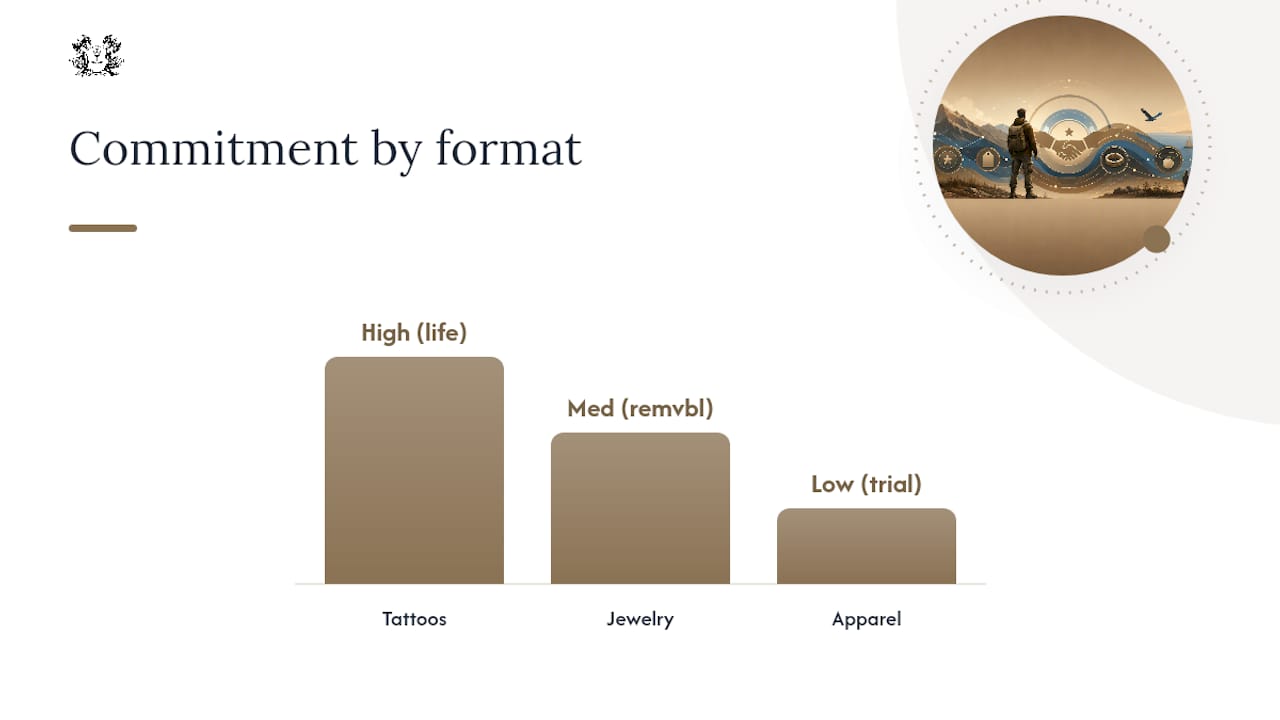
Permanence is the real decision point:
- Tattoos commit you to the symbol for life, which works best when the underlying value (not just the relationship) is unlikely to change.
- Jewelry offers a middle ground: durable, removable, and appropriate for professional settings where visible ink might not be.
- Apparel is the lowest-commitment option, ideal for daily signaling, group identity, and testing whether a symbol still resonates before going further.
Run through this short checklist before you decide:
- Does the symbol connect to a real personal story, not just an aesthetic?
- Is the meaning clear to you even if nobody else recognizes it?
- Will you still want this in ten years, or only this year?
- Does the placement match how public or private you want the message to be?
- Is there a nonpermanent version worth trying first?
Pro Tip: If you’re unsure whether a symbol will still feel true in a decade, wear it first. A hoodie or a pin costs a lot less than a regret you carry on your skin.
Why Modern Day Knight Writes About Loyalty Symbols
This topic isn’t academic for us, as it reflects core values of integrity, loyalty, and strength. We watch these same symbols get worn, tested, and lived out every day inside military and veteran communities.
Apparel functions as a visible, nonpermanent loyalty signal, a way to declare where you stand without the lifelong commitment a tattoo demands, and apparel-based identity signaling works precisely because people notice it faster than jewelry or ink. Certain hoodies translate pieces of that code of honor into something you can put on before you leave the house.
The Psychology Behind Why These Symbols Stick
People don’t bond with loyalty symbols because they’re pretty. They bond with them because the symbol stands in for a promise that would otherwise be invisible.
Loyalty itself is hard to observe directly. You can’t see commitment the way you can see a smile. Symbols solve that problem by giving an abstract value a physical anchor point, literally in the case of anchors themselves. A ring on a finger or a patch on a jacket does the psychological work of announcing “this value governs my behavior” without requiring a speech every time.
That’s also why repetition matters so much in symbol design. Rings without ends, knots that loop back on themselves, and dogs curled at someone’s feet all point to continuity rather than a single dramatic moment. Psychologically, that continuity is the entire message. A one-time gesture, no matter how grand, doesn’t communicate the same thing as a symbol built to be seen every single day.
Cultures reinforce this by tying loyalty symbols to rites of passage: weddings, military oaths, funerals. Attaching a symbol to a ceremony gives it social weight beyond the individual wearing it. Other people recognize the symbol and understand, often without a word exchanged, what kind of commitment they’re looking at.
How Loyalty Symbols Shift Across Cultures and Faiths
The same shape can carry different weight depending on where and how it’s used. A ring signals marriage in most Western contexts, but the specific gestures around it vary widely, and the Claddagh’s own wearing conventions (which hand, which direction the heart faces) show how much detail a single culture can pack into one object.
Religious contexts add another layer. Knotwork carries deep meaning in Celtic Christian art, where interlacing patterns without a clear beginning or end were used to represent eternal faith and unbroken devotion, both to God and to family. Islamic art historically avoided figurative loyalty symbols like animals in religious contexts, leaning instead on geometric patterns and calligraphy to express devotion and constancy. Buddhist traditions use the endless knot, one of the eight auspicious symbols, to represent the interdependence of all things, a subtly different framing than the Western focus on a bond between two specific people.
Even animal symbolism shifts. Dogs read as loyal companions across most Western art, but the specific virtue attached to them changes by context, marital fidelity in a portrait, watchfulness in a working dog, protection in a family crest. None of these variations contradict each other. They just prove that a loyalty symbol’s meaning depends heavily on the culture doing the interpreting, not on the shape alone.
Loyalty Symbols in Contemporary Life
Loyalty symbols didn’t stay locked in Victorian jewelry boxes and Roman sarcophagi. They moved into locker rooms, tattoo parlors, and closets, and they picked up new applications along the way.
Sports culture leans hard on symbolic loyalty. Team logos and crests function almost identically to a family crest from centuries ago: a visual shorthand that says “I belong to this group” before a single word gets spoken. Merchandise and team logos build the same kind of loyalty that a Claddagh ring builds for a couple, just scaled up to a stadium full of strangers who’ve never met.
Military and veteran communities carry this even further, since insignia, unit patches, and mottos are loyalty symbols with formal rules attached. Wearing a patch you didn’t earn isn’t just a fashion mistake in that context. It’s a real breach of trust.
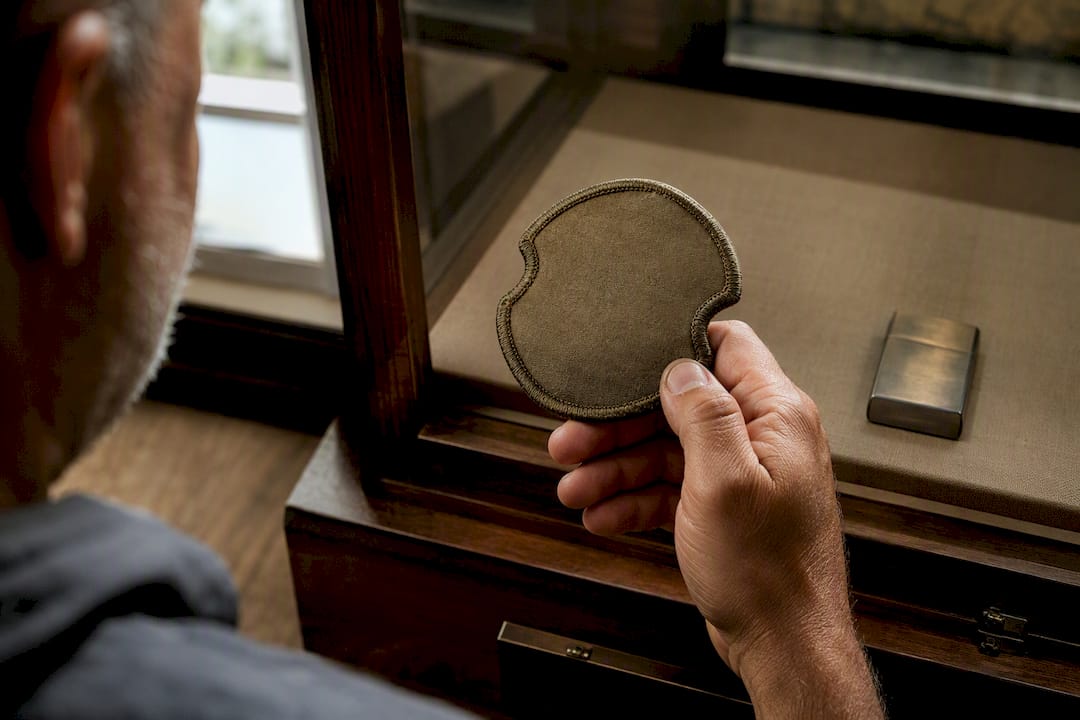
Everyday apparel picked up the same function at a smaller scale. A printed anchor, an infinity design, or a values-driven slogan on a hoodie works as a low-stakes way to signal what you stand for, tested daily rather than committed to permanently. That flexibility is part of why apparel has become one of the fastest-growing categories for loyalty-themed expression, sitting somewhere between a tattoo’s permanence and a passing trend’s disposability.
Common Myths About Loyalty Symbols You Should Ignore
The biggest myth is that a symbol’s meaning is fixed and universal. It isn’t. An anchor means something different to a Coast Guard veteran than it does to someone who bought a nautical throw pillow. Context, not the shape itself, does most of the interpretive work.
A second myth: loyalty symbols have to be old to be legitimate. Matching tattoos between best friends carry just as much real meaning as a centuries-old fede ring, even though the design has no medieval pedigree. What makes a symbol legitimate is the sincerity of the commitment behind it, not its age.
Third, plenty of people assume permanence equals seriousness, as if a tattoo automatically means more than a ring or a hoodie. That’s backwards. A tattoo commits you to a symbol regardless of whether the underlying relationship or value survives. A piece of jewelry or apparel that gets worn daily by choice, year after year, can represent just as much ongoing loyalty, sometimes more, because it requires continued intent rather than a single decision made once.
Finally, people often assume a borrowed cultural symbol is harmless as long as the intent is good. Intent matters, but so does understanding what you’re wearing. A Claddagh ring worn without any knowledge of Irish tradition, or Celtic knotwork used purely as decoration, strips a real cultural history down to an aesthetic. Research the origin before you adopt the symbol, not after.
Our Take: Meaning Beats Permanence Every Time
Most advice on loyalty symbols obsesses over permanence, as if a tattoo automatically outranks a ring or a hoodie in seriousness. That reasoning gets it backwards. A symbol’s weight comes from how well it matches an actual, lived commitment, not from how hard it is to remove.
Look at the Claddagh again. Its power isn’t that it’s old. It’s that three meanings, love, friendship, loyalty, live in one small object, which gives a family more reasons to keep it than a symbol built around a single idea.
That’s the standard worth applying to anything you choose to wear, ink, or hand down: does it carry a real story, and will that story still hold up in ten years? A hoodie worn daily by choice can carry as much honest weight as a tattoo, sometimes more, because it asks you to keep choosing it. Apparel done right isn’t a lesser substitute for permanent symbols. It’s a proving ground for whether a symbol deserves to become permanent at all.
— Modern Day Knight
Wear the Values, Not Just the Symbol
A brand like this can provide hoodies that work as everyday loyalty markers, tested daily, worn by choice, without asking you to commit to a tattoo before you’re sure the value fits your life.
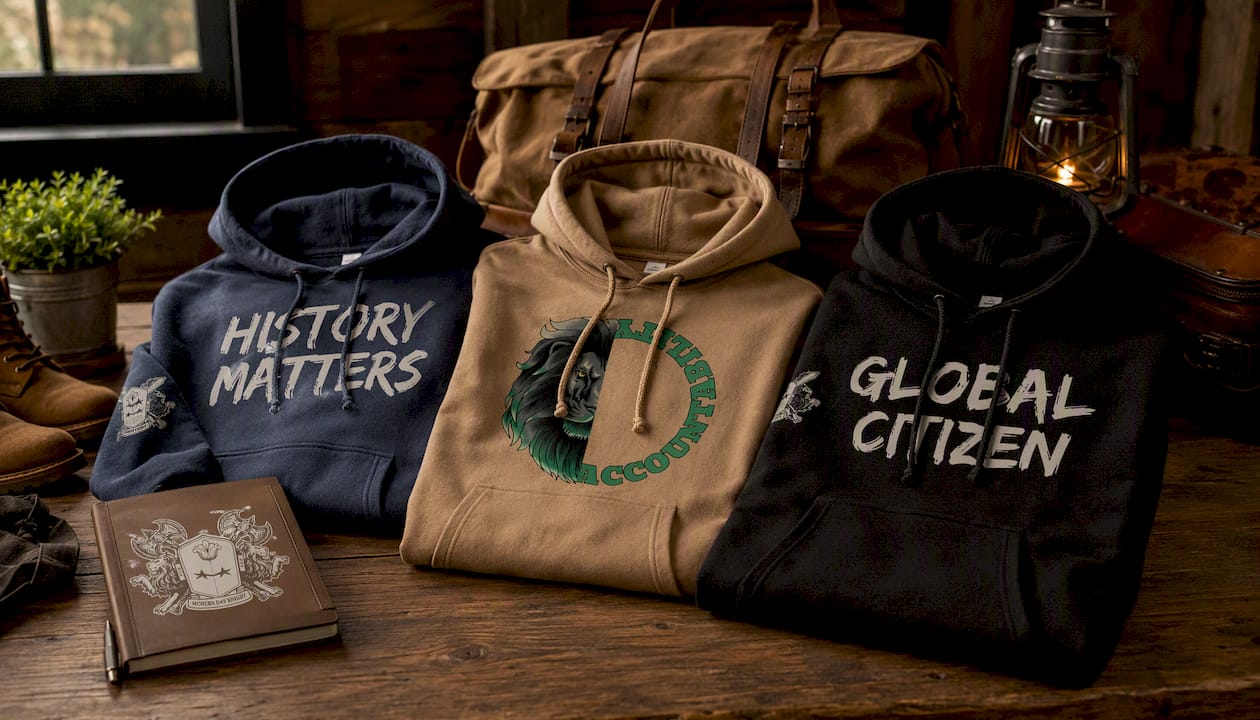
The History Matters Hoodie fits anyone who wants their clothing to carry a story about where their values come from, not just a logo. The Accountability Hoodie speaks directly to the idea that loyalty starts with keeping your own word first. The Global Citizen Hoodie signals a wider loyalty, one that reaches past a single relationship into a broader code of honor and respect for people beyond your own circle.
If any apparel matches a value you’re ready to wear daily, browse collections to find pieces that speak to the commitment you actually live by.
Sources
- Loyalty: Meaning, Symbolism & What It Says About You — MyMythos
- Tattoos meaning loyalty: symbolism and design — TattooBuild


