



Measure your head about 1 inch above your eyebrows, wrapping the tape over your ears and across the back of your skull, then match that circumference to the conversion chart below. If you land between two sizes, size up for structured hats, split the difference for stretchy ones, and never round up for a helmet.
TL;DR:
- Most adult heads measure between 22 and 23.5 inches, making adjustable hats with a 21 to 24 inch strap suitable for a wide range of sizes.
- For fitted caps, use the exact measurement without rounding down, and size up if you are between two fractions to ensure comfort.
- Thick hair, ponytails, or hairstyles can add up to half an inch, so measure against the scalp while styled as intended for wearing.
- Helmets require precise sizing from the manufacturer’s centimeters chart, with no room for comfort adjustments to ensure safety.
- When between sizes, it is best to size up for structured hats and consider adding padding or foam strips to improve fit.
Table of Contents
- How to Measure Your Head for a Hat
- Master Hat Size Conversion Chart
- How Do Different Hat Styles Use the Same Measurement?
- What To Do When You’re Between Sizes
- Quick Fit Checks Before You Buy or Wear
- Modern Day Knight’s Perspective on Getting Hat Fit Right
- Products To Try: Global Citizen Hat and Global Citizen Trucker Hat
- Sources
How to Measure Your Head for a Hat
A proper hat size guide starts and ends with one tool: a flexible tailor’s tape. Skip the rigid metal kind. If you don’t have a soft tape, string against a ruler works as a fallback.
Here’s the method that gets it right the first time:
- Wrap the tape roughly 1 inch above your eyebrows, resting just above your ears, and across the widest part of the back of your head, the occipital bone.
- Hold the tape horizontal and snug against your skin, not tight enough to leave a mark, but close enough that it can’t slide.
- Take the reading, then repeat it two more times. Average all three. Small shifts in tape angle throw off a single reading more than you’d expect.
- Measure with the hairstyle you’ll actually wear under the hat. If you sometimes wear it up and sometimes down, note both measurements.
Thick hair and ponytails are the most common source of a bad measurement. Thick hair can add a false half inch, so measure against the scalp, not over a pile of curls. For kids, keep the tape snug but check twice. Their heads grow fast, and a hat bought “to grow into” usually just falls off. If a hat has a leather or foam lining inside the band, account for it. That lining eats up a little room the raw circumference number doesn’t show.
Master Hat Size Conversion Chart
Once you have your circumference, converting it into a size label is simple arithmetic. Fitted hat sizes come from dividing your head circumference by pi, then rounding to the nearest eighth of an inch. To go from centimeters to fitted fractions, divide by 2. to get inches first, then round.
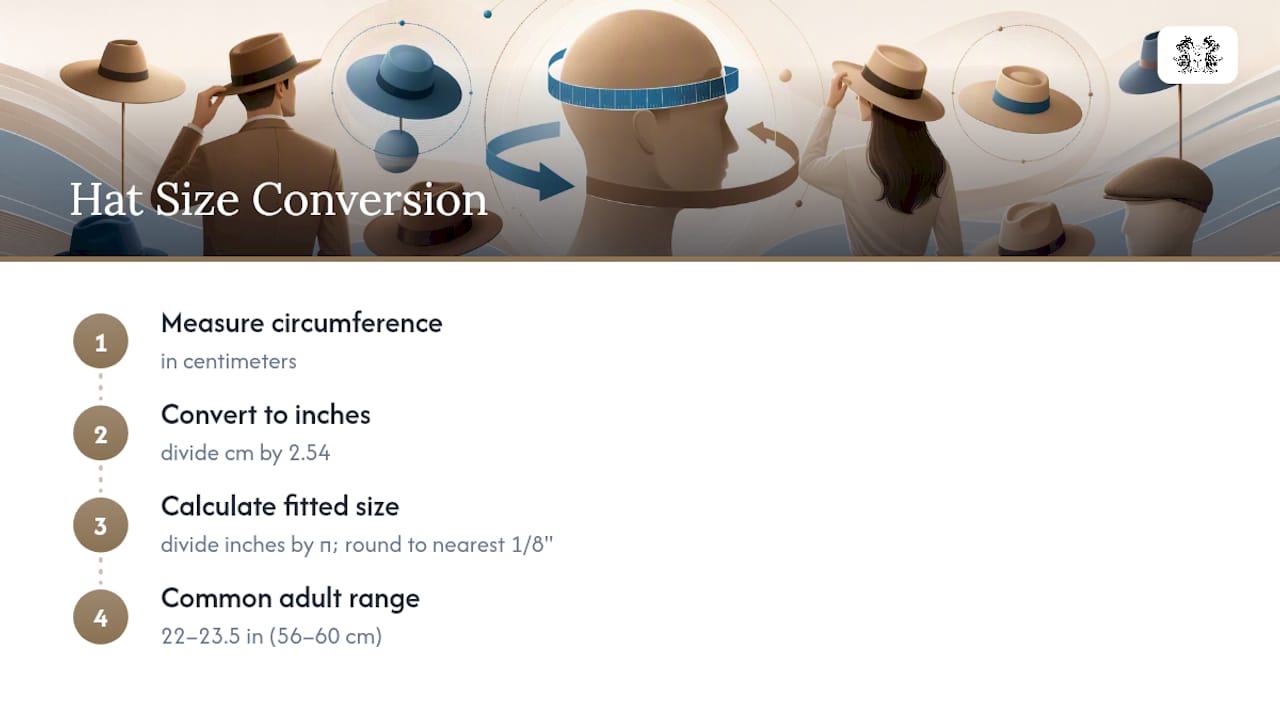
Most adult heads land in a narrow band. Between 22 and 23.5 inches, or 56 to 60 centimeters, covers the bulk of the population, which is why so many adjustable hats are built around that range.
These numbers align with the college-verified conversion standard used to cross-check fitted, UK, and letter systems against each other. Keep this table bookmarked. It’s the one page you’ll come back to every time you shop a new brand’s hat sizing chart, since letter sizes vary slightly by maker even when the underlying circumference doesn’t.
How Do Different Hat Styles Use the Same Measurement?
Your head circumference doesn’t change. How each hat style interprets it does.
Fitted caps have zero ease built in. Use your fitted number exactly as measured, no rounding down. If you’re between two fractions, go up, since a fitted cap that’s too small never breaks in.
Snapbacks and adjustable caps give you strap room, typically covering a 21 to 24 inch range on one size. If you measure above 24 inches, look for a brand’s “big head” or XL line rather than fighting the strap to its last notch.
Beanies rely on stretch, not precision. Letter sizes (S/M/L) usually span a full inch of circumference each, so these are style-dependent by design and far more forgiving than anything structured.
Fedoras and cowboy hats have rigid crowns and almost no give. Size shape matters here too. Some heads run “long oval” rather than round, and a round-block hat on a long-oval head pinches at the temples no matter what number you order.
Helmets are the one category where you follow the manufacturer’s own chart in centimeters, exactly. Do not size up for comfort. A loose helmet is a safety failure, not a fit preference.
What To Do When You’re Between Sizes
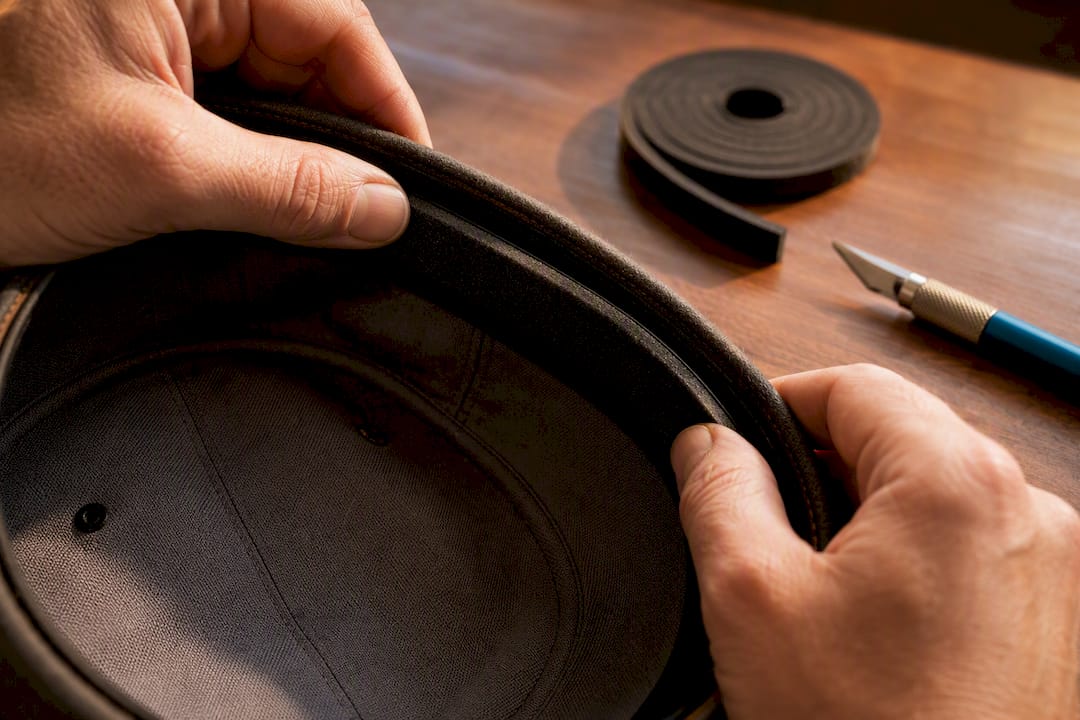
Default to sizing up on structured hats. A hatmaker can add padding or a foam reducer strip behind the sweatband to tighten a slightly loose fit, but stretching a rigid crown down a size risks cracking the material or blowing out the shape permanently.
Hat sizing tape, sold as a self-adhesive foam strip, goes inside the sweatband at the back and sides, never across the forehead where it would show and irritate the skin. A quarter inch of tape typically tightens a hat by about one size.
Pro Tip: Felt and straw hats should never get aggressive DIY stretching. Wool felt can be steamed and blocked by a milliner, but straw cracks under pressure and won’t recover. If a rigid dress hat needs real reshaping, that’s a job for a professional blocker, not a hair dryer and a hopeful tug.
Fabric matters more than most buyers realize. Knit and jersey blends stretch and hold. Structured cotton twill barely moves.
Quick Fit Checks Before You Buy or Wear
A correct measurement means nothing if the hat still feels wrong on your head. Run these checks every time:
- One-finger rule: you should be able to slide one finger between the band and your brow, no more, no less.
- Temple clearance: talk, chew, or smile while wearing it; pinching at the temples means the wrong crown shape, not the wrong size.
- Shake test: tilt your head and shake it lightly; a hat that shifts or lifts is too loose, even if the tag matches your measurement.
- Mark check: after 15 minutes, look for a red line or headache starting; that means size up or add padding, not “wear it in.”
Modern Day Knight’s Perspective on Getting Hat Fit Right
We built our sizing content the same way we build everything else: straight, no filler, no guesswork. As a veteran-owned brand, we know gear that doesn’t fit isn’t gear you’ll actually wear, so we size our hats to hold up in real conditions, not just look right on a shelf.
The Global Citizen Hat runs a structured fit, so treat it like the fitted caps above. Size up if you’re between two numbers. The Global Citizen Trucker Hat has snapback room built in, more forgiving if your measurement lands near a size line.
Save your measurement. If a fit still feels off, contact support before you write off the hat.
— Modern Day Knight
Products To Try: Global Citizen Hat and Global Citizen Trucker Hat
Both hats are designed for people who wear their values, not just a label, and the fit reflects that intent. The Global Citizen Hat is a structured crown built for a clean, tailored look, best for heads in the 22 to 23.5 inch range using the exact fitted number from the chart above, sized up if you fall between two.
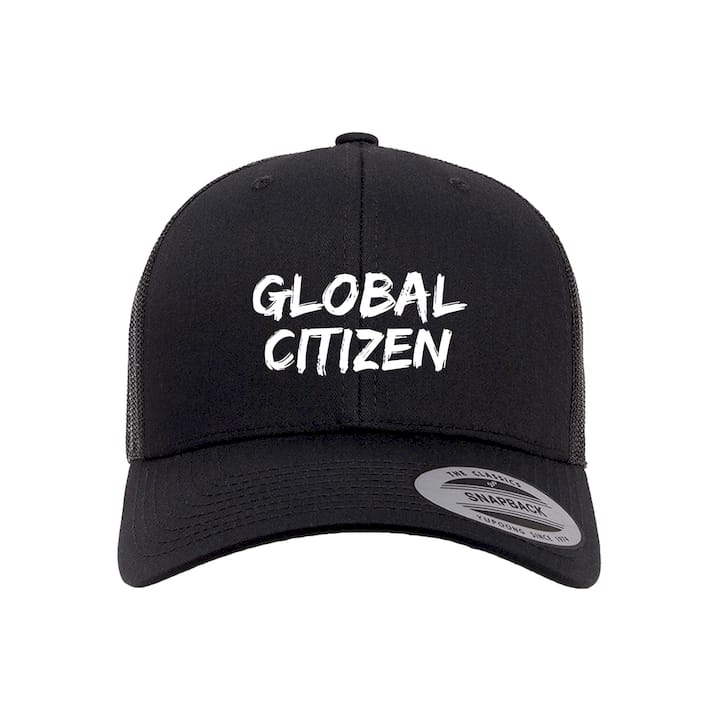
The Global Citizen Trucker Hat uses an adjustable snapback, so most adult heads from roughly 21 to 24 inches fit comfortably without needing an exact match. If you already know your measurement from our T-shirt sizing approach, you already understand how we think about fit: measure once, trust the number, buy with confidence. Browse the full hat collection once you’ve got your size dialed in, and if either hat doesn’t sit right, our returns and exchanges process has you covered.
Sources
This guide draws on measuring steps from the Eric Javits sizing method, the Village Hat Shop fit guide, the master conversion chart from TailorSizeGuide, and the Baruch College conversion reference for cross-checking numeric systems. For helmets or bespoke dress hats, always defer to the manufacturer’s chart or a professional milliner rather than a general sizing chart.
- How to measure head for hat | Eric Javits blog
- Hat Size Chart (S to XXL, Inch + cm) for All Styles — TailorSizeGuide
- How to Find Your Hat Size | Village Hat Shop sizing guide
- Hat Size Conversion Chart - Student Affairs | Baruch College


