



Wash cold, around 80°F, turn every shirt inside out, and run a short or delicate cycle with a liquid detergent made for darks. Air-dry out of the sun instead of blasting the dryer, and wash less often when you can get away with it. That routine will preserve most of your color. What it won’t do is bring back dye that’s already gone. Once a shirt has genuinely faded, restoration means re-dyeing or a color-refresh product, not another wash cycle.
TL;DR:
- Using cold water around 80°F and washing inside out significantly reduces dye loss, but can’t restore dye already faded from wear or washing.
- Separating heavy fabrics from lightweight ones and avoiding overdosing detergent prevents friction and residue that cause surface hazing and dullness.
- Air-drying shirts out of direct sunlight best preserves color, while heat sources like dryers or direct sun accelerate dye breakdown over time.
- Home dyeing can temporarily restore even black on plain fabrics, but better results come from professional re-dyeing for heavily faded or printed garments.
- Regular habits like minimal wash frequency, gentle cycles, and storing shirts out of direct light carry more impact than special products or additives.
Table of Contents
- Quick Prevention Checklist for Black Shirt Fading
- What Actually Causes Black Clothes to Fade?
- The Step-by-Step Washing Routine That Protects Black Shirts
- Drying and Storing Black Shirts Without Losing Color
- Can You Restore a Black Shirt That’s Already Faded?
- Common Laundry Mistakes That Look Like Fading
- Modern Day Knight’s Care Notes for Every Shirt We Make
- Does the Vinegar Trick Actually Stop Fading?
- Does Water Hardness Make Black Shirts Fade Faster?
- How Much Does Fabric Type Affect Color Retention?
- Can Ironing and Heat Exposure Fade Black Shirts?
- Does Sunlight Keep Fading Black Shirts After They’re Dry?
- Our Take: Habits Beat Products Every Time
- Shirts Built to Hold Their Color, Not Just Their Message
- Sources
Quick Prevention Checklist for Black Shirt Fading
Honor your gear the way you’d maintain any piece of equipment that matters. These habits take no extra time once they’re routine, and they do more for color retention than any single product on the shelf.
- Turn shirts inside out before they go in the machine.
- Sort by color and by fabric weight. Denim and towels do not belong in the same load as tees.
- Wash cold, around 80°F (30°C), on a short or delicate cycle.
- Choose a liquid detergent labeled for darks or color-guard, and measure it instead of eyeballing it.
- Air-dry indoors, away from direct sunlight.
- If you use a dryer, pick no-heat or the lowest setting and pull shirts out slightly damp.
- Wash less often. Spot-treat a stain instead of running a full cycle for one mark.
- Skip bleach and harsh stain removers entirely on black garments.
Build these into muscle memory and you’ll rarely think about them again. That’s the point. A code of care, followed consistently, protects the gear you’ve committed to.
What Actually Causes Black Clothes to Fade?
Fading isn’t one problem. It’s four different problems that all end up looking the same on a black shirt.
Heat is the biggest offender. Hot water and high dryer heat relax cotton fibers and strip dye molecules loose faster than any other factor in your laundry routine. Washing in cold water around 80°F keeps that damage to a minimum, which is why it’s the first rule on every serious care list.
Friction is the quiet second cause. Every spin cycle rubs fabric against fabric, and mixing heavyweight items like jeans or towels into a load of tees accelerates that abrasion, causing surface pilling and a hazy “halo” look that reads as fading even when the actual dye is intact.
Then there’s detergent residue. Overdosing on detergent, especially powder, can leave a dull film on dark fabric that looks exactly like color loss but is really just buildup sitting on the surface.
Finally, not all black holds the same. Cotton absorbs dye differently than polyester blends, and cheaper fabric or blended fibers tend to shed color faster under identical wash conditions. Know your fabric, and you’ll know what to expect from it.
The Step-by-Step Washing Routine That Protects Black Shirts
This is the routine, laid out in order. Follow it every time and you’re doing the work that actually matters.
- Sort before you wash. Separate darks from everything else, and separate heavy fabrics (denim, towels, hoodies) from lightweight tees. New black garments should get their own first few washes, since they release the most loose dye early on.
- Prep each shirt. Turn it inside out to shield the printed or visible face, empty pockets, and fasten zippers so nothing snags or scrapes against the fabric.
- Set the machine. Cold water, around 80°F, on a delicate or short cycle with a light soil setting. Don’t overload the drum. Cramped loads mean more friction per shirt.
- Pick the right detergent. A liquid formula labeled for darks or with color-guard technology dissolves cleanly in cold water and rinses out without leaving residue. Powder detergents and oxygen or chlorine-based boosters are the enemy here.
- Go easy on softener. Fabric softener can leave a coating that dulls black over time, so use it sparingly, if at all. Dryer sheets are fine for sturdy items but skip them on anything with a delicate print.
Turning garments inside out and running shorter, gentler cycles are the two habits that consistently show up in every credible laundry guide, and for good reason. They cost nothing and take no extra time.
Pro Tip: Before you commit to a new shirt’s full wash routine, test colorfastness on a hidden seam with a damp white cloth. If color transfers, wash that item alone for the first several cycles. And once in a while, add a cup of white vinegar to the rinse to clear detergent residue, but don’t expect it to reverse fading. Vinegar cleans, it doesn’t restore.
Drying and Storing Black Shirts Without Losing Color
Air-drying indoors, out of direct light, is the single best move you can make after the wash cycle ends. Sunlight and dryer heat both accelerate color loss, and a shirt hung in a sunny window is fading the same way it would on a clothesline outside.
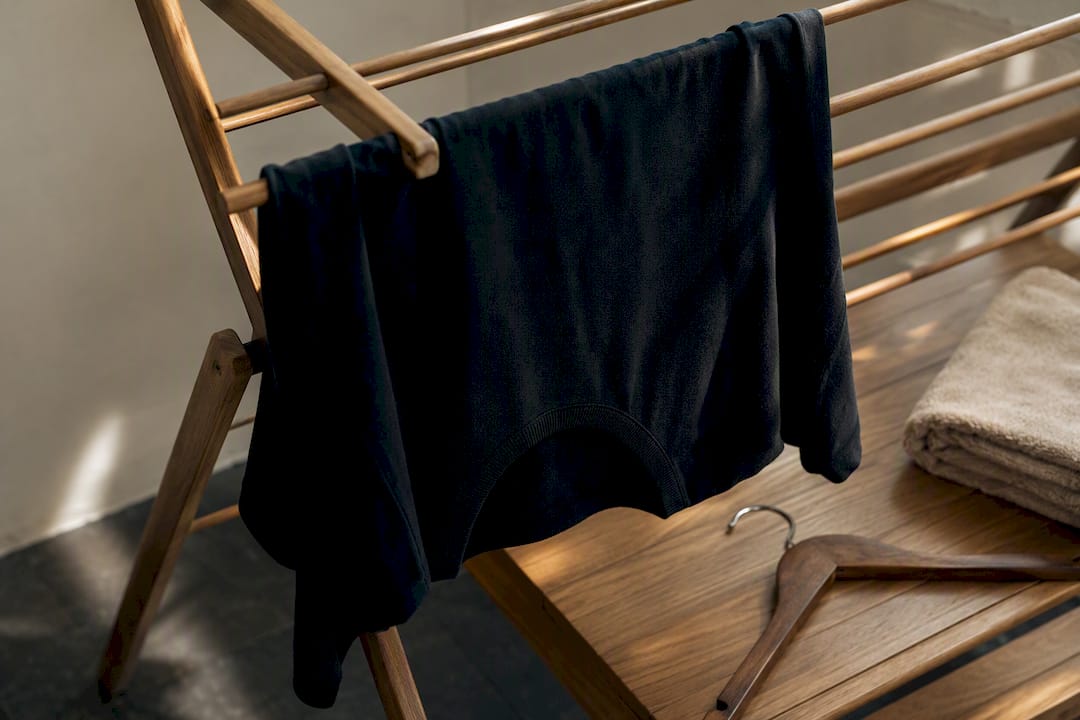
If you do use a dryer, choose the no-heat or lowest-heat setting and pull shirts out while they’re still slightly damp. Overdrying is where most of the fiber damage happens, not the wash itself. Knit fabrics should be laid flat to dry so they hold their shape, and tees hung to dry should go up inside out, protecting the visible face from whatever light does reach them.
Storage matters more than most people think. Fold or hang clean shirts away from windows, since UV exposure through glass fades color even when a shirt isn’t being worn. Rotate which shirts you reach for, too. A garment worn every day against the same backpack strap or seatbelt line will show localized wear long before the rest of the fabric does.
Can You Restore a Black Shirt That’s Already Faded?
Sometimes. It depends on how far gone the color is.
Fading means dye molecules have physically broken down or washed away, and washing alone can’t put them back. If you want real color back, you’re looking at re-dyeing or a color-refresh product, not a better detergent.
For a DIY approach, commercial fabric dyes made for cotton can restore an even, solid black on plain garments. Test on an inside seam first, follow the dye instructions exactly on water temperature and timing, and expect some shrinkage or texture change since heat is usually part of the process.
For anything with sentimental value or a higher price tag, a professional re-dyeing service is worth the cost. It’s controlled, even, and far less likely to leave the blotchy result home dyeing sometimes produces.
One serious caution: printed graphics and blended fibers don’t take dye evenly. Poly-cotton blends in particular can dye unevenly at home, which is exactly why professional service makes sense for a mixed-fiber shirt you actually care about. Dyeing over a screen-printed design will usually discolor or damage the print itself, so treat graphic tees as display pieces, not dye projects.
Common Laundry Mistakes That Look Like Fading
Not everything that looks like fading is fading. Learn to tell the difference before you write off a shirt.
Dull, streaky patches after a wash are usually detergent residue, not lost dye. Overdosing on detergent or using unmixed powder leaves a film that mimics color loss. The fix is simple: rewash with a smaller, measured dose of a liquid dark-formula detergent and run an extra rinse cycle to confirm.
Pilling and a hazy “halo” texture come from too much agitation, often from mixing heavy items into a load of lightweight tees. Reduce the load size and separate by weight, and use a fabric shaver carefully on existing pills rather than scrubbing at them.
Underarm discoloration is its own issue entirely. Deodorant and antiperspirant buildup reacts with fabric over time and creates localized fading that no wash routine will fully prevent. Rotating shirts and wearing an undershirt underneath cuts down on that direct contact.
Modern Day Knight’s Care Notes for Every Shirt We Make
We build shirts meant to be worn hard and worn often, because that’s the point of a piece that carries a message you actually believe in. Our care guidance is simple and it lines up with everything above: wash cold, turn the shirt inside out, hang it to dry, and always check the care tag for specific instructions.
We design every piece around values first: integrity, loyalty, strength. A shirt that fades fast undercuts that message, so quality fabric and print methods are important to hold up under repeated wear. If you want more detail on caring for heavier apparel or embroidered pieces, our garment care guide and our notes on embroidered military apparel cover the specifics.
Does the Vinegar Trick Actually Stop Fading?
White vinegar in the rinse cycle has a real, limited job: it cuts detergent residue and mineral buildup that can dull black fabric and make it look faded even when the dye itself is fine. Add about a cup to the rinse, not the wash, since vinegar and detergent can partially cancel each other out if combined in the same cycle.
Some laundry writers claim vinegar “sets” dye and locks in color, but that claim outruns the evidence. Vinegar can help remove residue and support dye setting in some cases, but it is not a fix for genuine fading, and it won’t reverse dye that’s already broken down. Treat it as a maintenance step, not a restoration tool.
Use it occasionally rather than every wash. Frequent vinegar use on certain fabric finishes can affect texture over time, so once every few washes is plenty for most black shirts. If your water runs particularly hard, vinegar earns its place in the routine more often, since mineral deposits build up faster and contribute to that dull, faded look.
Does Water Hardness Make Black Shirts Fade Faster?
Hard water carries more dissolved minerals, mainly calcium and magnesium, and those minerals interfere with how detergent dissolves and rinses out of fabric. The result is mineral film sitting on top of the dye layer, which reads visually as fading even though the black underneath hasn’t actually broken down.
That mineral buildup also makes detergent less effective at cleaning, which means you may be tempted to add more detergent to compensate. That extra dose creates the exact residue problem covered earlier, so hard water and detergent overdosing tend to show up together on the same faded-looking shirt.
If you’re in a hard-water area, a few adjustments help. Use slightly more detergent than the minimum label amount, but stay within the recommended range rather than guessing high, and add an extra rinse cycle to flush out mineral residue before it settles into the fabric. A whole-house water softener solves the problem at the source if fading and dullness are a recurring issue across your laundry, not just one shirt.
Soft water, by contrast, lets detergent rinse cleanly and reduces the film buildup that mimics fading. If you’ve moved between a hard-water and soft-water area and noticed your blacks suddenly looking better or worse, water hardness is very likely the reason, not a change in your detergent or your washing habits.
How Much Does Fabric Type Affect Color Retention?
Not every black shirt is fighting the same battle. Cotton absorbs dye deep into the fiber, which generally means better long-term color retention than synthetics, but cotton is also more prone to fiber relaxation from heat, which speeds up dye loss under hot water or high dryer settings.
Polyester and other synthetics hold surface dye differently. They resist water-based fading better in some conditions but can be more prone to heat-set discoloration from a hot iron or high dryer heat, since the fiber itself reacts to temperature rather than just releasing dye into wash water.
Blended fabrics, the poly-cotton mixes common in a lot of casual shirts, split the difference and often fade unevenly rather than uniformly, since the two fiber types absorb and release dye at different rates. That’s part of why uneven fading shows up more often on blends than on pure cotton or pure synthetic garments.
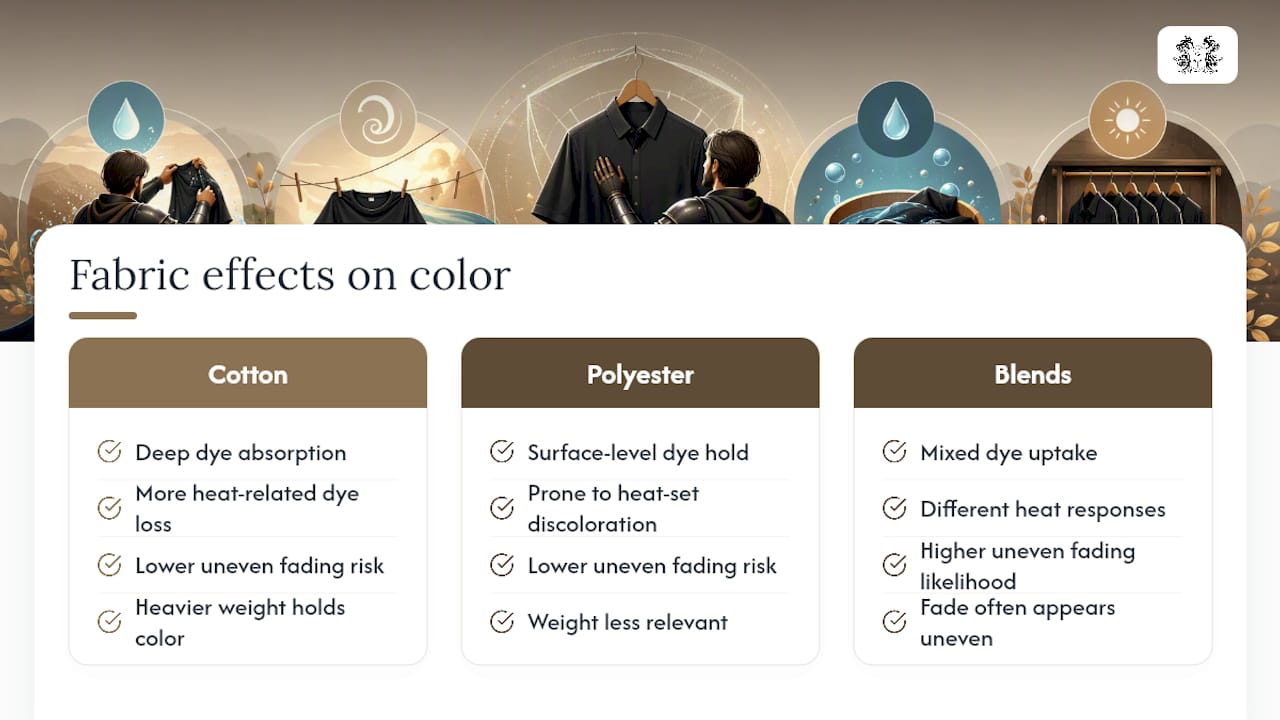
Heavier-weight cotton, like a mid-weight or heavyweight tee, also tends to hold color longer than a thin, lightweight jersey knit simply because there’s more fiber mass holding onto the dye. If you’re choosing between two black shirts and color retention matters to you, weight and fiber content are worth checking before you check the price tag. Our breakdown of cotton versus polyester walks through those trade-offs in more depth.
Can Ironing and Heat Exposure Fade Black Shirts?
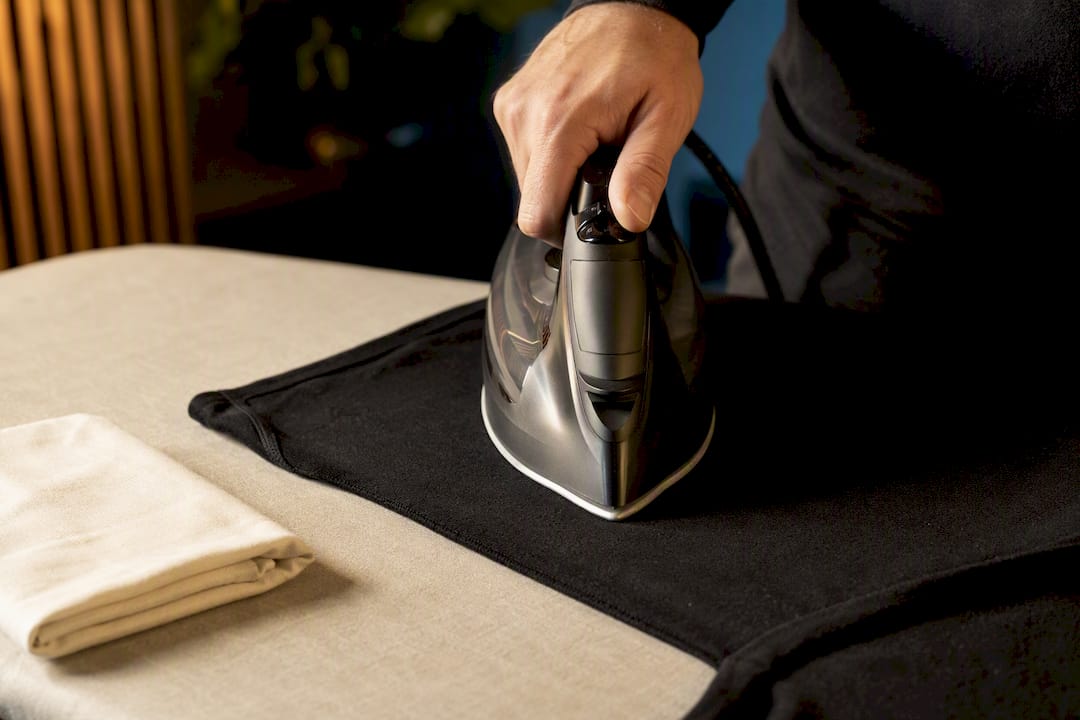
Direct heat from an iron is one of the fastest ways to fade black fabric outside of the wash cycle itself. A hot iron applied straight to a black shirt’s surface can cause visible shine, a lightened patch, or outright discoloration in seconds, especially on synthetic fibers that react strongly to heat.
The fix is straightforward: iron black garments inside out, or place a thin cotton cloth between the iron and the fabric if you need to press the outside face. Use the lowest heat setting the fabric tolerates, and check the care tag, since polyester and cotton call for very different iron temperatures.
Heat exposure beyond ironing adds up too. A black shirt left on a car dashboard, stored near a heating vent, or hung too close to a radiator experiences the same kind of accelerated dye breakdown as a shirt thrown in a too-hot dryer. None of these sources are as dramatic as direct iron contact, but they compound over time, especially for garments you wear regularly and store carelessly.
If a graphic or printed design is involved, heat is doubly risky. Direct iron heat on a screen print or heat-transfer design can crack, peel, or discolor the print well before it visibly damages the surrounding fabric. When in doubt, skip the iron entirely on printed shirts and rely on a quick tumble on low heat to smooth wrinkles instead.
Does Sunlight Keep Fading Black Shirts After They’re Dry?
Sunlight doesn’t stop working once your laundry is done. UV exposure breaks down dye molecules through a process separate from the heat and friction covered earlier, and it happens anytime a black shirt sits in direct light for extended periods, not just during the drying phase.
A shirt hung to dry on an outdoor line gets hit twice: once from any residual heat and once from ongoing UV exposure. But the damage doesn’t end there. A shirt stored folded on a shelf near a sunny window, displayed on a mannequin in a shop window, or left on a car seat in direct light continues to lose color gradually, even though it’s fully dry and not being laundered at all.
This is why storage location matters as much as wash routine for anyone serious about color retention. A closet, drawer, or shaded closet rod protects a shirt in ways that no detergent or wash setting can replicate.
If you wear a black shirt outdoors regularly, in bright sun for hours at a time, expect faster fading regardless of how carefully you wash it. UV exposure during actual wear is unavoidable, but rotating shirts so no single one takes the brunt of repeated sun exposure extends the life of your entire wardrobe rather than just one piece.
Our Take: Habits Beat Products Every Time
Most fading advice on the internet pushes a product: a special detergent, a miracle rinse additive, a fabric-refresh spray. None of that is wrong, exactly, but it’s the wrong priority. The habits matter more than anything you can buy. Cold water, inside-out washing, sorting by weight, and drying out of the sun will do more for a black shirt’s lifespan than any single detergent switch.
The conventional wisdom oversells restoration, too. Plenty of guides make re-dyeing sound routine, when the honest answer is that it works best on plain cotton and gets riskier fast on blends or anything printed. Know that going in, and you won’t be disappointed when a home dye job doesn’t match the original black exactly.
Here’s what we’d tell you to prioritize first: water temperature and wash frequency. Get those two right before you spend a dollar on a new detergent. A shirt built with quality fabric and worn with a little discipline will outlast one babied with every trick in the book but washed on hot, twice a week, out of habit.
— Modern Day Knight
Shirts Built to Hold Their Color, Not Just Their Message
A black shirt only carries its message as long as it still looks like the shirt you bought. Our Global Citizen Tee, Stay Dangerous Tee, and History Matters Tee are built for daily wear, and the routine in this guide, cold wash, inside out, air-dried out of the sun, keeps every one of them looking sharp for the long haul.

Follow your care tag, wash cold, and skip the dryer’s high heat, and black shirts can hold their color long past the point where cheaper shirts start looking gray. If you’re ready to add a piece that means something to your wardrobe, browse the full shirt collection and pick the message that fits you.
Sources
Whirlpool’s guide on cold-water washing covers practical machine settings. Consumer Reports backs the inside-out and reduced-frequency habits with testing-based reasoning. The Spruce explains drying and restoration limits clearly. For fit and wear-pattern context on friction points, see ClothME’s garment fit guide.
- How to keep black & dark-colored clothes from fading | Whirlpool
- How to Keep Your Black Clothes Looking Their Best | Consumer Reports
- How to Wash Black Clothes and Keep Them From Fading | The Spruce
- Vinegar in laundry (My Bright Spin) — detergent residue guidance


