



Measure your chest at its fullest point, match that number to the brand’s size chart, and size up only if you want a looser, layered fit. Confirm with two quick checks: the shoulder seam should sit right at the edge of your shoulder, and pinching the fabric at your side should give you 1 to 2 inches of ease. If those two checks agree with your measurement, you’ve got your size.
TL;DR:
- Choosing the right hoodie size depends not only on chest measurements but also on fabric weight, layer intention, and fit style preferences.
- Garment measurements, especially pit-to-pit and length, should be compared directly to your existing well-fitting hoodie and checked against specific product specs.
- The pinch test, shoulder seam position, sleeve length, and hem placement are reliable physical checks to confirm proper fit before cutting tags.
- Heavier fleece fabrics tend to restrict stretch and may require sizing up, especially when layering or depending on shrinkage tendencies.
- Sizing guides must account for different body types and hoodie styles, with unisex fits generally offering more room and women’s or men’s cuts varying in shoulder width and length.
Table of Contents
- How to Measure Your Body and a Hoodie You Already Own
- How Do You Read a Hoodie Size Chart Correctly?
- Fit Checkpoints: Pinch Test, Shoulder Seam, Sleeves, and Hem
- Fabric Weight, Shrinkage, and Layering: How Materials Change Fit
- Quick Decision Guide When You’re Between Sizes
- Modern Day Knight’s 2 Inch Chest Steps Sizing Practice
- Do Men’s, Women’s, and Unisex Hoodies Fit Differently?
- What Actually Matters When You’re Sizing a Hoodie
- Find Your Exact Fit and Shop With Confidence
- Sources
How to Measure Your Body and a Hoodie You Already Own
Numbers win arguments. Before you compare anything to a size chart, get your own measurements right, because a chart is only useful when you’re feeding it accurate data.
Start with your body:
- Chest. Wrap a tape measure around the fullest part of your chest, under your arms and across the shoulder blades. Keep it level and snug, not tight.
- Body length. Measure from the highest point of your shoulder down to where you want the hem to land.
- Sleeve. Measure from the center of the back of your neck, across the shoulder, and down to your wrist bone.
Now do the same to a hoodie that already fits you well. Lay it flat on a bed or table and measure:
- Pit-to-pit (armpit seam to armpit seam), which represents half the garment’s chest width.
- Body length, from the highest shoulder seam to the bottom hem.
- Sleeve length, either center-back-to-cuff or shoulder-seam-to-cuff. Brands differ on which one they list, so confirm which method a product page uses before you compare numbers.
If you own a hoodie you’d repair in that exact fit, measuring it flat is often faster and more reliable than measuring your body, especially if you’re not confident with a tape measure. Write both sets of numbers down. You’ll need them for the next step.
How Do You Read a Hoodie Size Chart Correctly?
Most sizing confusion comes from mixing up two different measurements: the garment’s chest width and your actual body circumference. A pit-to-pit reading of 11 inches does not mean your chest is 11 inches. It means half the hoodie’s chest opening is 11 inches, so the full garment chest is roughly 22 inches, doubled to approximate the body it’s built to fit.
Regular-fit hoodies build in about 4 to 6 inches of ease over your actual body measurement, which is why a hoodie sized for a 40-inch chest often measures closer to 44 to 46 inches pit-to-pit when doubled. That extra room is intentional. It’s what lets you layer a t-shirt underneath without feeling squeezed.
Here’s a general reference for how pit-to-pit numbers translate to approximate body chest ranges in a standard unisex cut:
Unisex charts run roomier through the body and shoulders than women’s-specific cuts, which typically taper at the waist and shorten the sleeve and body length. Oversized charts add ease on top of that unisex baseline, so a “size large oversized” is not the same garment as a “size large regular.”
- Unisex sizing splits the difference between men’s and women’s proportions.
- Women’s-specific cuts run narrower in the shoulder and shorter overall.
- Oversized styles intentionally widen the chest and drop the shoulder further.
Treat every chart as a starting point. The product page’s own spec sheet, not a generic size guide, has the final say.
Fit Checkpoints: Pinch Test, Shoulder Seam, Sleeves, and Hem
Once you’ve picked a size on paper, three physical checks confirm whether it’s right on your body.
- Pinch test. Grab the fabric at your side, just under the arm. One to two inches of pinched fabric is the sweet spot for a regular fit. Athletic or slim cuts tighten that window closer to half an inch to an inch.
- Shoulder seam. The seam should land right at the edge of your shoulder bone. This is the single most reliable fit anchor on a standard hoodie, though drop-shoulder styles are designed to sit further down your arm on purpose, so don’t apply this rule to that construction.
- Sleeve length. Cuffs should reach your wrist bone. Some stacking of fabric near the cuff is normal and even stylish. Excess bunching past your palm means the sleeve is too long for your frame.
- Hem length. The bottom hem should fall somewhere between your hip bone and mid-fly. Raise your arms overhead. If the hem rides up past your belly button, size up or look for a “tall” length option.
Pro Tip: Do the raise-arms test before you cut any tags off. It’s the fastest way to catch a body-length problem that a flat measurement won’t show you.
Fabric Weight, Shrinkage, and Layering: How Materials Change Fit
Fleece weight changes how a hoodie fits as much as the cut does. Polartec’s fleece series runs Micro, 100, 200, and 300, with higher numbers adding insulation without piling on bulk. Translated to fabric weight, industry guidance puts lightweight fleece around 100 to 200 GSM, mid-weight around 200 to 300 GSM, and anything above 300 GSM in heavyweight territory.
- Heavier cotton and fleece don’t stretch much, so a snug mid-weight hoodie can feel restrictive once you go heavyweight in the same size.
- Planning to layer under a jacket or over a thermal? Add one size unless the brand offers a “tall” length that solves the coverage problem without widening the chest.
- Untreated 100% cotton hoodies can shrink noticeably after a hot wash and dryer cycle. Favor pre-shrunk fabric where it’s offered, or size up slightly to account for it.
- A french terry weight, like this partner example, sits lighter than classic fleece and fits closer to true size with less shrink risk.
Quick Decision Guide When You’re Between Sizes
- Want a clean, fitted silhouette? Pick the smaller size, then confirm the shoulder seam sits exactly at your shoulder edge before you commit.
- Planning to layer or want an oversized look? Pick the larger size. Oversized hoodies already add several inches of chest width over a regular fit, so sizing up further only makes sense if you’re layering heavily.
- Tall or long-torso? Look for a dedicated “tall” size rather than jumping a full size up in the chest, which solves length but adds unwanted width.
- When it arrives: run the shoulder seam check, the pinch test, and the raise-arms test in that order. Log your measurements before you decide whether to keep it or return it.
Modern Day Knight’s 2 Inch Chest Steps Sizing Practice
Sizes increase by consistent chest increments, providing a clear sense of how much room each size adds over the previous one. If your measurement lands right between two sizes, that 2 inch step tells you exactly how much room you’re gaining or giving up either direction.
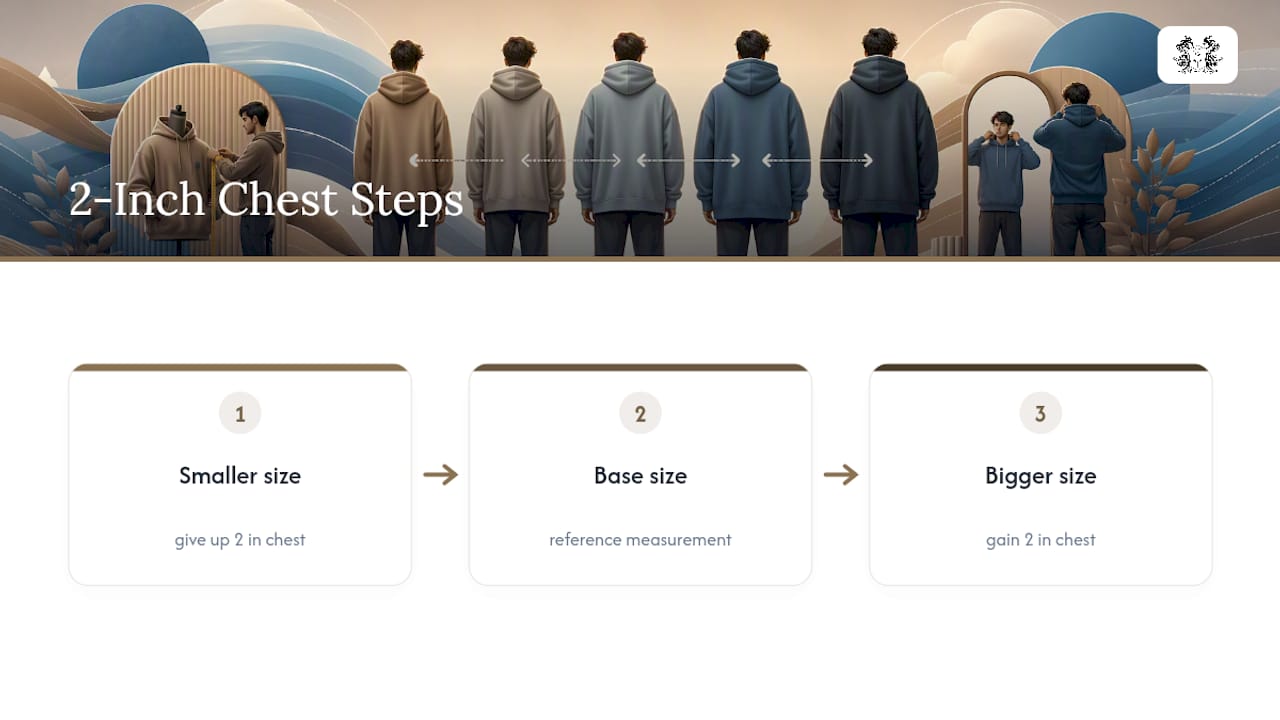
Before you buy, check the Global Citizen Hoodie, History Matters Hoodie, and Accountability Hoodie product pages for exact pit-to-pit and body-length specs. This section will carry founder background, customer fit testimonials, and case-study measurements as they’re added.
Do Men’s, Women’s, and Unisex Hoodies Fit Differently?
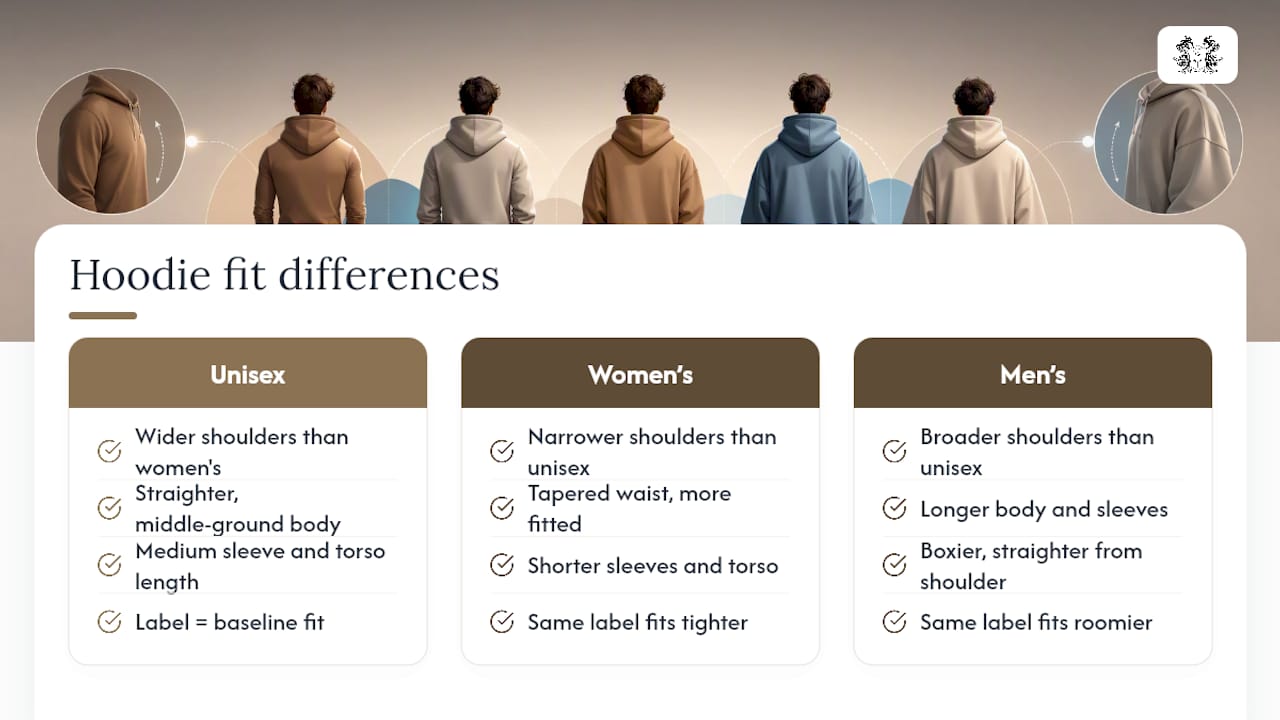
Yes, and the difference is bigger than most shoppers expect. A unisex hoodie is built as a middle-ground pattern: wider shoulders and a straighter body than a women’s-specific cut, but not quite as boxy as a traditional men’s block.
Women’s-specific hoodies typically narrow through the shoulder, shorten the sleeve and body length, and taper slightly at the waist. If you’re used to unisex sizing and switch to a women’s-specific chart, expect the same size label to fit noticeably tighter through the shoulders and shorter in the torso. Someone who wears a unisex large might need a women’s-specific extra large to get comparable room through the chest and arms.
Men’s-specific charts run the opposite direction. They tend to add shoulder width and body length compared to a unisex chart at the same labeled size, built around a broader average shoulder-to-hip ratio.
Unisex sizing works well for shoppers who want one consistent chart regardless of body type, and it’s the most common choice for graphic and message-driven hoodies where the fit goal is a relaxed, universal drape rather than a tailored silhouette. If you fall between a unisex and a gendered chart, the pinch test and shoulder seam check matter more than the label on the size tag. Fit intent, not gender labeling, should drive the final call: a fitted look means trusting your chest measurement against the body-chest range, while a relaxed or oversized look means leaning into the next size up regardless of which chart you’re using.
What Actually Matters When You’re Sizing a Hoodie
Most sizing advice treats every hoodie like it’s cut from the same fabric and the same pattern, and that’s the actual failure point. A pit-to-pit number without a fabric weight attached tells you half the story. Two hoodies with identical chest measurements can wear completely differently once one is 180 GSM french terry and the other is 320 GSM heavyweight fleece, because the heavier one has almost no give.
The conventional wisdom of “measure your chest, pick the matching size” isn’t wrong, it’s just incomplete. It skips the part where fabric weight and layering intent should adjust that first decision. A shopper buying a hoodie to wear under a jacket all winter needs a different sizing logic than someone buying the same hoodie as a standalone piece on a mild day.
Our 2 Inch Chest Steps approach exists because sizing shouldn’t be a coin flip between two labels on a chart. Know your fit intent first: fitted, regular, or oversized. Measure honestly. Then let the shoulder seam and pinch test settle any argument your tape measure couldn’t. That order of operations, intent before measurement before physical check, is what most guides get backwards.
— Modern Day Knight
Find Your Exact Fit and Shop With Confidence
Each hoodie carries its own pit-to-pit and body-length measurements so you have garment specs available alongside chest size. That’s the gap most retailers leave you to fill in with guesswork. We don’t.

Check the Global Citizen Hoodie for its full spec sheet if you want a standalone regular fit, the History Matters Hoodie if you’re deciding between sizes for a layered look, or the Accountability Hoodie if you’re set on true-to-size comfort. Apply the 2 Inch Chest Steps rule to whichever measurement sits between two listed sizes, run the pinch test and shoulder seam check once it arrives, and you’ll know within seconds whether you nailed it. Browse the full hoodie collection and pick the size that matches your intent, not just your chest number.
Sources
- Polartec® Fleece Series
- Hoodie size chart - MFG Merch
- How a hoodie should fit a man: A complete fit guide


