



A raglan sleeve is a sleeve that extends to the neckline in one piece, with a diagonal seam running from the underarm to the collarbone instead of a seam at the top of the shoulder. That construction gives the shoulder a softer, more rounded line and frees up the arm for a wider range of motion. Merriam-Webster and Wikipedia both define it this way, and it’s one of the oldest sleeve patterns still in daily use.
TL;DR:
- Raglan sleeves feature a diagonal seam from underarm to collar that creates a softer shoulder line, enhancing comfort and range of motion.
- They are identified by the absence of a traditional shoulder seam and often include contrast-colored sleeves to highlight the seam line.
- Raglan construction offers advantages in mobility and simplicity of sewing but results in a relaxed silhouette unsuitable for formal or structured apparel.
- The style originated from military coats designed for ease of dressing and movement and is now popular in casual, athletic, and vintage-inspired garments.
- For a proper fit, check that the shoulder seam sits symmetrically, the sleeve moves freely when raising the arm, and the overall drape is relaxed but not overly baggy.
Table of Contents
- Raglan Sleeve Anatomy: How to Spot the Construction
- Raglan vs Set-In Sleeves: What Actually Changes
- Where Did the Raglan Sleeve Come From?
- Common Garments That Use Raglan Sleeves
- The Real Trade-Offs: Benefits and Drawbacks of Raglan Sleeves
- How Raglan Sleeves Change Fit and What to Check When Shopping
- Why Modern Day Knight Builds Around the Raglan Cut
- Shop Raglan-Friendly Tees Built With Purpose
- Where This Information Comes From
- Sources
Raglan Sleeve Anatomy: How to Spot the Construction
Look at the shoulder seam first. On a regular garment, there’s a horizontal line where the sleeve meets the shoulder. On a raglan, that seam is gone. Instead, you’ll find a diagonal line running from the armpit up to the collar, cutting across what would normally be the shoulder cap.
That diagonal is the whole story. The sleeve and a triangular section of the shoulder are cut as one connected piece, so the fabric flows from wrist to neckline without a break. Simply Sewing’s guide notes this is part of why raglan patterns are popular with home sewers: fewer pattern pieces, fewer seams to match, faster construction.
Here’s what to check when you’re trying to identify one:
- A visible diagonal seam from underarm to collar, rather than a shoulder seam
- No sharp shoulder point. The fabric rounds off instead of forming a corner
- Contrast-colored sleeves, common on baseball tees and used partly to highlight the seam line
- A one-piece sleeve pattern rather than a curved cap sewn into a matching armhole
That last point separates raglan from every other sleeve style on the market.
Raglan vs Set-In Sleeves: What Actually Changes
Set-in sleeves are the standard on dress shirts, blazers, and most tailored jackets. The sleeve is cut separately, then sewn into a curved armhole at the shoulder. That seam sits right at the top of the arm, which is what gives tailored clothing its crisp, structured shoulder line.
Raglan flips that approach entirely.
- Seam placement. Set-in sleeves have a seam at the shoulder point. Raglan sleeves move that seam diagonally toward the collar.
- Shoulder definition. Set-in construction creates a defined, structured shoulder. Raglan softens it, sometimes to the point of looking relaxed even in a fitted cut.
- Range of motion. Raglan allows the arm to lift and rotate with less fabric resistance, which is why you won’t see raglan on suit jackets but will see it constantly in sportswear.
A baseball tee and a dress shirt make the contrast obvious. One is built to move. The other is built to hold a shape.
Where Did the Raglan Sleeve Come From?
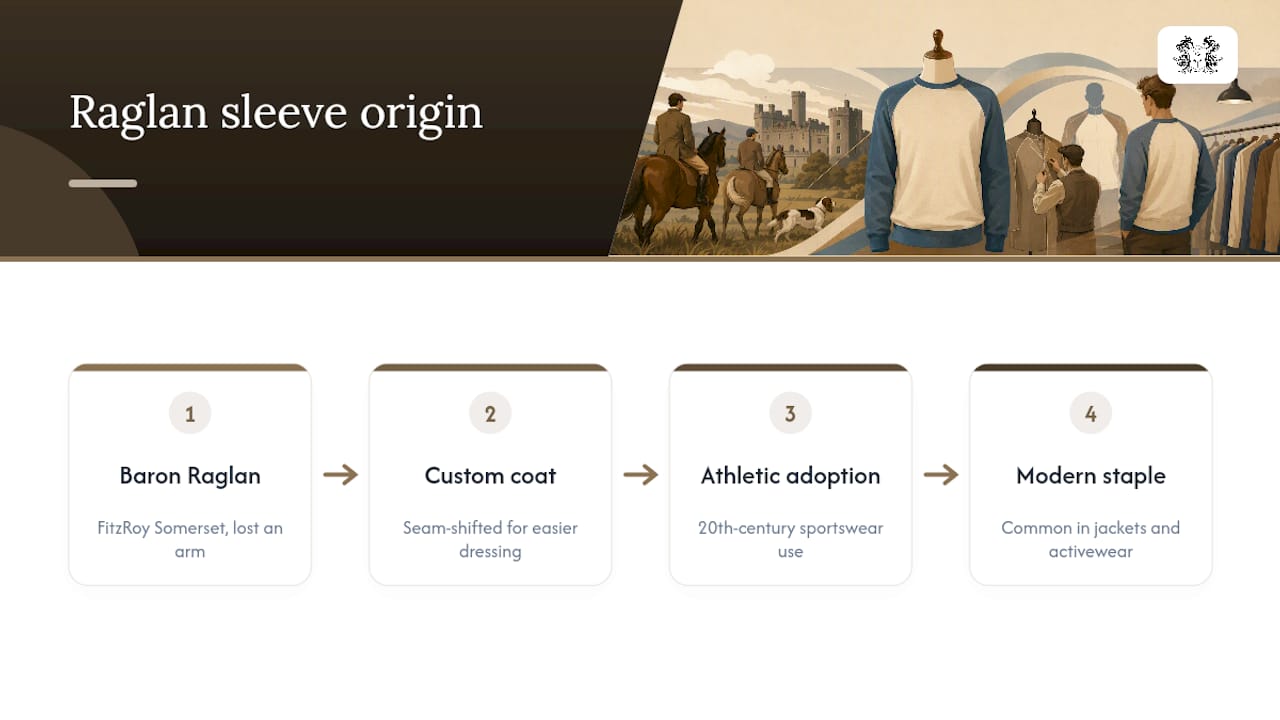
The name traces back to FitzRoy Somerset, 1st Baron Raglan, a British military commander. The most repeated version of the story credits a coat made for him after he lost an arm at the Battle of Waterloo, designed with a looser, seam-shifted sleeve that made dressing easier and movement more comfortable.
That practical origin. A cut built around real physical limitation. Explains why the style never stayed confined to military coats. Over the 20th century, the same seam logic that helped one man move more freely got adopted by athletic wear designers who needed the same thing for pitchers, swimmers, and anyone throwing a ball. What started as an overcoat detail is now a wardrobe staple, and it carries a story most people wearing it have never heard.
Common Garments That Use Raglan Sleeves
You’ve worn one. Almost everyone has. The cut shows up constantly across casual and athletic apparel because it solves a problem tailored clothing doesn’t need to solve: freedom of movement under stress.
- Baseball tees. The classic example, usually with contrast-colored sleeves that make the diagonal seam obvious at a glance.
- Hoodies and pullovers. Raglan construction pairs naturally with heavier fabric since there’s less bulk stacked at the shoulder.
- Athletic jerseys. Pitchers and swimmers benefit directly from the reduced restriction across the shoulder.
- Three-quarter sleeve shirts. A popular variation that stops the sleeve at the elbow, common in vintage-inspired designs.
- Some outerwear and coats. Less common today, but this is where the style started, on Lord Raglan’s own coat.
Retail guides consistently point to the baseball tee as the style’s most recognizable modern home, and it’s easy to see why. It puts the seam and the color contrast front and center.
The Real Trade-Offs: Benefits and Drawbacks of Raglan Sleeves
Raglan isn’t a universal upgrade. It’s a trade, and knowing what you’re trading helps you pick the right cut for the occasion.
What you gain:
- More mobility through the shoulder and upper arm
- A softer shoulder line that layers well under jackets or over other shirts
- Simpler construction, which often means fewer seams to catch or wear out
- A relaxed look that works for casual and athletic settings
What you give up:
- Less shoulder structure, so it won’t replicate a tailored, sharp-shouldered look
- On some body types, the diagonal seam can make shoulders look narrower or the drape slightly uneven
- Not the right choice for formal or business settings where a defined shoulder matters
Pro Tip: If you’re layering a raglan tee under a structured jacket, size up slightly in the outer layer. The rounded shoulder profile sits differently under a blazer than a set-in sleeve does, and a snug jacket shoulder will fight the raglan’s natural drape.
Pick raglan when comfort and movement matter more than a sharp silhouette. Pick set-in when the occasion calls for structure.
How Raglan Sleeves Change Fit and What to Check When Shopping
The diagonal seam shifts weight and drape away from the shoulder point, which changes how a shirt sits even before you factor in size. A raglan tee tends to skim the shoulder rather than cap it, so the overall silhouette reads looser through the upper body even in a true-to-size fit.
When you’re checking fit, focus on three things:
- Sleeve length. Raise your arm overhead. A well-cut raglan should move with you without pulling at the underarm seam.
- Shoulder balance. The diagonal seam should sit symmetrically on both sides. An uneven seam usually signals a poor pattern or a bad fit for your frame.
- Sleeve drape. Loose is normal for raglan. Baggy at the wrist is not.
Styling-wise, raglan tees work best leaning into the casual identity of the cut rather than fighting it. Pair one with jeans and sneakers, layer it under an unstructured jacket, or let a contrast sleeve do the visual work instead of adding more pattern elsewhere.
Why Modern Day Knight Builds Around the Raglan Cut
We didn’t choose raglan-friendly cuts by accident. Comfort and mobility matter to people who move for a living, and that’s who we build for. A softer shoulder line and a freer range of motion aren’t cosmetic details. They’re functional ones, the same reason the cut got adopted for pitchers and outfielders generations ago.
Our shirts and hoodies carry that same practical DNA. Clothing built to represent something should also be built to keep up with you, whether that’s a workday, a workout, or a weekend standing behind a cause you believe in. We’ve written more about how clothing builds community among people who share those values, because for us, fit and purpose are never separate conversations.
— Modern Day Knight
Shop Raglan-Friendly Tees Built With Purpose
Comfort shouldn’t come at the cost of what you stand for. Modern Day Knight’s tees combine a relaxed, mobile fit with messaging that means something, so you’re not choosing between a good fit and a statement worth wearing.
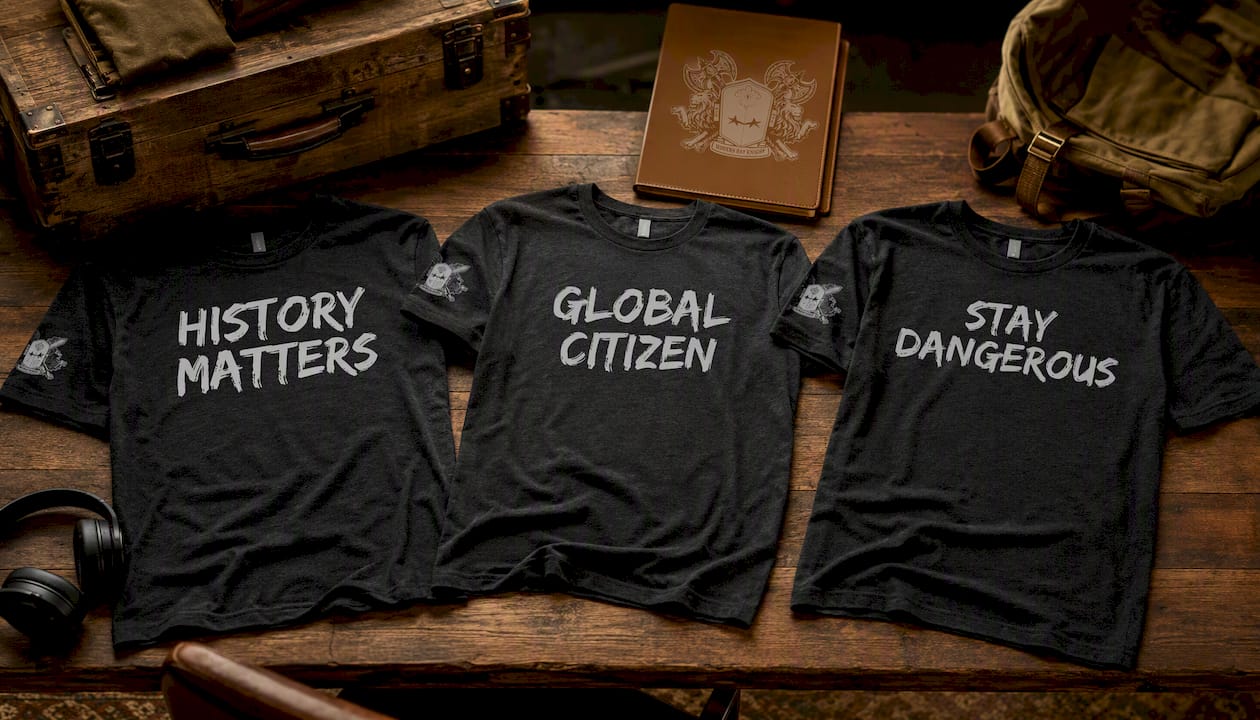
The History Matters Tee carries a message rooted in legacy and remembrance, cut for everyday casual wear with room to move through the shoulder. The Global Citizen Tee leans into a broader, values-first identity, built for layering or wearing solo without feeling restrictive. The Stay Dangerous Tee pairs a bold statement with the same relaxed, casual fit that makes it easy to dress up or down.
Browse the History Matters Tee, check out the Global Citizen Tee, or grab the Stay Dangerous Tee and put your values on. Your next favorite tee is one click away.
Where This Information Comes From
- Raglan sleeve overview — Wikipedia
- Raglan sleeve definition — Merriam-Webster
- Raglan sleeve sewing guide — Simply Sewing
- Raglan sleeve construction guide — Silver Bobbin
- Raglan t-shirt explainer — ShirtSpace
Sources
- Raglan sleeve - Wikipedia
- RAGLAN SLEEVE Definition & Meaning - Merriam-Webster
- How to sew a raglan sleeve - Simply Sewing
- What Are Raglan Sleeves? Complete Guide - Silver Bobbin


