



Choose tri-blend for ultra-soft, lived-in comfort with a vintage drape, and choose 100% cotton for maximum breathability and the crispest prints. Tri-blend costs more and shrinks less; cotton shrinks more but delivers bolder graphics and rugged structure. The right call depends on whether you’re chasing comfort or clarity, and the sections ahead break down composition, care, and a shopping checklist so you buy with confidence.
TL;DR:
- A tri-blend fabric typically includes cotton, polyester, and rayon with a common ratio of 50/25/25, providing softness, stretch, and shape retention.
- Cotton feels sturdier and improves through wear, while tri-blend offers a lighter, more flexible fit with faster-drying properties due to its synthetic fibers.
- Cotton absorbs moisture well but dries slowly and is better for warmth and breathability, whereas tri-blend dries faster, but its synthetic content can trap bacteria, leading to odor over time.
- Shrinkage is generally 1-3% for tri-blend and 3-5% for cotton; pre-shrunk options reduce size changes, but rayon remains the most delicate in both fabrics.
- For print clarity and color vibrancy, cotton is superior due to its natural fiber absorption, while tri-blend’s heathered look produces a vintage effect, making each fabric suitable for different design styles and uses.
Table of Contents
- Tri Blend vs Cotton: What Each Fabric Is Actually Made Of
- How Tri-Blend and Cotton Feel and Fit on the Body
- Breathability, Moisture, and Odor: Which Fabric Performs Better
- Care, Shrinkage, and How Each Fabric Ages
- How Fabric Choice Changes the Way a Print Looks
- Best Uses for Tri-Blend, Cotton, and the Blends in Between
- Your Shopping Checklist Before You Buy
- How Modern Day Knight Builds Around These Trade-Offs
- The Truth About Fabric Marketing That Nobody Tells You
- Shop the Fit That Matches Your Standard
- Sources
Tri Blend vs Cotton: What Each Fabric Is Actually Made Of
A tri-blend shirt is a mix of three fibers, typically cotton, polyester, and rayon, blended into one yarn instead of woven as separate materials. The most common ratio runs 50% cotton, 25% polyester, and 25% rayon, though manufacturers adjust that split depending on the weight and hand they’re after. Rayon, sometimes labeled viscose, is what gives tri-blend its signature drape and softness. Polyester holds the shape and keeps the garment from stretching out of form after a few washes.
Cotton, on the other hand, stands alone. But not all cotton is equal, and this is where a lot of shoppers get fooled by a soft-sounding label.
- Carded cotton is the basic, budget-grade version, with looser fibers that create a rougher, less durable weave.
- Combed cotton goes through an extra process that removes short fibers, leaving a smoother, stronger yarn.
- Ring-spun cotton twists fibers tighter during spinning, producing a softer hand and a shirt that holds up to repeated washing far better than carded cotton.
Each fiber pulls its own weight in a blend. Cotton brings breathability and a natural feel. Polyester brings durability and quick drying. Rayon brings drape and a silkier touch, though it’s also the most delicate fiber in the mix and the reason tri-blend care labels tend to be stricter. Knowing these ratios matters before you compare tri blend vs cotton on anything else, because the percentage on the tag predicts almost everything that follows: how it feels, how it prints, and how long it lasts.
How Tri-Blend and Cotton Feel and Fit on the Body
Tri-blend feels lighter and looser in the hand, almost like it’s already been through fifty washes. That’s the rayon at work. Rayon fibers are naturally more fluid than cotton, so they drape close to the body instead of holding a boxy shape.
Cotton feels sturdier from the first touch. A quality ring-spun cotton tee has structure. It holds a crease, keeps its shape on the hanger, and doesn’t cling. Over time, cotton actually improves. It goes through a break-in period, and after a dozen washes it develops that broken-in softness people associate with an old favorite. Tri-blend starts soft and mostly stays that way, since the polyester content resists much further change in either direction.
Stretch is another factor shoppers overlook. Polyester adds a slight spring, so tri-blend garments tend to snap back into shape after stretching during movement. Straight cotton has almost no natural stretch and can lose its shape with aggressive wear unless the weight and weave are heavy enough to resist it. If you’ve ever wondered whether tri-blend is better than cotton, the honest answer depends on whether you want a shirt that feels finished on day one or one that earns its softness over months of wear.
Pro Tip: If you’re shopping online and can’t feel the fabric, look for terms like “heathered,” “vintage,” or “relaxed drape” in the product description. Those words almost always signal tri-blend or a cotton-poly blend, not pure cotton.
Breathability, Moisture, and Odor: Which Fabric Performs Better
Cotton absorbs moisture well, which makes it comfortable against skin in dry heat but slower to dry once it’s soaked through with sweat. That absorbency is a strength and a limitation at the same time. It pulls moisture off your skin, but it holds onto that moisture longer than synthetic fibers do, which is why a cotton shirt can feel heavy and clingy by the end of a hard workout.
Tri-blend’s drying speed depends heavily on its polyester share. Polyester doesn’t absorb water the way cotton does. It moves moisture to the surface where it evaporates faster, so a tri-blend tee with a healthy polyester percentage will typically feel drier sooner after activity than a straight cotton shirt.
Odor tells a different story. Polyester’s structure traps bacteria more readily than cotton’s, and bacteria buildup is what causes that stubborn synthetic smell that lingers even after washing. A tri-blend still performs better on odor than 100% polyester since the cotton and rayon content dilutes the effect, but it won’t out-perform pure cotton for all-day freshness.
Here’s how that plays out by activity:
For running or gym sessions, a tri-blend with a higher polyester ratio dries faster and moves better, but don’t expect it to smell fresher than cotton after a tough sweat session.
For travel, tri-blend wins on wrinkle resistance and packability. It bounces back from a suitcase better than cotton does.
For everyday casual wear, cotton is usually the more comfortable choice against skin for extended wear, especially in warm, humid climates.
The takeaway: match the fabric to the activity, not the marketing copy on the hangtag.
Care, Shrinkage, and How Each Fabric Ages
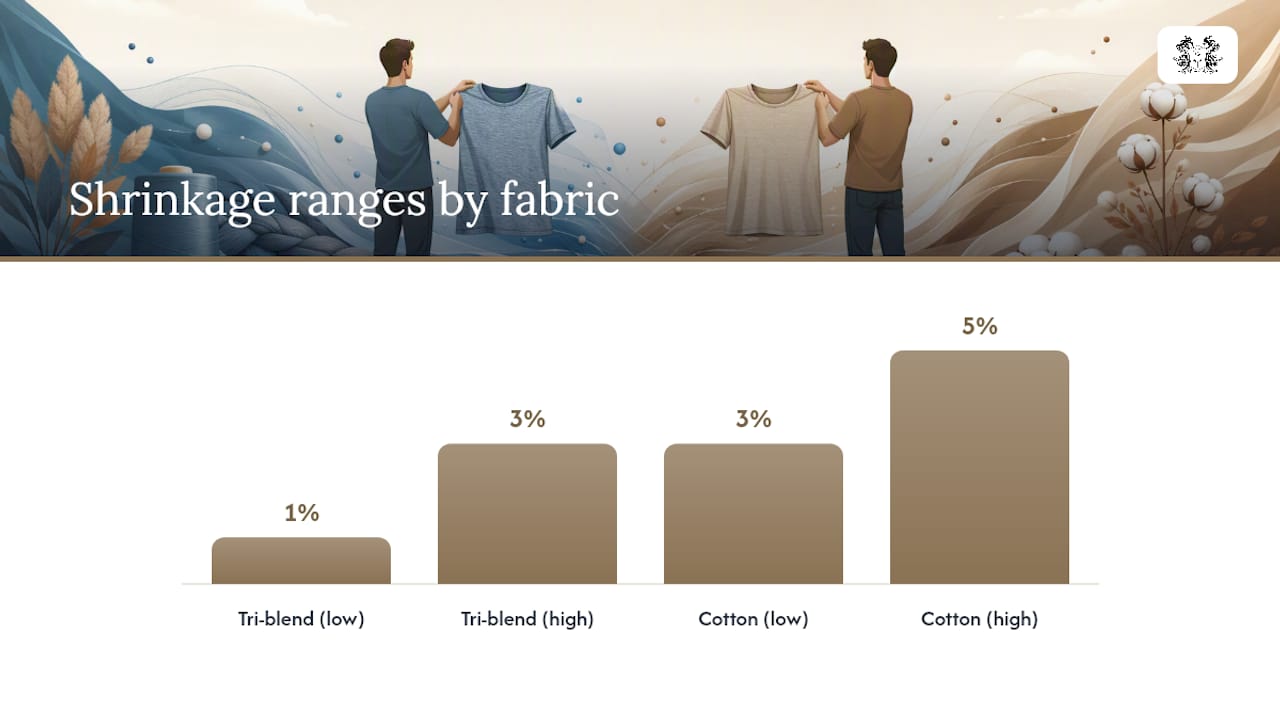
Shrinkage is one of the biggest surprises for first-time buyers comparing tri blend vs cotton, and the numbers matter more than most people realize. Tri-blend shirts typically shrink around 1% to 3% on the first wash, while 100% cotton commonly shrinks 3% to 5% depending on how it was constructed and whether it was pre-shrunk at the factory. Polyester and rayon simply relax less than cotton fibers do when exposed to heat and water, which is why blended garments hold their original measurements more reliably.
That doesn’t mean tri-blend is immune. Rayon is the delicate one in the mix, and it can lose shape or pill if it’s over-dried on high heat repeatedly.
Follow these steps to protect fit and fabric quality on either type:
- Wash in cold water. Hot water accelerates shrinkage in cotton and can stress the rayon fibers in a tri-blend.
- Turn garments inside out before washing to protect any printed graphics from friction.
- Skip the high heat dryer setting. Air drying or a low-heat tumble cycle preserves both cotton’s shape and rayon’s drape.
- Avoid fabric softener on printed shirts, since it can build a film over ink and dull the design over time.
- Check the label for “pre-shrunk.” Manufacturers who pre-treat fabric before cutting reduce future shrinkage risk substantially, which matters more for cotton than tri-blend.
Pro Tip: If a shirt doesn’t list “pre-shrunk” anywhere on the tag or product page, assume it will shrink close to the higher end of the range and size up if you’re between sizes.
As for aging, cotton shows wear through fading and softening, which many people actually prefer since it looks lived-in rather than worn out. Tri-blend resists fading better because of its synthetic content, but the seams and print areas tend to show stress first, particularly on shirts with heavy embroidery or dense screen printing.
How Fabric Choice Changes the Way a Print Looks
If you’re buying or designing merch, this is the section that decides your outcome more than any other. Cotton fibers absorb ink directly into the weave, which is why 100% cotton produces the brightest, most saturated prints and is the standard choice for bold logos, sharp text, and high-contrast graphic tees.
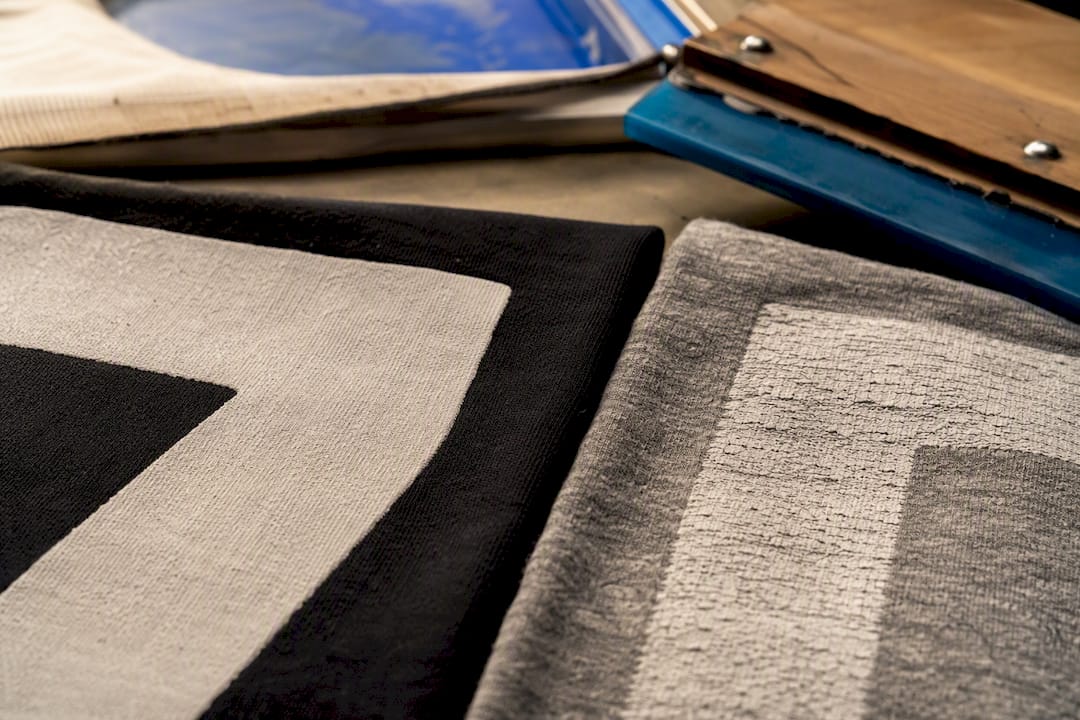
Tri-blend behaves differently because of its mixed fiber content. Cotton, polyester, and rayon each accept dye and ink at different rates, which is exactly why tri-blend fabric has that heathered look even before anything is printed on it. Run a print over that uneven base and the ink settles into a softer, faded finish that reads as vintage rather than crisp. Brands that want a worn-in, retro aesthetic lean into tri-blend on purpose.
Printing method matters just as much as fabric choice:
- Screen printing works well on cotton for vibrant, opaque colors, but requires lower curing temperatures and softer ink formulations on tri-blend to avoid scorching the polyester content.
- DTG (direct-to-garment) printing favors cotton because the ink absorbs cleanly into natural fiber; results on tri-blend can look muted or slightly grainy.
- Discharge printing removes dye from the fabric and replaces it with pigment, and it performs best on 100% cotton since synthetic fibers resist the discharge chemical process.
If you’re sourcing shirts for a print run, ask your vendor three things before committing: what substrate the ink is formulated for, what curing temperature the fabric tolerates, and whether pre-treatment is needed for dark garments. Skipping that conversation is how brands end up with cracked ink or washed-out colors on their first batch.
Best Uses for Tri-Blend, Cotton, and the Blends in Between
Matching fabric to purpose saves you money and disappointment. Here’s how the decision typically breaks down by use case:
- Merch and retail apparel built for bold branding and vivid colors should lean toward 100% cotton, since print clarity and color saturation matter more than drape for most storefronts.
- Athletic and performance wear benefits from tri-blend or higher-polyester blends, since faster drying and shape retention outperform pure cotton during movement.
- Everyday casual tees work well in either fabric, but tri-blend edges ahead for shoppers who want a shirt that feels broken-in the day it arrives.
- Hoodies and layering pieces favor cotton or heavier cotton-poly blends for structure and warmth retention, since tri-blend’s lighter drape doesn’t hold heat as effectively under a jacket.
- Premium streetwear and vintage-style graphics almost always choose tri-blend on purpose, since the faded print effect is a design feature, not a flaw.
These blends resist wrinkling better than pure cotton, shrink less, and still take ink reasonably well, though they won’t match tri-blend’s drape or cotton’s print vibrancy.
Cost is the final piece of the puzzle. Tri-blend commands a higher wholesale and retail price than standard cotton because of its material complexity and the premium hand shoppers pay for. Cotton, especially carded cotton, remains the budget-friendly workhorse for high-volume orders where the softness upgrade doesn’t justify the added cost.
Your Shopping Checklist Before You Buy
You don’t need a textile degree to shop smart. Run through this checklist before you add anything to your cart:
- Check the fiber breakdown on the tag. If a listing doesn’t state the exact percentages, that’s a red flag, not a minor omission.
- Look for ring-spun or combed cotton labeling if you’re buying pure cotton, since carded cotton wears out faster and feels rougher against skin.
- Read the care label closely. Vague instructions like “wash as needed” tell you nothing about shrinkage risk or how the rayon in a tri-blend will hold up.
- Ask whether the fabric is pre-shrunk, especially for cotton, since that single detail can save you a full size up or down.
- Weigh cost against lifetime use. A $35 tri-blend tee that lasts years and never needs ironing may cost less per wear than a $15 cotton shirt you replace twice a year.
- Confirm printing method compatibility if you’re buying custom merch, since a vendor who can’t answer basic questions about ink and curing temperature probably hasn’t tested their process on your chosen fabric.
Walking into a purchase with these questions answered turns a guessing game into an informed decision, whether you’re buying one shirt or ordering two hundred for a team.
How Modern Day Knight Builds Around These Trade-Offs
We’re a veteran-owned brand, and that means every piece we put our name on has to earn its place. Fabric choice isn’t an afterthought here. It’s part of how we honor the standard we hold ourselves to.
Our collection of shirts leans on cotton and cotton-forward builds where bold graphics and clear messaging matter most. When your shirt carries a statement about integrity or loyalty, that message needs to read clean, not faded into a heathered blur. That’s why our approach to cotton vs polyester construction favors the fabric that lets our designs speak without compromise.
For layering pieces and colder-weather gear, our hoodie collection is built with structure in mind, the kind that holds its shape through training, travel, and everyday duty. A hoodie that stretches out after one wash doesn’t reflect a high standard.
We also put real thought into how our garments hold up over time, which is why we wrote a care guide for heavy-duty lifestyle apparel covering wash cycles, drying habits, and how to protect print integrity across seasons of wear. Every recommendation in that guide traces back to the same fiber science covered here: know your fabric, care for it right, and it’ll carry your values a lot longer than a shirt that falls apart after a summer.
The Truth About Fabric Marketing That Nobody Tells You
Most fabric guides treat tri-blend and cotton like a beauty contest, crowning one “better” overall. That framing misses the point entirely. The real question isn’t which fabric wins. It’s which fabric matches the mission you’re dressing for.
Where conventional advice falls short is in treating softness as the only variable worth chasing. Softness fades in importance fast when a shirt can’t hold a crisp print of something you actually believe in, or when it stretches out of shape after a few hard training sessions. Structure, durability, and print clarity carry weight too, and cotton earns its keep there.
Prioritize the use case first, not the hand-feel. Ask what the shirt needs to do, whether that’s carrying a message with total clarity, holding shape through daily wear, or feeling like a second skin from day one. The fabric that fits your mission almost always makes itself known once you frame the decision that way.
— Modern Day Knight
Shop the Fit That Matches Your Standard
This brand is built for people who don’t buy shirts, they buy statements. Every piece made ties fabric choice directly to purpose, so you’re not guessing whether a garment will hold up to what you stand for.
If you want the structured hold and print clarity that comes with a cotton-forward build, the Army Brat Tee delivers bold graphics that won’t fade into the background. Layering up? The Army Brat Hoodie and the Global Citizen Hoodie bring structured warmth built to outlast a season. Want that classic, broken-in feel without sacrificing message clarity? The Global Citizen Tee fits the everyday-wear category well. For a timeless hoodie style that holds its shape through repeated wear, look at the Modern Day Knight Old School Hoodie, and for daily accountability layered with durability, the Accountability Hoodie rounds out the lineup.
Browse the full lineup and pick the fabric and fit that carries your standard the way it deserves.
Sources
- T-Shirt Fabric Guide: Cotton vs. CVC vs. Tri-Blend
- Meridianrules
- 100% Cotton vs Polyester vs Tri-Blend T-Shirts Explained – Local Threads
- The Difference Between Cotton, Polyester and Tri-Blends and Why We Like Cotton – Lone Creek Apparel


