



Proper care for heavy-duty lifestyle garments means applying specific washing, drying, and storage methods that protect performance fabrics from breakdown and extend their working life. The industry term for this practice is technical garment maintenance, and it applies to any clothing built for demanding physical use, including flame-resistant workwear, DWR-coated outerwear, and reinforced cotton apparel. 83% of luxury and high-end garment damage results from improper laundry, not natural wear. That single fact reframes everything. Your gear is not wearing out. You are washing it to death.
What washing practices best preserve heavy-duty garment performance?
The right wash starts before you touch the machine. Sorting matters more than most people realize. FR and hi-vis workwear must be washed separately from regular laundry to prevent contaminant residue from impairing safety ratings. Mixing a flame-resistant jacket with a standard load is not just a care mistake. It is a safety risk.
Water temperature is the next critical variable. Durable cotton garments wash best between 15°C and 38°C, which is roughly 60°F to 100°F. Flame-resistant clothing must never exceed 60°C, or you risk 5–10% shrinkage that permanently compromises the fit and protective coverage. Cooler water protects the fabric structure and preserves any applied coatings.
Pre-treatment is non-negotiable for heavily soiled gear. Follow these steps when dealing with fuel or oil contamination:
- Remove excess soil with a soft brush before wetting the garment.
- Submerge the garment in liquid detergent and cool water for 30–60 minutes to penetrate hydrocarbon soils.
- Check for any remaining fuel smell before placing the item in the machine. A persistent fuel smell after soaking signals a fire hazard that requires a non-flammable degreaser rewash.
- Run the machine on a gentle cycle with the appropriate temperature setting.
- Inspect the garment after washing before placing it in the dryer.
“A garment that smells clean is not always safe. Residual detergent and softener buildup can leave fire hazards in fuel-soaked flame-resistant clothing even when the fabric appears clean.” — Rated for Work
Pro Tip: Zip all zippers closed before loading technical garments into the machine. Open zippers snag fabric, deform zipper teeth, and cause failures at the worst possible moments.
How should you dry and store heavy-duty lifestyle garments?
Drying is where most people undo good washing habits. The right method depends on the garment type, but the principle is consistent: controlled heat protects performance, and excess heat destroys it.
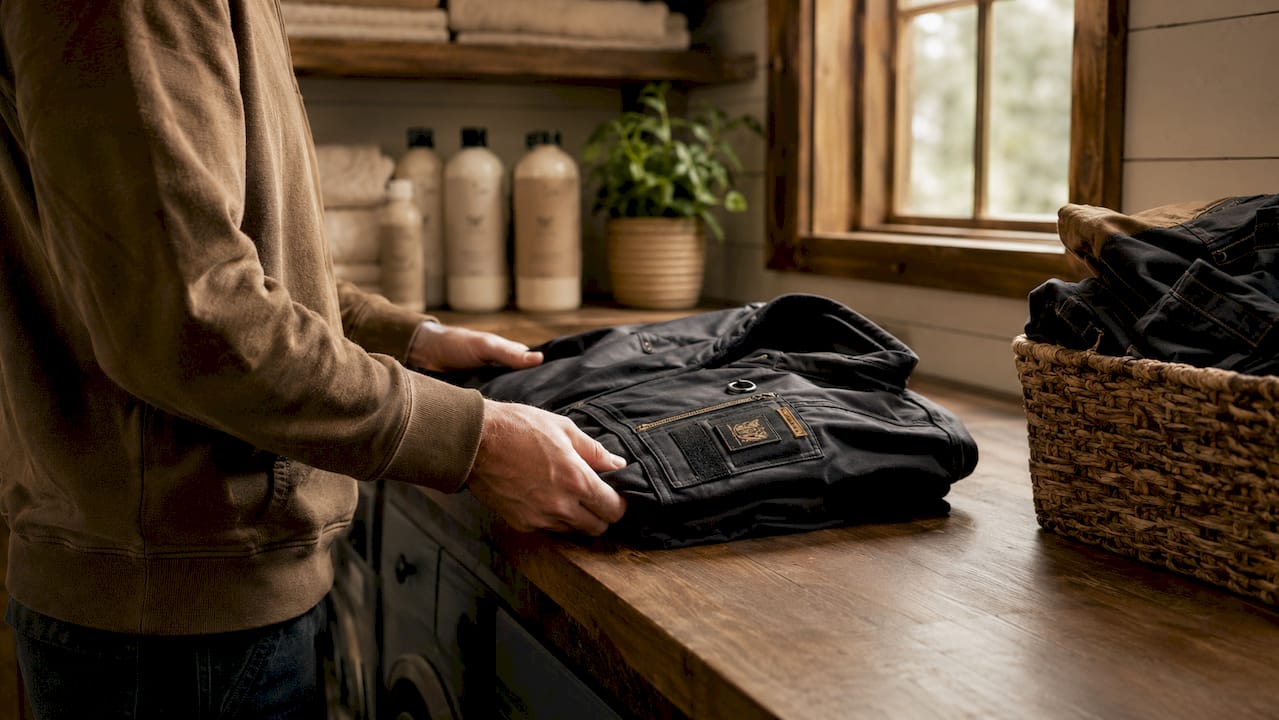
For garments with DWR (Durable Water Repellent) coatings, tumble dry on low heat for 20 minutes after washing. That brief heat cycle reactivates the DWR coating, restoring the water-beading effect that keeps you dry in the field. Skipping this step leaves the coating dormant even though it is still present in the fabric.
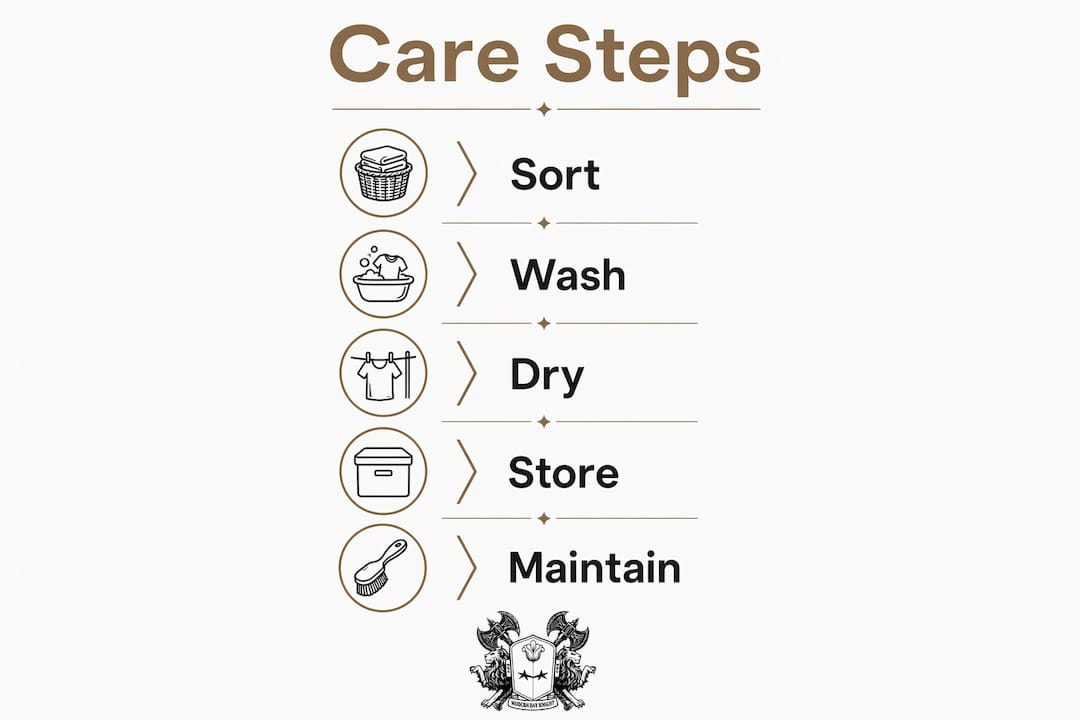
Flame-resistant and heavily insulated garments benefit from air drying instead. Lay them flat or hang them on contoured wooden hangers, never on wire hangers. Plastic dry-cleaner wire hangers damage garment shoulders over time by creating pressure points that distort the fabric structure permanently.
Storage deserves the same attention as washing. Here is what works:
- Use breathable cotton garment bags. Plastic bags trap moisture, causing gas fading and mold growth that ruins fabric color and integrity.
- Add cedar blocks to storage areas. Cedar naturally deters moths and fabric pests without chemical residue.
- Replace cedar blocks every 6 months. Cedar loses its potency over time, and replacing it biannually maintains effective pest deterrence.
- Rotate your garments. Wearing the same piece repeatedly without rest accelerates wear at stress points like elbows and knees.
- Store in a cool, dry location. Heat and humidity accelerate fabric breakdown even when garments are not being worn.
Pro Tip: Never store heavy-duty apparel in a sealed plastic bin long-term. The trapped humidity creates a breeding ground for mildew, and the off-gassing from plastic can fade dyed fabrics over months.
| Storage method | Effect on garment |
|---|---|
| Breathable cotton bag | Prevents moisture buildup and gas fading |
| Plastic garment bag | Traps humidity, causes mold and color loss |
| Contoured wooden hanger | Preserves shoulder shape and structure |
| Wire dry-cleaner hanger | Distorts shoulders, creates pressure damage |
| Cedar blocks (replaced biannually) | Deters pests without chemical residue |
When and how often should heavy-duty apparel be cleaned?
Cleaning frequency is one of the most misunderstood aspects of maintaining durable clothing. More washing does not mean better care. Experts recommend airing high-end garments between wears rather than washing after every use. This preserves coatings, elasticity, and fabric structure far longer than frequent machine cycles.
For technical gear with DWR coatings, the guideline is clear: wash every 10–12 days of heavy use. That schedule balances hygiene with coating preservation. Washing more often than necessary strips protective treatments and shortens the garment’s effective life.
Build a simple maintenance routine around these four steps:
- Air out after each wear. Hang the garment in a ventilated space for several hours before storing. This removes odor and moisture without a wash cycle.
- Spot clean minor soiling. Use a damp cloth and a small amount of pH-neutral detergent on isolated dirty areas. This avoids a full wash for minor contamination.
- Inspect hardware and seams monthly. Check zippers, snaps, and taped seams for wear. Catching a failing zipper early prevents a full garment failure in the field.
- Schedule a professional clean when DWR fails. If water no longer beads on the surface and a low-heat tumble dry does not restore the effect, the coating needs professional reapplication.
Pro Tip: Reactive cleaning after heavy use and routine upkeep are two different things. Treat a muddy field day differently from a regular training session. Match the cleaning intensity to the actual soil level, not the calendar.
What detergents and chemicals should you use or avoid?
Detergent choice directly determines whether your gear survives the wash cycle or degrades inside it. Standard detergents and fabric softeners damage DWR coatings and reduce the stretchiness of performance fabrics. The chemicals coat individual fibers, blocking moisture-wicking channels and breaking down water-repellent treatments.
The right detergent for heavy-duty clothing is a heavy-duty liquid formula that is pH-neutral and non-tallow based. Powder detergents leave residue in fabric weaves. Tallow-based soaps, which are derived from animal fat, coat fibers in a way that degrades flame resistance over time.
For flame-resistant clothing specifically, the forbidden chemicals are non-negotiable:
- Fabric softeners. They coat FR fibers and reduce the garment’s ability to self-extinguish.
- Bleach. It breaks down the chemical treatment that gives FR fabric its protective properties.
- Starch. It makes fabric more flammable by adding a combustible coating.
- Dryer sheets. Like fabric softeners, they leave a residue that compromises FR performance.
“Residual softener and detergent buildup can leave fire hazards in fuel-soaked flame-resistant garments despite the garment appearing clean. A non-flammable degreaser rewash is the only safe solution.” — Rated for Work
For fuel-soaked gear, citrus-based degreasers are also off the list. Citrus degreasers are flammable and can leave residue that creates a fire risk in FR clothing. Use only non-flammable, purpose-formulated degreasers designed for industrial workwear. Check the purposeful lifestyle clothing checklist for guidance on selecting garments built to handle these care requirements from the start.
How do you fix common care mistakes and extend garment lifespan?
The most common mistake is washing at too high a temperature. Heat shrinks FR garments, destroys DWR coatings, and sets stains permanently. If you have been washing durable cotton at 60°C or above, drop the temperature immediately and assess the garment for shrinkage or coating failure.
The second most common mistake is ignoring the care label. Every technical garment carries specific instructions from the manufacturer. Those instructions are not suggestions. They reflect the exact conditions the fabric was engineered to handle. Ignoring them voids any performance guarantee and accelerates damage.
Here is how to identify and address the most common damage types:
| Damage type | How to identify | Corrective action |
|---|---|---|
| DWR coating failure | Water soaks in instead of beading | Tumble dry 20 min on low; re-treat if needed |
| Fabric thinning | Visible light through stretched areas | Retire or patch; do not rely on safety features |
| Zipper deformation | Zipper skips or fails to close fully | Replace zipper; do not force it closed |
| Tape curling on seams | Seam tape lifts or peels at edges | Professional re-taping required |
| Mold or mildew odor | Musty smell after storage | Wash immediately; switch to breathable storage |
Seasonal storage preparation prevents most long-term damage. Before storing garments for an extended period, wash them thoroughly, dry them completely, and inspect every seam and zipper. Storing a damp or soiled garment creates mold, attracts pests, and sets stains that become permanent.
Pro Tip: Before storing garments at the end of a season, check every pocket for forgotten items. Metal objects left in pockets corrode and stain fabric from the inside during storage.
Key Takeaways
Proper technical garment maintenance requires correct water temperature, approved detergents, controlled drying, and breathable storage to preserve both safety features and performance coatings.
| Point | Details |
|---|---|
| Wash at the right temperature | Keep durable cotton between 15°C and 38°C; never exceed 60°C for FR clothing. |
| Avoid fabric softeners and bleach | These chemicals degrade DWR coatings and compromise flame-resistant protection. |
| Tumble dry to reactivate DWR | 20 minutes on low heat restores water-repellent performance after washing. |
| Store in breathable cotton bags | Plastic bags trap moisture and cause gas fading; cedar blocks deter pests. |
| Air out between wears | Frequent washing accelerates damage; airing preserves coatings and fabric structure. |
What I have learned from years of wearing gear that has to perform
Most people treat garment care as an afterthought. They buy quality clothing, wear it hard, and then run it through the same hot wash cycle they use for everything else. That approach works fine for a basic cotton tee. It destroys technical gear.
The gap between common assumptions and technical reality is wide. People assume hot water cleans better. It does not. It shrinks FR fabric, strips DWR coatings, and sets stains. People assume fabric softener is a sign of care. It is not. It is one of the fastest ways to turn a high-performance garment into a liability.
What actually works is discipline. The same discipline that goes into choosing gear built on values goes into maintaining it. At Moderndayknightco, we build clothing that reflects a code of honor. That code does not stop at the purchase. It extends to how you treat what you own. A garment that carries meaning deserves to be maintained with intention.
The readers who get the most out of their heavy-duty apparel are the ones who treat maintenance as part of the lifestyle, not a chore. They air out their gear. They check their zippers. They read the care label. That is not obsessive. That is respect for the investment and for the values the clothing represents. Gear that is properly maintained lasts longer, performs better, and keeps you safer. That is not a small thing. That is the whole point.
— Modern Day Knight
Built to last: Moderndayknightco apparel for the heavy-duty lifestyle
Moderndayknightco designs apparel for people who live with purpose and demand the same from their clothing. Every piece in our durable apparel collection is built for active, demanding use and constructed to hold up under the care practices outlined here. From the Army Brat Hoodie to our full range of shirts, each garment is made to be worn with conviction and maintained with care. When you invest in clothing that reflects your values, protecting that investment with the right maintenance routine is part of the code. Shop the collection and wear what you stand for.
FAQ
What temperature should I wash heavy-duty garments at?
Wash durable cotton garments between 15°C and 38°C (60°F–100°F). Flame-resistant clothing must never exceed 60°C to avoid shrinkage and loss of protective coverage.
Can I use fabric softener on performance workwear?
No. Fabric softeners coat fibers and permanently damage moisture-wicking channels and DWR coatings. They also reduce the self-extinguishing properties of flame-resistant fabrics.
How often should I wash technical lifestyle clothing?
Wash technical gear with DWR coatings every 10–12 days of heavy use. Between washes, air the garment out in a ventilated space to preserve coatings and reduce unnecessary wash cycles.
How do I reactivate a DWR coating after washing?
Tumble dry the garment on low heat for 20 minutes after washing. The controlled heat reactivates the DWR treatment and restores the water-beading effect without damaging the fabric.
What is the safest way to store heavy-duty garments long-term?
Store in breathable cotton garment bags with cedar blocks, replacing the cedar every 6 months. Avoid plastic bags, which trap moisture and cause gas fading and mold growth.


