



The fastest way to shop ethically and align your appearance with your beliefs is simple: prioritize purposeful messaging over military aesthetic shorthand, and verify durability and provenance before you buy. Clothing carries weight beyond fabric. Research on enclothed cognition shows that symbolic garments shape how we act and how others read us, which is exactly why the wrong shirt can undercut the values you’re trying to project.
Two moves get you there fast:
- Scan the product copy and imagery for respectful, values-driven language, not rank, unit patches, or tactical replica gear.
- Check for a veteran-owned statement, a mission page, or community ties. Modern Day Knight is one option built specifically around that standard.
Table of Contents
- Four Rules for Evaluating Values-Aligned Military-Inspired Apparel
- What Should You Check Before You Buy?
- Why Clothes Change How You Feel and How Others Read You
- Choose Values, Not Just a Silhouette
- Where Do Military Symbols in Apparel Actually Come From?
- How Ethical Manufacturing Connects Appearance to Belief
- How Can You Verify a Brand’s Ethical Claims?
- How to Support Brands With Transparent Supply Chains
- What Goes Wrong When Military Symbols Get Misused?
- How Do You Balance Personal Expression With Cultural Sensitivity?
- Why Modern Day Knight Fits These Rules
- Sources
Four Rules for Evaluating Values-Aligned Military-Inspired Apparel
Aesthetic shorthand is easy. Real alignment takes work. Here are four rules that separate a shirt that means something from one that just looks tough.
1. The message carries the weight, not the costume. A slogan tied to loyalty, discipline, or accountability tells the world what you stand for. A copied unit patch or rank insignia tells the world you’re borrowing someone else’s earned identity. Practitioner guidance in Army Times is blunt on this point: skip literal insignia and unit-specific gear, and choose heraldic motifs, mottos, or plain statements of value instead.
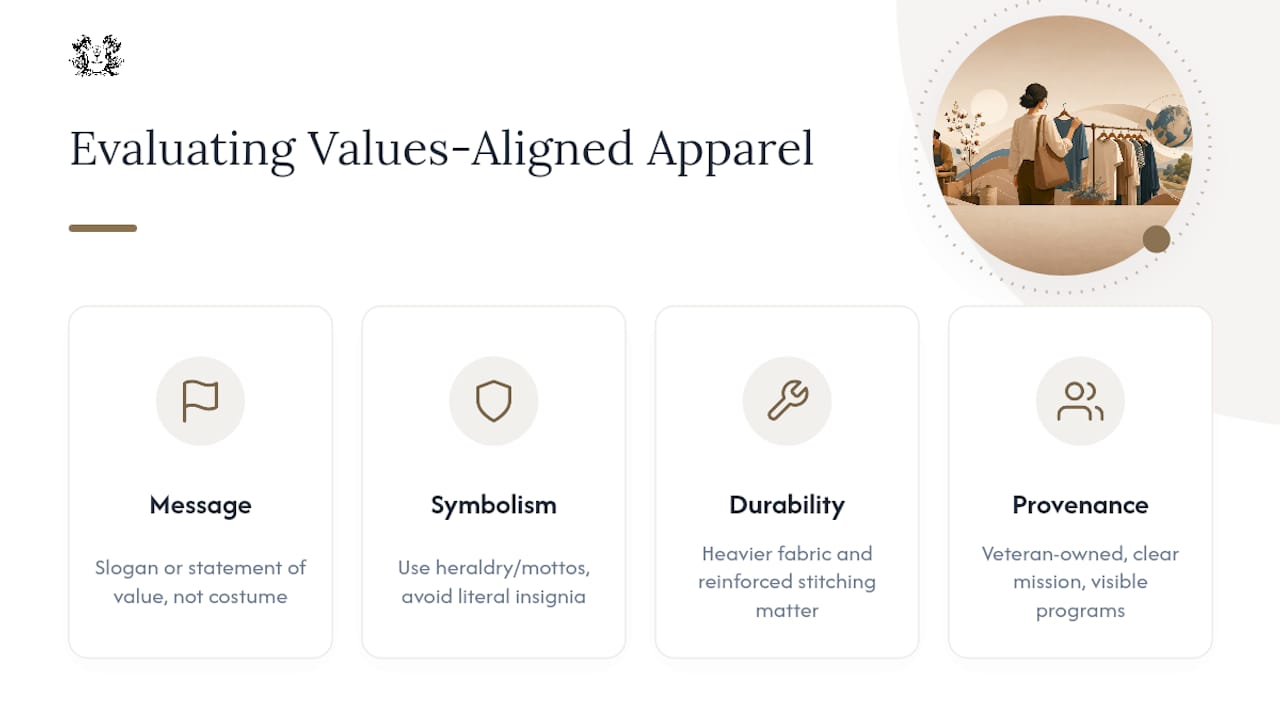
2. Symbolism should honor, not appropriate. Military uniforms function as public statements of belief in a system — they signal status, unity, and identity. A civilian shirt that mimics that symbolism without context strips away the meaning and keeps only the costume. Heraldry-inspired graphics and motto-based designs sidestep that trap because they reference values, not rank.
3. Durability is part of the message. A shirt that falls apart after three washes contradicts everything it claims to represent. Heavier fabric weights, reinforced stitching, and construction built for daily wear are the physical version of resilience. If a brand can’t tell you the fabric weight or stitch details, that’s a gap worth noticing.
4. Provenance is your trust signal. Veteran-owned status, a clear mission statement, and visible community programs tell you a brand built its product around the audience it claims to serve, not around a trend cycle.
Pro Tip: Before you add anything to your cart, ask one question: does this item say something I believe, or does it just look like something I’ve seen on someone who earned the right to wear it?
What Should You Check Before You Buy?
Vetting a shirt or hoodie takes two minutes if you know where to look. Run through this list on any product page or in any store aisle:
- Read the copy twice. Look for explicit language about tribute, heritage, or charitable purpose, and treat vague “military-style” descriptions as a caution sign.
- Check the fabric and construction details. Weight, blend, and stitch information tell you whether the piece is built to last or built to photograph well once.
- Confirm the brand’s provenance. A visible values page, a veteran-owned statement, or a documented community program are the difference between marketing and mission.
- Read the fit and styling notes. A tight tactical silhouette or faux-issue cut sends a different signal than a clean, values-driven tee or hoodie. Fit changes meaning as much as text does.
- Check the returns policy and real customer photos. Sizing charts lie more often than customers do.
That last point matters more than it seems. Research on target dress and person perception confirms that fit and styling are major cues people use to infer beliefs and group membership. A shirt that fits like a costume reads like one, no matter what the slogan says.
Why Clothes Change How You Feel and How Others Read You
Clothing does two jobs at once: it changes how you feel, and it changes how others categorize you. The first job has a name in psychology research: enclothed cognition. It describes how a garment’s symbolic meaning, combined with the physical act of wearing it, shapes cognition and behavior. A Frontiers in Psychology study found that military-style garments can increase a wearer’s sense of agency, while other role-based uniforms, like a Red Cross uniform, can increase empathy for others. The symbol you choose to wear doesn’t just decorate you. It nudges how you show up.
The second job shows up in confidence research. A 2024 study in Sustainability found that clothing style confidence, built from factors like authenticity and appearance importance, rises when garments match personal values. Wear something that actually reflects what you believe, and your self-assurance follows.
“Uniforms serve symbolic roles: status, unity, identity, and the reinforcement of a mission greater than the individual.” That’s the core finding from the Australian Army Research Centre’s analysis on military dress, and it’s worth sitting with before you buy anything camo-adjacent.
Here’s the practical catch: context matters. A values-driven tee at a family barbecue reads as pride. The same shirt worn as costume at an unrelated event can misfire, especially if the symbolism feels borrowed rather than earned. Check the room before you check the mirror.
Choose Values, Not Just a Silhouette
A camo pattern and a values statement are not the same purchase, even when they hang on the same rack. One borrows a look. The other declares a commitment. If you’re shopping to reflect integrity, loyalty, or strength, start with the word choice on the shirt, not the color palette.
Ask what the garment actually claims. “Loyalty runs deeper than blood” is a statement you can stand behind in any room. A shirt covered in unearned rank stripes is a costume, and costumes come off at the end of the night. Values don’t.
This distinction also shapes how a piece ages in your closet. Trend-driven militarized aesthetics cycle out fast, because they were never about meaning in the first place, just about a look that was popular for a season. A shirt built around accountability, family heritage, or service to something bigger than yourself doesn’t go out of style, because the value it names doesn’t go out of style either.
The practical test: if you removed all the camouflage print and tactical stitching from a garment and it had nothing left to say, it was aesthetic shorthand. If the message would still stand on a plain cotton tee with no visual military cues at all, you’ve found something real.
Where Do Military Symbols in Apparel Actually Come From?
Heraldry, mottos, and unit insignia carry centuries of history most shoppers never learn. Rank insignia developed to communicate authority and responsibility within a chain of command, earned through service, not purchased at checkout. Unit patches identify specific groups with specific histories, often tied to real operations and real losses. Wearing them without that history isn’t neutral. It borrows weight you haven’t carried.
Heraldic and motto-based designs work differently. A crest built around a value like “duty” or “honor” references an idea, not a specific unit or rank someone else earned. That’s the meaningful line: symbols that represent shared values are open to anyone who holds those values. Symbols that represent specific, earned service belong to the people who earned them.
Broader cultural analysis backs this distinction. Academic work on the militarization of fashion points out how widespread militarized imagery in mainstream apparel can normalize or flatten symbols that once carried serious weight. That doesn’t mean military-inspired clothing is off limits. It means the responsible move is choosing symbols built to be shared rather than symbols built to be earned.
How Ethical Manufacturing Connects Appearance to Belief
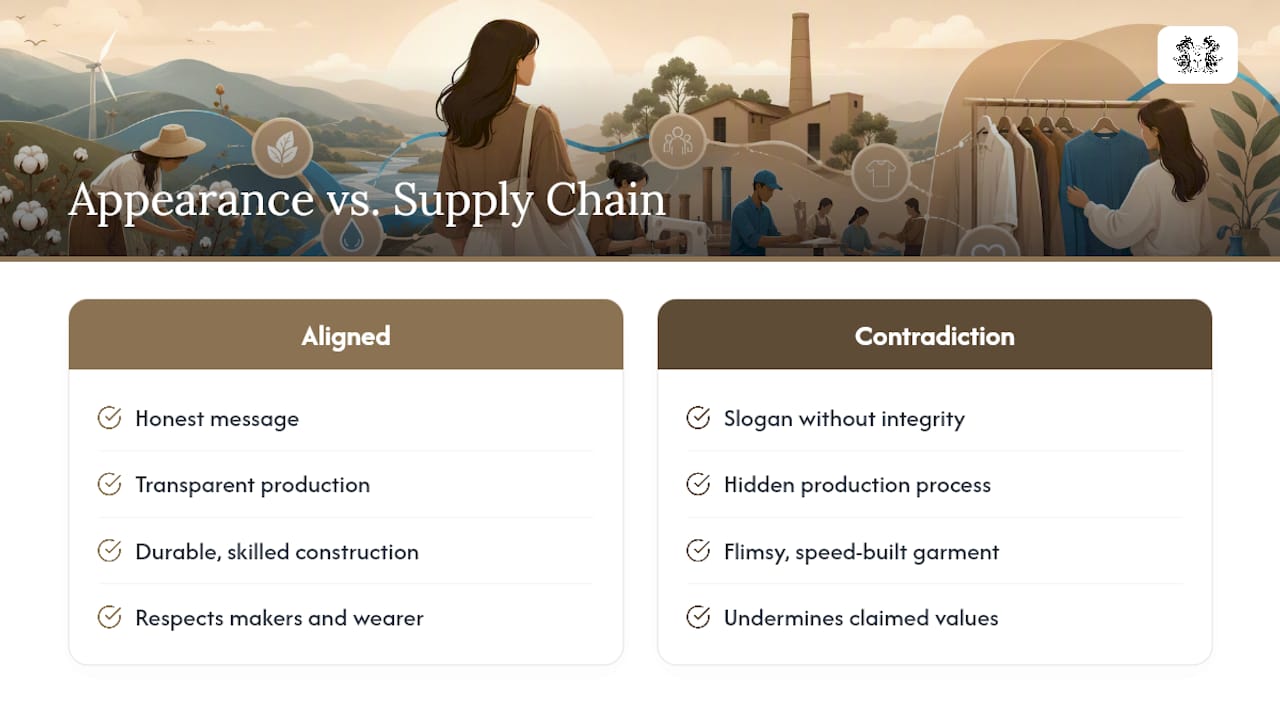
A shirt with an honest message and a dishonest supply chain is a contradiction you’re wearing. If integrity is the point, the way a garment gets made has to match the message printed on it.
Ethical manufacturing shows up in concrete ways: fair labor conditions, transparent sourcing, and construction quality that reflects respect for both the people who made the garment and the person who’ll wear it daily. A brand that talks about loyalty and accountability but hides its production process is selling a slogan, not a value.
This is also where durability and ethics overlap more than people expect. Heavier, better-constructed garments generally require more skilled labor and better materials, which tends to track with manufacturing practices worth standing behind. A flimsy shirt that falls apart in a month usually came from a supply chain built for speed, not care.
For veterans and supporters specifically, this connection matters even more. Clothing that claims to honor service while cutting corners on the people who made it undercuts its own message. The alignment the reader is looking for, appearance matching belief, has to run all the way through the product, not just across the front of the shirt.
How Can You Verify a Brand’s Ethical Claims?
Claims are easy to print. Verification takes a little more effort, but not much.
Start with specifics. A brand that states clear details, like fabric sourcing, veteran-owned status, or a defined mission, is easier to check than one using vague language like “made with care” or “inspired by service.” Vague claims usually mean there’s nothing concrete behind them.
Look for a dedicated values or about page that names actual commitments rather than general good intentions. Community programs, donation partnerships, or documented veteran ownership all serve as checkable claims, unlike marketing copy alone.
Customer reviews and photos matter here too. A brand whose real customers confirm the product matches the description, in construction and in message, builds more credibility than a polished product photo ever will. When in doubt, treat any claim you can’t verify with a quick search as a claim to be skeptical of.
How to Support Brands With Transparent Supply Chains
Supporting transparency isn’t complicated, but it does require a shift in shopping habits. A few practices make the biggest difference:
- Favor brands that publish specifics about sourcing, ownership, and manufacturing rather than general statements.
- Treat a documented veteran-owned or mission-driven business as a stronger signal than a slogan alone.
- Read the “About” or “Our Story” page before checkout, not after.
- Support brands with visible community programs, since programs require ongoing commitment that marketing copy doesn’t.
- Ask direct questions through customer service if sourcing details aren’t listed. A transparent brand answers plainly.
Every one of these habits takes less time than reading a full return policy, and they compound. Consistently buying from brands that show their work, rather than brands that just claim good intentions, shifts what the whole apparel market rewards. Your closet becomes a small but real vote for the kind of business you want to see more of.
What Goes Wrong When Military Symbols Get Misused?
Military-inspired fashion has a real controversy problem, and pretending otherwise doesn’t help anyone shop better. The most common misstep is wearing earned insignia, like rank or specific unit patches, as decoration. It reads as disrespectful to people who actually earned those symbols through service, and it can read as costume play to everyone else.
A second pitfall is context blindness. A motto-based tee that feels right at a veteran’s day event might land very differently at a formal work function or an unrelated cultural gathering. Symbolic clothing doesn’t carry a fixed meaning. It carries whatever meaning the room assigns it, and that shifts.
A third issue is dilution through overuse. When militarized aesthetics saturate mainstream fashion, as documented in analysis on the militarization of fashion, the symbols risk losing meaning altogether, turning something that once signaled sacrifice into pure pattern and color.
None of this means avoiding military-inspired apparel. It means choosing designs built around shared values rather than borrowed authority, and staying aware of the room you’re walking into.
How Do You Balance Personal Expression With Cultural Sensitivity?
Personal expression and cultural sensitivity aren’t opposites, but they do require you to think for a second before you get dressed. The goal isn’t to avoid meaningful clothing. It’s to wear it in a way that respects what it represents.
A simple gut check works well here: would the message on your shirt make sense to a veteran who served, without needing an explanation or an apology? If the answer is yes, you’re likely in safe territory. If the shirt requires context to not seem disrespectful, that’s worth reconsidering.
Setting matters as much as design. A values-driven statement tee reads as pride at a family gathering and reads as pride at a community event too. The same shirt paired with tactical accessories at an unrelated formal setting can send a confusing signal. Clothing communicates differently depending on where you wear it, and that’s not a flaw. It’s just how symbols work.
The safest, most durable approach is choosing garments built around ideas everyone can stand behind: loyalty, accountability, resilience. Those values translate across settings because they’re not tied to a specific unit, rank, or moment. They’re tied to character, and character reads the same in every room.
Why Modern Day Knight Fits These Rules
We built Modern Day Knight as a veteran-owned company on purpose, not as a marketing angle. Every product starts with a value, not a camo pattern, and we hold ourselves to the same standard this guide just walked you through.
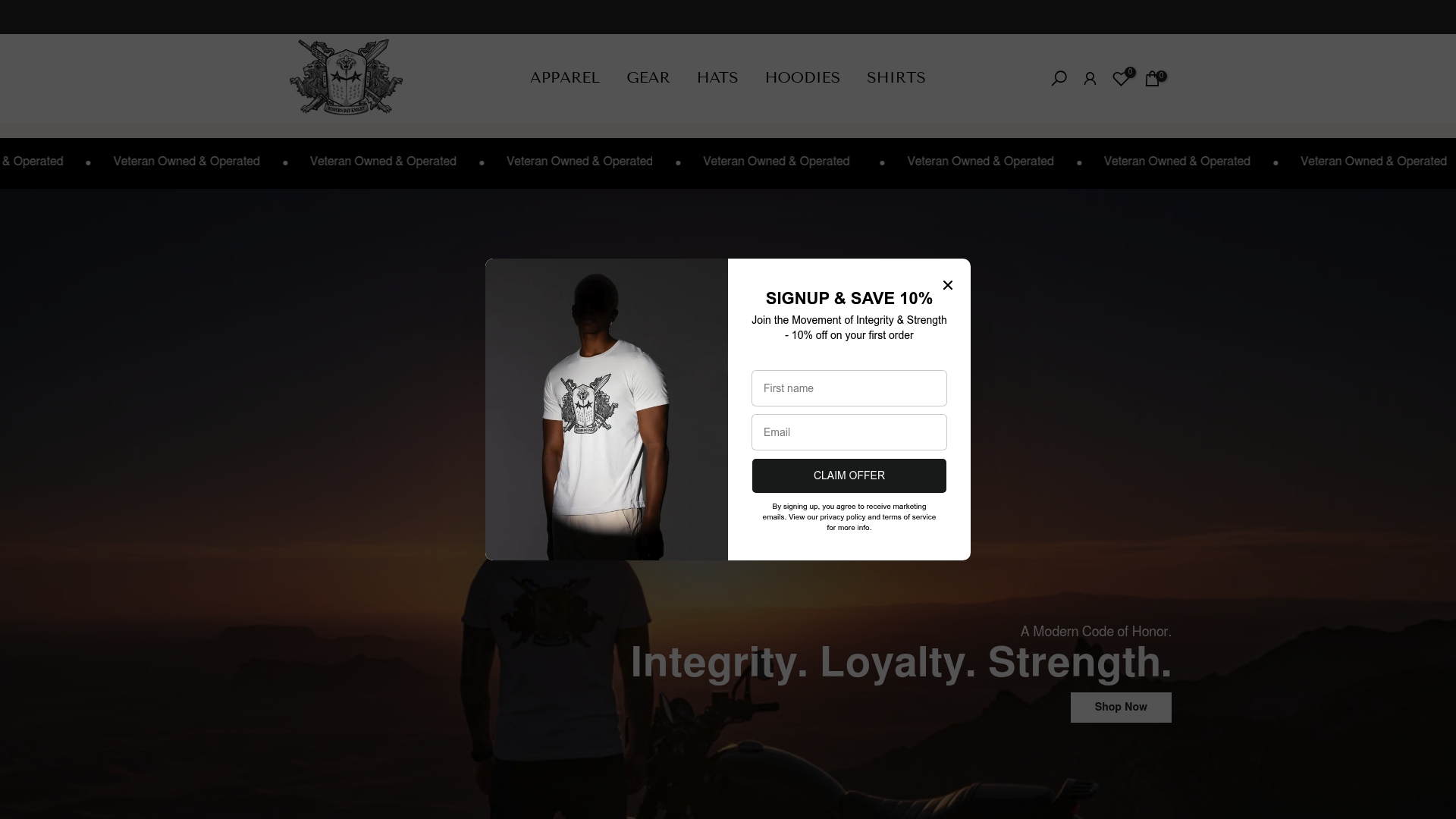
The Army Brat Hoodie is built for readers who want to signal family military heritage, made with heavier-weight fabric that holds up to daily wear. The Army Brat Tee delivers that same message in a lighter, everyday statement piece. If you’re looking for something with a broader reach, the Global Citizen Tee signals values-driven, community-minded commitment beyond military service alone. And for a direct, no-ambiguity message, the Accountability Tee puts the word itself front and center, no symbolism required.
Each piece skips insignia, skips rank, and skips tactical replica details. What you get instead is honest language, durable construction, and a company that documents its own mission rather than just implying one. Browse the full apparel collection and find the piece that matches what you actually believe.
A Short Note on Wearing Values
We started this company because we noticed a gap: plenty of military-inspired apparel, not much of it built around actual meaning. Every one of us at Modern Day Knight has a stake in getting this right.
Think of it this way. A shirt that says “Loyalty runs deeper than blood” worn by someone who lives that value every day carries weight. The same shirt worn as a costume, with no connection to what it says, carries none. We’d rather sell fewer shirts to people who mean it than a lot of shirts to people who don’t.
If you wear something from us, tell us why it matters to you. Our community exists because people keep showing up with real stories, not because we asked them to.
The fastest path to values-aligned apparel is checking message, symbolism, durability, and provenance before checkout, in that order.
| Point | Details |
|---|---|
| Lead with message | Choose slogans tied to values like loyalty and accountability over camo or copied tactical gear. |
| Skip earned insignia | Avoid rank, unit patches, or replica issue gear that belongs to those who earned it. |
| Check construction | Heavier fabric weights and reinforced stitching signal a garment built to last, not just photograph. |
| Verify provenance | Look for veteran-owned statements, mission pages, and documented community programs before buying. |
| Shop with Modern Day Knight | The Army Brat Hoodie, Army Brat Tee, Global Citizen Tee, and Accountability Tee each pair durable construction with values-first messaging. |
Sources
This guide draws on psychological research and practitioner commentary, plus deeper reading from our own blog:
- Effects of Personal Values and Clothing Style Confidence on Consumers’ Interest in Upcycled Clothing Products
- Does the cowl make the monk? The effect of military and Red Cross uniforms on empathy for pain, sense of agency, and moral behaviors
- Military uniforms: the psychological dimension


