



Values alignment matters in clothing brands because buying from a brand that acts on the same principles you hold builds trust, reduces buyer regret, and turns a purchase into a statement of identity. When your values and a brand’s actions match, three things happen consistently:
- Trust deepens. You believe what the brand says because their actions back it up.
- Authenticity shows. The clothing carries meaning beyond fabric and stitching.
- Loyalty follows. You return, recommend, and defend the brand because it represents something real.
Moderndayknightco was built on exactly this premise: that every piece of apparel should stand for something. Integrity, loyalty, and strength are not marketing words here. They are the code.
Key Takeaways
Values alignment in clothing brands is the single most reliable predictor of long-term consumer trust, repeat purchase behavior, and brand loyalty in the U.S. apparel market.
| Point | Details |
|---|---|
| Values drive purchase decisions | Forbes data shows 82% of consumers want brand values to match their own, with 3 in 4 willing to leave over a conflict. |
| Authenticity is the top consumer demand | Sprout Social found authenticity is the #1 trait consumers want in brand content, and 41% will publicly call out unethical behavior. |
| Certifications are your fastest filter | Fair Trade, GOTS, and OEKO-TEX each cover different supply-chain stages; match the cert to your specific priority. |
| Articulate your values before browsing | A short personal values list (3–5 words) filters purchases faster than any algorithm or review site. |
| Moderndayknightco | A veteran-owned apparel brand built on integrity, loyalty, and strength — values embedded in every product, not just the marketing. |
Table of Contents
- Why clothing brand values alignment changes how you shop
- How values alignment actually changes what you buy
- How to tell if a clothing brand truly aligns with your values
- Red flags and greenwashing signals to watch for
- What the research shows about consumer behavior and brand outcomes
- How to shop your values without sacrificing fit, style, or budget
- How Moderndayknightco puts values-first apparel into practice
- How to articulate your personal values before you shop
- How to engage with brands about their values directly
- Our perspective on why values belong in every wardrobe
- Wear what you stand for with Moderndayknightco
- Sources
Why clothing brand values alignment changes how you shop
Forbes reported that 82% of consumers want the values of the brands they buy from to align with their own, and that roughly three in four shoppers will leave a brand over a values conflict. That is not a preference. That is a purchasing decision waiting to happen.
The psychological driver is straightforward. When a brand’s stated mission matches its actual behavior, it reduces cognitive dissonance — the uncomfortable gap between what you believe and what you do. Buying from a brand that shares your values closes that gap. Buying from one that contradicts them widens it, and most people eventually stop tolerating the friction.
MIT Sloan argues that acting on values creates measurable business value, including better margins, greater resilience, and stronger customer preference, and that values should be treated as business assets rather than soft commitments. For shoppers, that translates directly: brands that treat values as operational priorities tend to be more consistent, more transparent, and more worth your loyalty. The World Economic Forum corroborates this, noting that people consistently prefer brands whose corporate purpose aligns with their own, especially on environmental and social responsibility.
Stat to know: Sprout Social found that authenticity is the top trait consumers want in brand content, and 41% of social media users are likely to call out a brand publicly for unethical behavior.
How values alignment actually changes what you buy
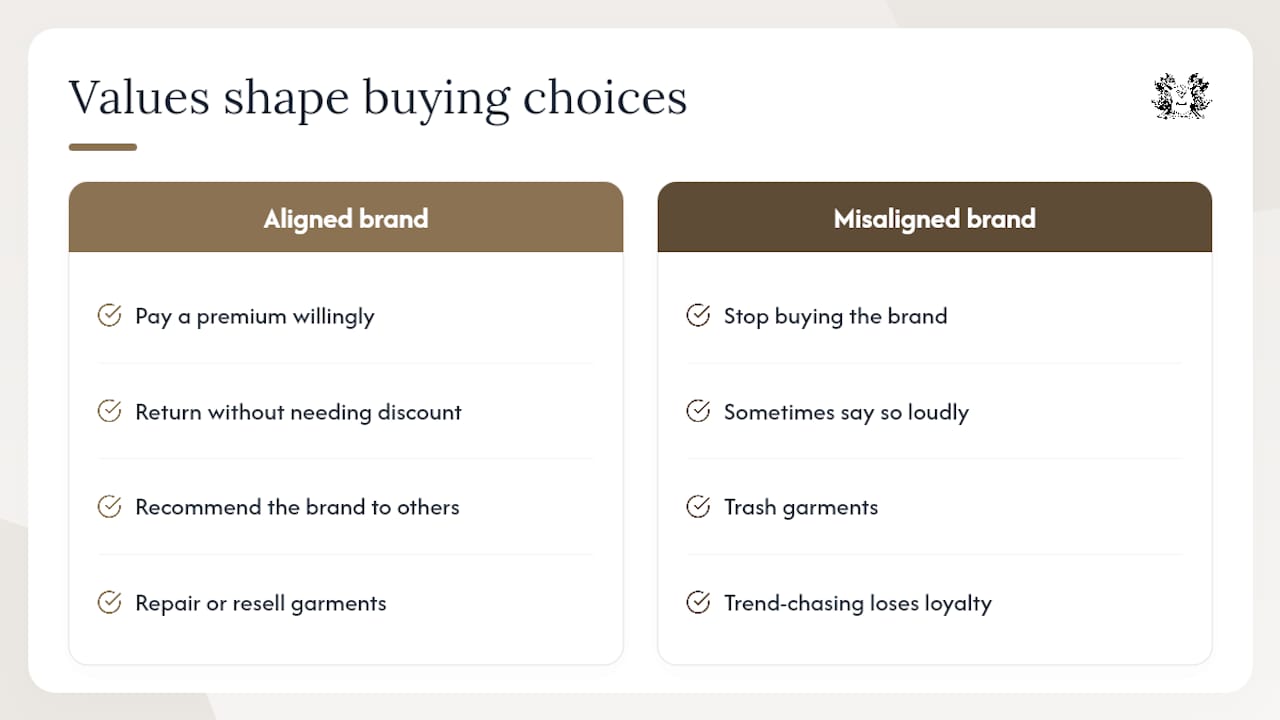
The mechanics are concrete. When you believe a brand shares your values, you pay a premium willingly. You return without needing a discount. You tell others. And when a brand betrays those values, you stop buying and sometimes say so loudly.
Consider durability expectations. A shopper who values craftsmanship and longevity will gravitate toward brands that publish material sourcing details and stand behind their products. That same shopper is more likely to repair a garment than discard it, and more likely to resell it rather than trash it. Values alignment shapes the entire lifecycle of a purchase, not just the checkout moment.
Vogue Business documented a persistent gap between stated values and actual purchases, driven by price, convenience, sizing, and greenwashing confusion. The gap is real, but it narrows when a brand makes values-driven choices easy and visible. Founder-led and smaller brands often close that gap faster because they control their narrative directly and can demonstrate alignment without layers of corporate PR. Meaningful fashion consistently outperforms trend-chasing apparel in long-term loyalty precisely because it gives buyers a reason to stay.
EarthDay’s guidance frames this as collective purchasing power: when enough shoppers choose values-aligned brands, they shift industry behavior. Your individual choice is also a signal.
How to tell if a clothing brand truly aligns with your values
Use this checklist before you buy. Work through it in order — the first items are the fastest to check.
- Read the About page critically. Does it name specific values, or does it use vague language like “we care about the planet”? Specific commitments beat aspirational slogans.
- Check for third-party certifications. Fair Trade Certified™ covers fair wages and safe working conditions. GOTS (Global Organic Textile Standard) certifies organic fiber and responsible processing. OEKO-TEX® certifies that textiles are free from harmful substances. Each covers a different part of the supply chain, so look for the one that matches your priority.
- Look for product-level transparency. Does the product page list material composition, country of origin, and factory name? Brands that publish this data are harder to fake.
- Search for a sustainability report or impact page. Annual reporting with measurable targets signals a brand that tracks its own progress rather than just claiming it.
- Check labor and sourcing policies. A published supplier code of conduct or a named factory audit partner is a stronger signal than a general “we work with ethical factories” statement.
- Scan social media for consistency. Does the brand’s messaging match across channels? Inconsistency between Instagram posts and policy pages is a warning sign.
- Look for QR codes or traceability links on product pages. Some brands now offer product passports that trace a garment from raw material to finished piece. Scientific American’s supply-chain framework highlights traceability as one of the most reliable production-stage signals available to shoppers.
For readers who want a structured evaluation method, comparing sustainable streetwear brands methodically offers a practical template you can apply across categories.
Pro Tip: Search the brand name plus “controversy” or “greenwashing” before you buy. If a brand has faced public accountability, how they responded tells you more about their values than any marketing copy.
Red flags and greenwashing signals to watch for
Greenwashing is the practice of making environmental or ethical claims that are not backed by evidence. It is widespread in apparel, and it costs you both money and trust.
Watch for these patterns:
- Vague language without proof. “Eco-friendly,” “green,” “conscious,” or “sustainable” with no certification, no data, and no sourcing detail attached.
- One-off marketing stunts. A single “charity capsule” or a one-time donation campaign while the rest of the line has no ethical sourcing information.
- Inconsistent messaging. A brand that promotes sustainability on its website but posts fast-fashion-style haul content on social media is signaling a gap between brand and behavior.
- Unverifiable certifications. A logo that looks like a certification but links to no third-party body, or a “certified” claim with no certificate number or audit date.
- Supply chain secrecy. Refusing to name factories, countries of origin, or material suppliers when asked directly.
- No accountability after controversy. Brands that go quiet after a public ethics failure, rather than addressing it with specific corrective action, tend to repeat the pattern.
HBR research shows that alignment between stated values and actual organizational behavior drives authenticity and retention. When that alignment breaks publicly, consumer trust erodes fast and rarely fully recovers.
What the research shows about consumer behavior and brand outcomes
The evidence is consistent across sources. Consumers do not just prefer values-aligned brands. They act on that preference in measurable ways.
Forbes’ data showing 82% of consumers want brand values to match their own is striking on its own. The three-in-four abandonment rate for values conflicts makes it commercially urgent for brands. Brands that ignore this are not just missing a marketing opportunity. They are building churn into their model.
Stat to know: Sprout Social found that 41% of social media users will publicly call out a brand for unethical behavior — meaning a values failure is now a reputational event, not just a lost sale.
MIT Sloan’s framing of values as financial assets connects the consumer-facing story to business outcomes: brands that act consistently on their mission build emotional connections that advertising alone cannot replicate. Brands that over-promise and under-deliver on values face the reverse: eroded margins, higher churn, and a credibility gap that discounts cannot fix. For shoppers, this means your loyalty to a values-aligned brand is not just personal. It is part of what makes that brand viable long-term.
How to shop your values without sacrificing fit, style, or budget
Values-driven shopping does not require perfection. It requires intention.
- Prioritize categories where values matter most to you. Basics and outerwear you wear daily are worth the extra research. A single-use accessory may not be.
- Set a price ceiling before you browse. Knowing your limit prevents impulse buys that bypass your values checklist.
- Use repair, resale, and rental options. Extending the life of a garment you already own is often the most values-consistent choice available.
- Compare product-level footprint data when it exists. Material composition and country of origin are the two fastest filters.
- Ask questions directly. Email or message a brand before buying. How they respond — and how fast — tells you whether customer accountability is real or performative.
Intentional dressing starts with knowing what you stand for before you open a browser tab. That clarity makes every shopping decision faster and more satisfying.
Pro Tip: Build a short personal values list — three to five words that describe what you stand for — and keep it somewhere visible when you shop. “Durability, transparency, American-made” is a faster filter than any algorithm.
How Moderndayknightco puts values-first apparel into practice
Moderndayknightco is veteran-owned and operated. That is not a tagline. It is the foundation of every product decision. The brand’s core values — integrity, loyalty, and strength — are embedded in the messaging on every piece, not applied as an afterthought in a marketing brief.
Here is where you can verify that on the brand’s site:
- The About page names the veteran-owned positioning and the code of honor the brand is built around.
- Product pages carry values-driven messaging directly on the item, so the principle is visible before purchase.
- The blog covers topics like honorable lifestyle fashion, warrior culture in modern fashion, and how lifestyle apparel builds community — each one a signal of consistent, values-led editorial thinking.
When you land on a product page, check the messaging. Does it name a specific value? Does the design reinforce it? That product-level specificity is the difference between a brand that talks about values and one that builds them into the product itself.
How to articulate your personal values before you shop
Most shoppers skip this step. That is why they end up with a closet full of clothes that feel disconnected from who they are.
Before you browse, write down three to five principles that guide how you live. Not categories like “sustainability” in the abstract, but specific commitments: “I want to know who made this,” “I will not buy from brands with documented labor violations,” “I prioritize American-made when the quality is comparable.” Specific values produce specific filters.
From there, rank them. Not every value carries equal weight in every purchase. Knowing which one is non-negotiable and which is a preference saves time and prevents paralysis. A purposeful lifestyle clothing checklist can help you structure that ranking before you hit a product page.
How to engage with brands about their values directly
Engagement is a form of accountability. When you ask a brand a direct question about its supply chain, labor practices, or material sourcing, you are doing two things: getting information you need and signaling that these things matter to buyers.
Send a short, specific email or DM before a significant purchase. Ask one concrete question: “Can you tell me where this garment is manufactured?” or “Do you publish a supplier code of conduct?” A brand that values transparency will answer promptly and specifically. One that deflects or sends a generic response is telling you something important.
On social media, follow brands you care about and engage with their values-related content. When a brand posts about a labor initiative or a sourcing change, a comment or share amplifies that behavior and signals to the brand that it matters to their audience. Sourcing eco-friendly pieces globally is increasingly possible when shoppers actively seek out and reward transparent brands.
If a brand gets something wrong publicly, watch how they respond. A direct, specific acknowledgment with a corrective action plan is a values signal. Silence or deflection is the opposite.
Our perspective on why values belong in every wardrobe
We built Moderndayknightco because we believe what you wear should reflect who you are. Not just your aesthetic. Your character. The veteran community understands this instinctively: honor is not a concept you leave at the door when you get dressed. It goes with you.
The research backs what we have always known. Shoppers who find brands that genuinely share their values do not just buy once. They become part of a community. That is what we are building here — not a clothing line, but a movement around a modern code of honor. Use the checklist in this article when you shop anywhere. Hold every brand, including ours, to that standard.
Wear what you stand for with Moderndayknightco
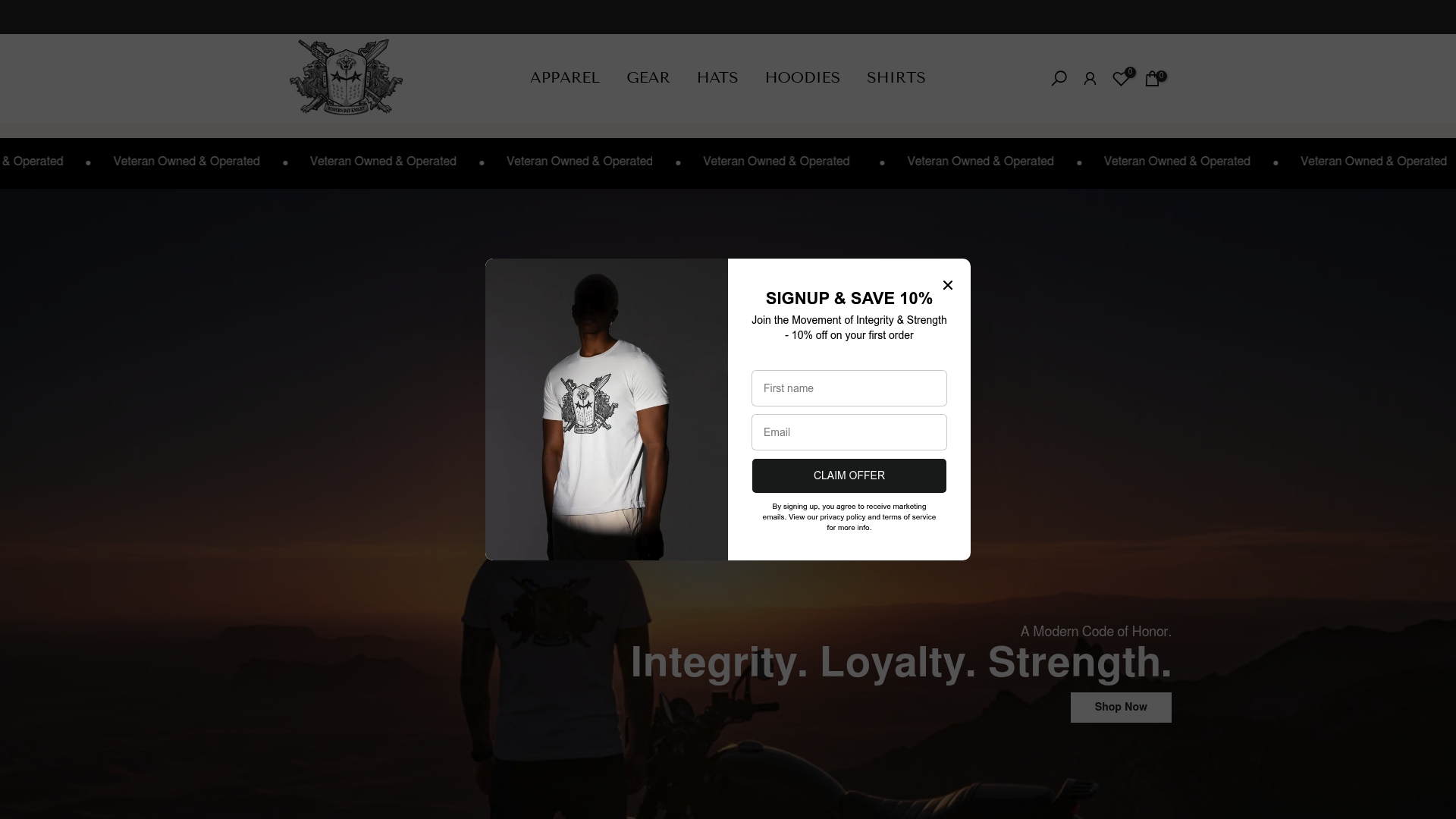
Moderndayknightco gives you apparel that carries your values on its sleeve, literally. Every t-shirt, hoodie, and hat in the collection is built around a modern code of honor: integrity, loyalty, and strength. This is not generic lifestyle clothing dressed up with a mission statement. It is veteran-owned, values-first apparel designed for people who live by a code and want their wardrobe to reflect it.
If you came to this article looking for a brand you can actually trust, one where the values on the product page match the values behind the business, this is where you start. Browse the full apparel collection and find the piece that speaks to your code. Or go straight to the Accountability Tee — a direct expression of what it means to wear your principles.
Sources
- Consumers Aren’t Just Buying Products. They Are Investing In Values | Forbes
- Why It’s Good for Business When Customers Share Your Values | MIT Sloan Management Review
- What Does Your Company Really Stand For? | Harvard Business Review (reprint)


