



Meaningful fashion is defined as clothing chosen for its values, craftsmanship, and personal resonance rather than its alignment with current trends. This distinction matters more now than ever. 85% of brand loyalty ties to purpose-driven identity over aesthetic trends. That number tells you something real: people are not just buying clothes anymore. They are buying what those clothes stand for. Understanding why people choose meaningful over trendy fashion starts with recognizing that clothing has always been a statement. The question is whether that statement reflects who you are or who the algorithm told you to be.
Why people choose meaningful over trendy fashion: the core difference
Meaningful fashion is built on three pillars: quality materials, skilled craftsmanship, and timeless design. These attributes create garments that last physically and emotionally. Trendy fashion, by contrast, operates on a 3–6 month churn cycle that prioritizes novelty over durability.
The contrast shows up clearly in materials. Fast fashion relies on synthetic fibers derived from petrochemicals, contributing to landfill waste and microplastic pollution. Meaningful fashion favors natural, renewable fibers like wool, cotton, and linen. These materials age well, breathe better, and carry none of the environmental debt that synthetics leave behind.
Craftsmanship is the other defining factor. A well-constructed garment holds its shape, resists wear, and develops character over time. A fast fashion piece often loses its form after a handful of washes. The difference is not just aesthetic. It is structural.
- Quality materials: Natural fibers like wool, cotton, and linen outlast synthetic alternatives and carry a lower environmental cost.
- Timeless design: Classic silhouettes and neutral palettes stay relevant across seasons without requiring replacement.
- Skilled construction: Reinforced seams, quality stitching, and thoughtful finishing extend a garment’s usable life significantly.
- Emotional resonance: Pieces tied to memory, heritage, or personal values are kept longer and worn more often.
Pro Tip: Before buying any garment, ask yourself: “Will I still reach for this in three years?” If the answer is no, the trend is driving the decision, not you.
How does meaningful fashion support authentic self-expression?
Meaningful fashion builds identity through cultural heritage, craftsmanship, and personal narrative. True status now stems from understanding a garment’s provenance, not from its brand label or price tag. That shift changes everything about how intentional shoppers approach their wardrobes.
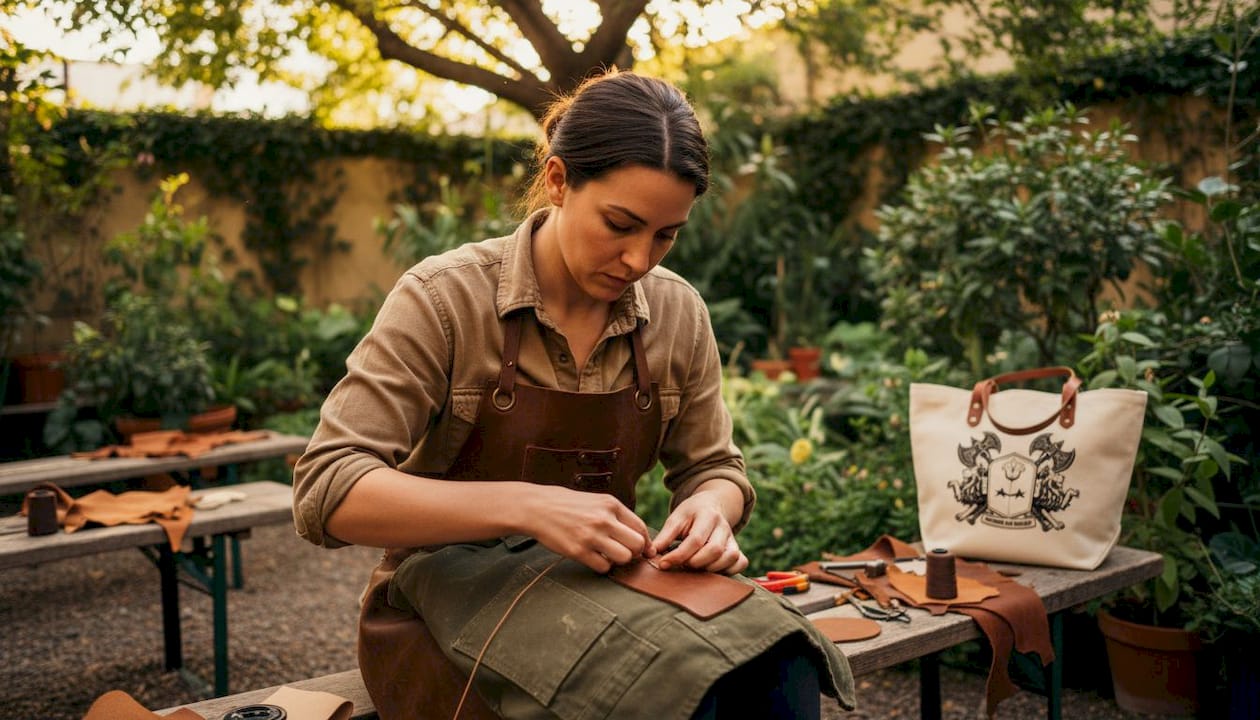
Trend-led fashion promotes conformity. When millions of people buy the same viral piece, individuality collapses into a uniform. Meaning-driven consumption, by contrast, helps individuals reclaim individuality lost in the mass-market homogenization of trends. Your wardrobe becomes a record of who you are, not a reflection of what was popular last season.
The psychological cost of trend-chasing is real. Most consumers experience decision fatigue from fast fashion’s rapid trend cycles, leading to mental exhaustion and aesthetic insecurity. When you do not know what you stand for, every new season feels like a test you are not prepared for.
Building a wardrobe around meaning solves this. Here is how intentional shoppers approach it:
- Identify your values first. What do you want your clothes to say about your character, your community, and your commitments?
- Choose pieces with provenance. Know where a garment was made, by whom, and from what materials.
- Anchor with timeless foundations. A well-fitted jacket, a quality tee, a durable pair of trousers. These form the core.
- Add trend selectively. Accessories and accent pieces let you engage with current style without surrendering your identity.
“The shift from ‘I can afford this’ to ‘I understand this’ signals a consumer focus on meaning over mere ownership. When you understand what you wear, you wear it with conviction.”
Learning to build a wardrobe around principles rather than trends is the clearest path to authentic personal style.
What are the economic advantages of timeless style?
Cost-per-wear calculations show that timeless pieces save money over frequent low-cost trendy purchases. A $200 jacket worn 200 times costs $1 per wear. A $40 trend piece worn 8 times costs $5 per wear. The math is not complicated. The meaningful choice is also the financially sound one.
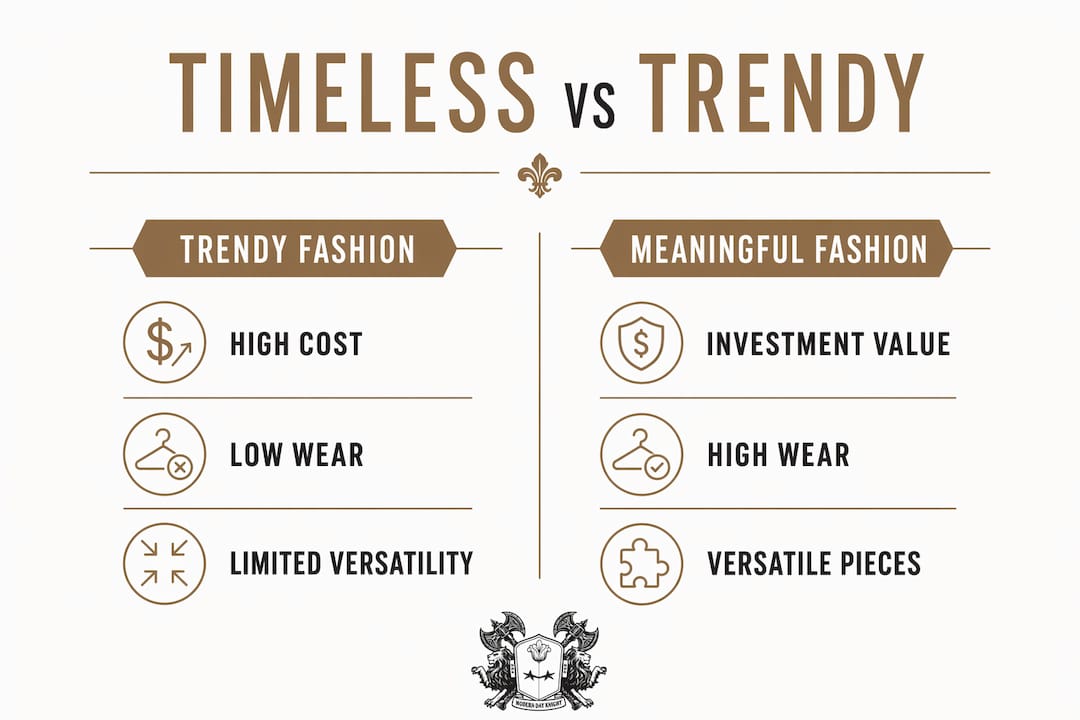
Versatility multiplies this advantage. A garment that works across multiple settings, seasons, and occasions delivers more value per dollar than a single-use trend item. Versatile garments usable across settings maximize financial and practical value, reducing the need for frequent replacements.
| Factor | Trendy fashion | Meaningful fashion |
|---|---|---|
| Average cost per wear | High (worn rarely) | Low (worn often) |
| Wardrobe replacement frequency | Every 3–6 months | Every several years |
| Decision fatigue | High | Low |
| Emotional attachment | Minimal | Strong |
| Environmental cost | High | Significantly lower |
Wardrobes anchored by timeless pieces reduce decision fatigue and provide mental peace of mind. That is not a soft benefit. Reduced cognitive load each morning translates to better focus, less stress, and more confidence in how you show up.
Pro Tip: Calculate cost-per-wear before any purchase. Divide the price by the number of times you realistically expect to wear it. If that number is high, the piece earns its place. If it is not, reconsider.
How does meaningful fashion reduce environmental impact?
Extending a garment’s lifespan by just 9 months reduces its carbon, water, and waste footprint by 20%–30%. That is a measurable, significant reduction achieved simply by choosing better and keeping longer. No special technology required.
Emotional durability is the mechanism behind this. Emotional attachment to a garment prevents disposal, making it a core but underappreciated sustainability strategy. A piece tied to a memory, a milestone, or a personal value does not end up in a landfill after one season. It stays in your wardrobe because it means something.
The fiber choice matters too. Natural fibers biodegrade. Synthetic fibers do not. Fast fashion’s dependence on petrochemical-based materials means every discarded trend piece contributes to a pollution problem that outlasts the trend by decades.
- Choosing natural fibers reduces microplastic pollution in waterways.
- Buying fewer, better pieces cuts the demand that drives overproduction.
- Caring for garments properly, washing less, air drying, and repairing, extends their life and reduces resource consumption.
- Selecting pieces with emotional meaning keeps them out of landfills longer than any recycling program can.
The importance of meaningful fashion extends beyond personal identity. Every intentional purchase is a vote for a supply chain that respects people, materials, and the planet.
Key Takeaways
People choose meaningful over trendy fashion because it delivers more value across every dimension: personal, financial, and environmental.
| Point | Details |
|---|---|
| Meaningful fashion builds identity | Clothing chosen for values and craftsmanship reflects who you are, not what trends dictate. |
| Timeless pieces save money | Cost-per-wear analysis consistently favors quality pieces over frequent low-cost trend purchases. |
| Emotional durability reduces waste | Garments tied to personal meaning are kept longer, cutting disposal rates and environmental impact. |
| Natural fibers outperform synthetics | Wool, cotton, and linen last longer and carry a lower environmental cost than petrochemical-based materials. |
| Intentional wardrobes reduce fatigue | Anchoring your wardrobe in timeless pieces eliminates the mental exhaustion of constant trend cycles. |
What meaningful fashion has taught me about wearing your values
I have watched people spend hundreds of dollars chasing trends that were irrelevant within a season. I have also watched people build wardrobes around a handful of pieces they have worn for a decade. The difference is not income. It is intention.
The most powerful thing meaningful fashion does is force a question: what do I actually stand for? When you answer that honestly, your wardrobe becomes a reflection of your character rather than a catalog of impulse decisions. That is not a small thing. It changes how you carry yourself.
What I have found is that the pieces people keep the longest are never the trendiest ones. They are the ones that carry a story. A jacket from a meaningful moment. A shirt that represents something you believe in. A brand that shares your values. Those pieces do not go out of style because they were never in style for style’s sake.
My practical advice: do not abandon all trends. Blend timeless foundations with selective trend pieces, particularly in accessories, to stay current without surrendering your identity. The goal is a wardrobe that is unmistakably yours. Wear what you believe in. That is the only fashion statement worth making.
— Modern Day Knight
Apparel that stands for something at Moderndayknightco
Moderndayknightco was built on the belief that what you wear should reflect what you stand for. Every piece in our collection carries a message rooted in integrity, loyalty, and strength. These are not decorative values. They are the foundation of every design decision we make.
If you are ready to build a wardrobe that means something, our full apparel collection is the place to start. From the Accountability Hoodie to the History Matters Hoodie, each piece is designed to be worn with conviction. We are a veteran-owned brand, and we build for people who live by a code. Explore what it means to wear your values, not just your wardrobe.
FAQ
Why do people prefer meaningful fashion over fast fashion?
People prefer meaningful fashion because it reflects personal values, lasts longer, and costs less per wear over time. Purpose-driven identity now drives brand loyalty more than aesthetic trends alone.
What makes a piece of clothing “meaningful”?
A garment is meaningful when it connects to personal values, cultural heritage, or a specific story. Provenance, craftsmanship, and emotional resonance are the defining qualities.
Does meaningful fashion actually save money?
Yes. Cost-per-wear analysis shows that timeless, quality pieces consistently deliver lower cost per use than frequent low-cost trend purchases, even when the upfront price is higher.
How does meaningful fashion help the environment?
Extending a garment’s life by 9 months reduces its carbon, water, and waste footprint by 20%–30%. Choosing natural fibers and keeping pieces longer are the two most direct ways fashion choices reduce environmental impact.
Can you still follow trends while choosing meaningful fashion?
Yes. Blending timeless foundational pieces with selective trend items, particularly accessories, lets you stay current without surrendering your personal style or buying into disposable fashion cycles.


