



A minimalist wardrobe built around bold statement pieces is defined by one core principle: a strong foundation of neutral essentials supports a small number of high-impact items. This approach, often called the capsule wardrobe method in the fashion industry, gives you the freedom to express yourself without visual chaos. To balance bold statement minimalist wardrobe choices effectively, you need two proven frameworks: the 70/30 wardrobe rule and the One-Statement Rule. Together, they create outfits that feel intentional, not accidental. Moderndayknightco builds its entire apparel philosophy around this same idea: wear what means something, and let it speak clearly.
What is the 70/30 wardrobe rule and how does it support balance?
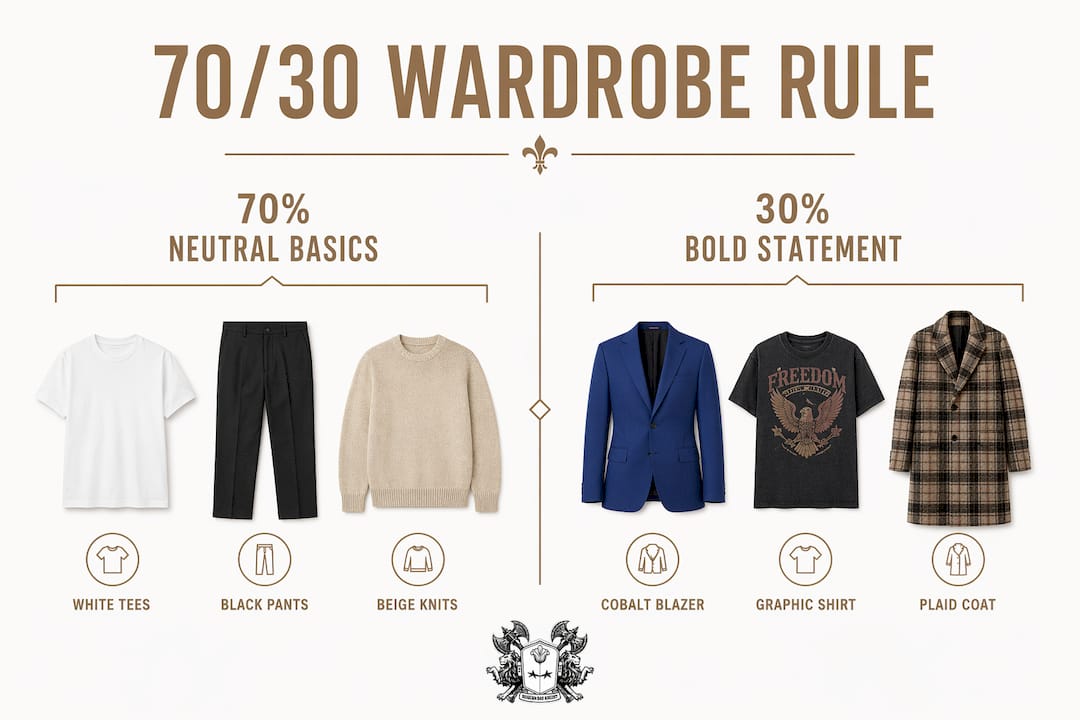
The 70/30 rule is the most effective framework for balancing simplicity and expression in wardrobe composition. Seventy percent of your wardrobe consists of versatile, neutral-toned essentials. The remaining 30% is reserved for bold colors, dramatic prints, and statement silhouettes.
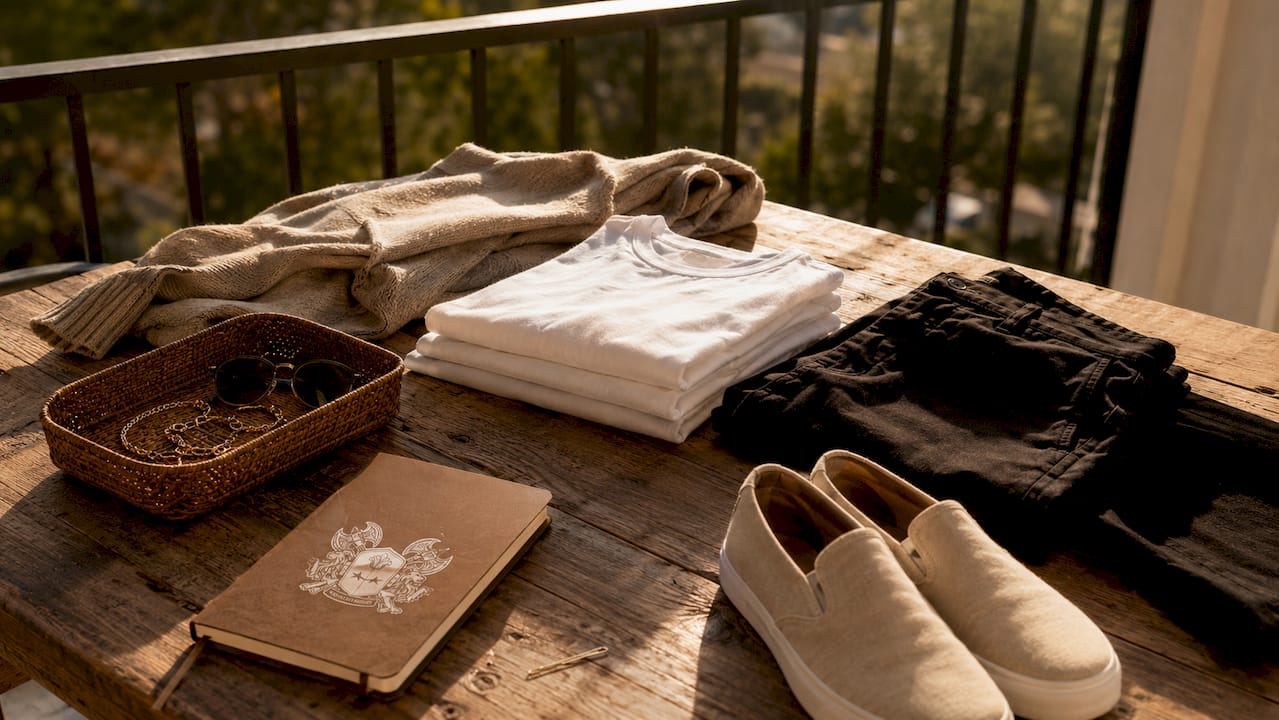
Think of the 70% as your wardrobe’s backbone. These are the pieces you reach for without thinking: white tees, straight-leg dark denim, a clean gray crewneck, a well-fitted black trouser. They create a stable canvas. Without them, bold pieces have nothing to anchor them.
The 30% is where your personality lives. A cobalt blue structured blazer, a graphic print shirt, an oversized plaid coat. These items carry visual weight. They need the quiet 70% around them to land with impact rather than noise.
This ratio also reduces decision fatigue. When most of your wardrobe coordinates effortlessly, getting dressed becomes faster and more confident. The bold pieces stop feeling risky because you always know what they pair with.
| Wardrobe Category | Example Items | Approximate Count (44-item wardrobe) |
|---|---|---|
| Neutral tops | White tees, gray henleys, black tanks | 8–10 |
| Neutral bottoms | Dark denim, black trousers, khaki chinos | 6–8 |
| Layering basics | Solid crewnecks, simple cardigans | 4–5 |
| Statement tops | Bold graphic tees, printed shirts | 3–4 |
| Statement outerwear | Patterned coats, structured colored blazers | 2–3 |
| Statement accessories | Bold hats, printed scarves, standout shoes | 3–4 |
Pro Tip: Lay out every item you own and sort them into “neutral” and “bold” piles. If your bold pile exceeds 30% of the total, identify which pieces you actually wear and which ones just take up space.
How does the One-Statement Rule prevent outfit overload?
The One-Statement Rule is the styling principle that keeps minimalist outfits from collapsing into visual noise. The rule is simple: choose one bold focal point per outfit and build everything else around it quietly.
A statement can take five forms:
- Color: A single saturated or unexpected color in an otherwise neutral outfit
- Print: A graphic, stripe, or pattern that draws the eye immediately
- Silhouette: An oversized, structured, or dramatically cut garment
- Texture: A piece with strong tactile presence, like shearling, velvet, or heavy canvas
- Accessory: A bold hat, a chunky chain, or a standout bag that anchors the look
The common mistake is stacking two or more of these at once. A printed shirt worn with a textured statement jacket and a bold accessory creates three competing focal points. The eye does not know where to land. The result feels cluttered, not expressive.
Neutral, quiet basics are the supporting cast. A plain white tee, clean black trousers, and simple leather sneakers let a single bold piece own the room. The supporting basics do not disappear. They create the negative space that makes the statement visible.
Small styling moves also carry real weight. Cuffing sleeves or half-tucking a shirt prevents outfits from feeling like costumes and adds polish without adding visual noise. These details signal intention. They tell the viewer that the outfit was considered, not thrown together.
Pro Tip: Before leaving the house, ask yourself: “What is the one thing I want someone to notice first?” If you cannot answer immediately, remove one bold element.
How do you manage visual weight and balance through styling choices?
Balancing bold statements in minimalist fashion is more about managing visual weight than counting items. Think of your outfit the way a graphic designer thinks about a layout: every element either adds weight or creates space.
Four styling levers control visual weight effectively:
-
Silhouette balance. If a statement piece is oversized or voluminous, the pieces around it should be fitted and close to the body. An oversized graphic hoodie pairs with slim trousers, not wide-leg pants. Matching volume with volume creates bulk, not balance.
-
Color restraint. Tonal and monochromatic palettes work as natural negative space. If your statement piece is a bold red bomber, keep everything else in black, white, or charcoal. The bold color reads as intentional rather than accidental.
-
Texture restraint. A statement piece with strong texture, like a shearling collar or a heavily woven fabric, needs smooth, clean-lined companions. Pairing two high-texture pieces creates sensory overload. One textured item against flat, simple fabric lets the texture breathe.
-
Finishing details. Styling details like cuffing, tucking, and balancing shoe weight are what separate a polished look from a thrown-together one. Heavy boots ground a lightweight statement piece. Clean white sneakers lift a darker, heavier outfit. These choices are not afterthoughts. They are the final layer of balance.
The negative space principle is the most underused tool in personal styling. Statement pieces require clean-lined garments around them to stand out. Without that space, even a great piece gets lost in the noise.
What are practical steps to build a balanced minimalist wardrobe?
Building a wardrobe that holds bold and minimal in tension starts with an honest audit. Pull everything out. Ask one question about each item: does this serve as a foundation, or does it make a statement? If it does neither, it leaves.
Your minimalist foundation should include these core items:
- 5–7 neutral bottoms (dark denim, black trousers, clean chinos)
- 5–7 everyday tees in white, gray, and black
- 3–5 layering knits in solid, muted tones
- 1–2 clean outerwear pieces in neutral colors
- Simple, versatile footwear in two or three colorways
These minimalist fashion essentials act as the stable canvas that makes bold pieces work. Without them, statement items have no contrast to push against.
When selecting new bold items, apply the 3-staple test: name three specific outfits using pieces you already own. If you cannot do it, the item will sit unworn and clutter your space. The 30% statement allocation functions as a limit on visual intensity, not just item count.
Mistakes to avoid when building this wardrobe:
- Buying bold pieces without checking them against your existing basics
- Letting statement pieces pile up because they were on sale
- Wearing two statement pieces in the same outfit category (two bold tops, two printed layers)
- Choosing statement pieces that only work for one occasion or season
Pro Tip: Before any bold purchase, identify three ways to style it with what you already own. If you cannot name three distinct outfits, put it back.
| Strategy | What it does |
|---|---|
| 70/30 ratio | Keeps neutral essentials dominant so bold pieces have contrast |
| One-Statement Rule | Prevents visual overload by limiting focal points to one per outfit |
| 3-staple test | Confirms a bold piece integrates before you buy it |
| Silhouette balance | Pairs volume with fitted pieces to maintain proportion |
| Styling details | Uses cuffing, tucking, and shoe weight to finish and ground the look |
Key Takeaways
A minimalist wardrobe that carries bold statement pieces works because the 70/30 ratio, the One-Statement Rule, and visual weight management operate together as a single system.
| Point | Details |
|---|---|
| Follow the 70/30 rule | Keep 70% neutral essentials and reserve 30% for bold, high-impact pieces. |
| Apply the One-Statement Rule | Choose one focal point per outfit and build everything else quietly around it. |
| Manage visual weight | Balance silhouette, color, and texture so statement pieces stand out rather than compete. |
| Use the 3-staple test | Confirm any bold item pairs in at least three ways before adding it to your wardrobe. |
| Finish with styling details | Cuffing, tucking, and shoe weight are the final layer that makes a look polished. |
What I have learned about bold and minimal working together
Most people treat minimalism as a restriction. They think it means wearing less color, fewer prints, and nothing that draws attention. That reading misses the point entirely.
Minimalism is about intention. A bold piece in a minimal wardrobe hits harder than the same piece worn in a busy, overcrowded outfit. The restraint around it is what gives it power. I have seen this principle show up in the way Moderndayknightco approaches apparel: a single strong message on a clean garment carries more weight than a dozen competing graphics. The clothing that reflects personal principles is the piece that stands alone and still says everything.
The hardest part is not choosing the bold piece. It is trusting the quiet pieces to do their job. Most people underestimate how much a plain white tee or a clean black trouser contributes to an outfit. They feel invisible. That is exactly the point.
Bend the rules when you have earned the eye for it. Once you understand why the One-Statement Rule exists, you will know when breaking it creates drama and when it just creates a mess. Start with the framework. Build the instinct. Then make it yours.
— Modern Day Knight
Moderndayknightco apparel for a balanced, bold wardrobe
The right wardrobe does not happen by accident. It is built piece by piece, with purpose behind every choice.
Moderndayknightco designs apparel for people who wear what they stand for. The apparel collection includes clean, versatile essentials that anchor any minimalist wardrobe, alongside bold statement pieces built around values, not trends. The Accountability Tee is a strong example: a clean silhouette, a direct message, and the kind of restraint that makes a statement land. The hats collection adds a finishing bold element without disrupting the balance of an outfit. Every piece is made for people who are intentional about what they wear and why they wear it.
FAQ
What is the 70/30 wardrobe rule?
The 70/30 rule means 70% of your wardrobe is neutral, versatile essentials and 30% is bold statement pieces. This ratio keeps outfits cohesive while allowing personal expression.
How many statement pieces should a minimalist wardrobe have?
The 30% allocation functions as a limit on visual intensity rather than a strict item count. For a 44-item wardrobe, that means roughly 8–11 bold pieces across tops, outerwear, and accessories.
What is the One-Statement Rule in fashion?
The One-Statement Rule means choosing one bold focal point per outfit, defined by color, print, silhouette, texture, or accessory, and surrounding it with quiet, neutral basics.
How do I know if a bold piece works in my minimalist wardrobe?
Apply the 3-staple test: name three specific outfits using pieces you already own. If you cannot identify three pairings, the item risks becoming a costume piece that goes unworn.
What styling details help balance bold and minimalist pieces?
Small moves like cuffing sleeves, half-tucking shirts, and matching shoe weight to the outfit’s overall tone create polish and prevent bold pieces from feeling out of place.


