



Modern chivalry is defined as an inclusive, gender-neutral code of conduct built on everyday kindness, respect, and emotional maturity toward all people. It is not a relic of medieval knighthood. It is a living ethic that anyone can practice, regardless of gender, background, or social role. What does modern chivalry mean at its core? It means treating every person with dignity, asking before you act, and choosing integrity when no one is watching. This code centers on consent, emotional intelligence, and mutual respect as its three foundational pillars.
What does modern chivalry mean and how has it evolved?
Traditional chivalry was a code for medieval knights. It governed conduct in battle, loyalty to a lord, and protection of women. The word itself comes from the Old French chevalerie, meaning horsemanship and knightly skill. Over centuries, it narrowed into a set of gendered social scripts: men open doors, men pay, men protect.
That model carried a hidden flaw. It placed women in a passive role and men in a position of authority. Feminist movements of the 20th century, along with civil rights advocacy, exposed this imbalance. The question shifted from “how should men treat women?” to “how should people treat each other?”
The result is a reframed code of civility that empowers all individuals equally and centers on kindness without outdated stereotypes. The gestures remain, but the logic behind them changes completely. You hold a door because it is kind, not because the other person cannot manage it themselves.

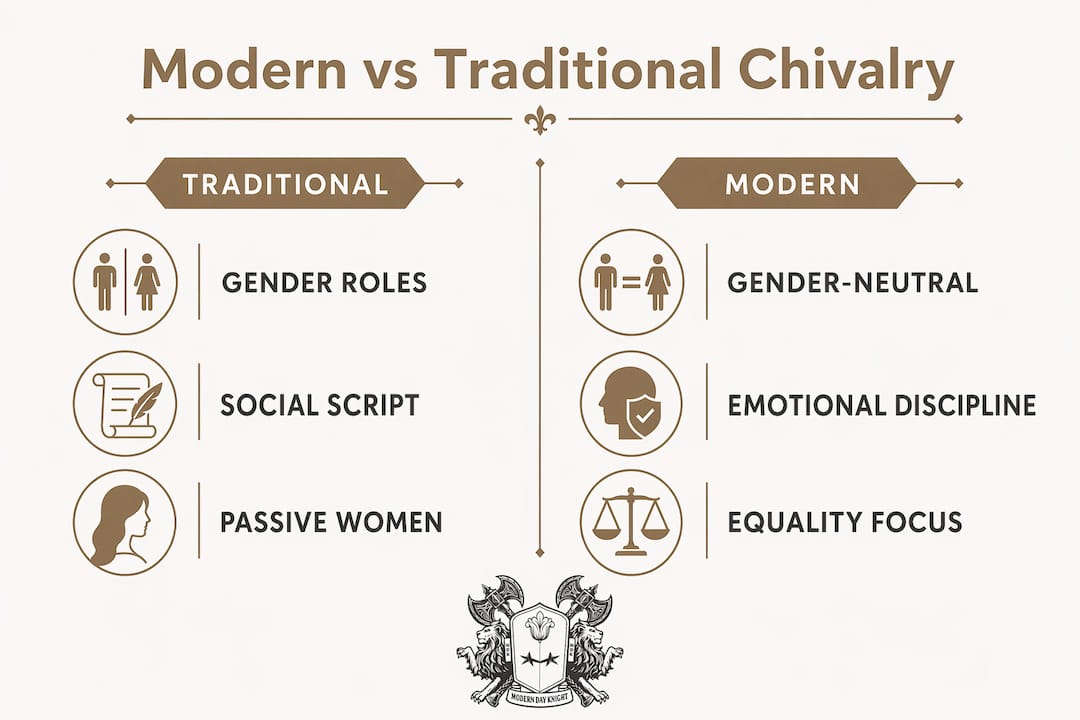
Here is how the shift looks across key dimensions:
| Traditional chivalry | Modern chivalry |
|---|---|
| Gender-specific roles | Universal, gender-neutral conduct |
| Protection of women | Respect for all individuals |
| External social performance | Internal discipline and emotional labor |
| Assumed preferences | Consent and autonomy first |
| Loyalty to a lord | Loyalty to personal values and community |
The most significant shift is from performance to discipline. Old chivalry was about following a social script. Modern chivalry requires you to do the work internally, managing your ego, your temper, and your assumptions before you ever act.
What are the core characteristics of modern chivalry?
Modern chivalry is an inclusive code focused on honor, integrity, and protection of the vulnerable, applied regardless of gender. Five characteristics define it in practice:
- Consent and autonomy first. Every act of kindness starts with a check. You offer help; you do not impose it. This single habit separates genuine respect from patronage.
- Emotional intelligence. You manage your ego and your temper before they manage you. Active listening and calm communication replace passive-aggressive behavior in every conflict.
- Equality as the baseline. Kindness is not tied to gender, status, or expectation of reward. You treat the CEO and the janitor with the same dignity.
- Deliberate effort without expectation. Chivalry is not a transaction. You invest genuine effort into interactions because it is right, not because you expect recognition.
- Situational awareness. You read the room. You notice when someone needs space, when they need support, and when they simply need to be heard.
Pro Tip: The fastest way to tell the difference between help and patronage is to ask one question: “Do you need a hand?” That single pause upholds the other person’s autonomy and turns a gesture into genuine respect.
Modern chivalry is more demanding than the traditional model. It requires internal emotional discipline rather than just following external social scripts. Anyone can hold a door. Fewer people can hold their tongue during a heated argument and still respond with dignity.
How does modern chivalry apply in everyday life?
Chivalry in today’s society shows up in small, deliberate choices made every day. These are not grand gestures. They are habits of character.
- Opening doors with awareness. Hold the door for the person behind you. If they seem uncertain, a brief nod or smile signals the offer without pressure. The key is reading the moment, not performing a ritual.
- Active listening in conflict. When a disagreement escalates, the chivalrous response is to slow down, not speed up. Put your phone away. Make eye contact. Let the other person finish before you respond.
- Sharing the mental load. Balancing household responsibilities is one of the clearest modern examples of chivalry. Noticing what needs to be done, without being asked, is a direct act of respect.
- Uplifting others publicly. Credit people for their ideas in meetings. Defend someone being spoken over. These acts cost nothing and signal that you value others’ dignity.
- Checking preferences before acting. Before you assume someone wants your help, your advice, or your company, ask. That habit alone removes most of the friction between good intentions and bad outcomes.
Pro Tip: Chivalry does not require a dramatic moment. Intentional acts that show someone matters, done consistently and without fanfare, carry more weight than any single grand gesture.
The goal is not to perform kindness for an audience. The goal is to make the people around you feel seen, respected, and safe. That is what chivalric values in modern life actually look like when they are working.
How does modern chivalry connect to personal integrity?
Chivalry practiced as a personal discipline is fundamentally different from chivalry practiced as a social performance. One is about your character. The other is about your reputation.
“Modern chivalry embodies the intersection of strength and restraint. It requires high emotional intelligence to know when to encourage, when to step back, and when to simply listen.”
This intersection is where personal integrity lives. Strength without restraint becomes aggression. Restraint without strength becomes passivity. The code demands both at once.
Emotional regulation is the practical skill that makes this possible. When you feel disrespected, the chivalrous response is not silence or explosion. It is a measured, dignified reply that addresses the issue without attacking the person. That takes practice. It takes the kind of internal discipline that distinguishes a person of character from someone who simply follows rules when it is convenient.
The connection to ethical living runs deeper than manners. Chivalry as a personal code asks you to prioritize empathy, respect, and dignity as non-negotiable standards, not situational choices. You apply them when it is easy and when it costs you something. That consistency is what makes the code meaningful.
Here is how chivalric principles map to ethical living:
| Chivalric principle | Ethical application |
|---|---|
| Consent and autonomy | Respecting others’ right to choose |
| Emotional regulation | Resolving conflict without harm |
| Deliberate kindness | Acting for others’ benefit, not personal gain |
| Loyalty | Keeping commitments even under pressure |
| Protecting the vulnerable | Speaking up when others cannot |
The modern day knight concept captures this ethic precisely. It is not about armor or swords. It is about choosing integrity as a daily practice, especially when no one is watching.
Key Takeaways
Modern chivalry is a gender-neutral code of conduct requiring consent, emotional intelligence, and deliberate kindness practiced consistently as a personal discipline, not a social performance.
| Point | Details |
|---|---|
| Universal code of conduct | Modern chivalry applies to all people regardless of gender, status, or role. |
| Consent comes first | Always offer help rather than assume it is needed or wanted. |
| Emotional discipline is required | Managing ego and temper is the core skill that separates chivalry from performance. |
| Small acts carry the most weight | Consistent, intentional kindness in daily life defines the code in practice. |
| Integrity over reputation | Chivalry practiced privately, without expectation of reward, is the truest form. |
Why modern chivalry matters more now than ever
Cynicism is cheap right now. Social media rewards outrage. Public discourse rewards volume over substance. Against that backdrop, deliberate kindness feels almost radical.
What I have seen, both in the veteran community and beyond, is that people are hungry for a code. Not rules imposed from outside, but a standard they choose to hold themselves to. That is exactly what modern chivalry offers. It is not nostalgia. It is a corrective.
The hardest part is not the big moments. It is the Tuesday afternoon when you are tired, someone cuts you off in traffic, and you choose not to react. That choice, repeated daily, builds the kind of character that actually holds under pressure. The meaning of chivalry today is not about impressing anyone. It is about becoming someone worth respecting.
We also need to stop letting fear of misinterpretation kill kindness. Yes, some gestures carry historical baggage. Ask before you act, adjust when you get feedback, and keep going. Abandoning chivalry entirely only deepens the social cynicism we are already drowning in. The answer is not less kindness. It is smarter, more aware kindness.
— Modern Day Knight
Wear what you stand for
The values behind modern chivalry, honor, integrity, loyalty, and respect, are not just ideas. They are a way of living that shows up in every choice you make, including what you put on in the morning.

Moderndayknightco was built by veterans who understand that a code of honor is not ceremonial. It is daily. Every piece in the collection is a statement of that commitment. The Army Brat Hoodie and the Army Brat Tee are not just apparel. They are a signal to the world that you stand for something. Browse the full apparel collection and wear the values you live by.
FAQ
What is the definition of modern chivalry?
Modern chivalry is a gender-neutral code of conduct centered on kindness, consent, and respect for all people. It replaces gendered social scripts with universal ethical behavior grounded in emotional intelligence and mutual dignity.
Is modern chivalry still relevant today?
Modern chivalry is directly relevant because it addresses the social cynicism and incivility that characterize much of public life today. Practicing deliberate, consent-based kindness is a concrete response to that problem.
What are the main characteristics of modern chivalry?
The core characteristics are consent, emotional intelligence, equality, deliberate effort without expectation of reward, and situational awareness. These traits apply to all people regardless of gender or social role.
How do you practice modern chivalry in daily life?
Practice modern chivalry by asking before you help, listening actively during conflict, sharing responsibilities without being prompted, and crediting others publicly. Consistency in small acts matters more than occasional grand gestures.
How does modern chivalry differ from traditional chivalry?
Traditional chivalry assigned gendered roles and focused on external performance. Modern chivalry removes gender from the equation entirely and demands internal discipline, emotional regulation, and consent as its foundation.


