



Honor in warrior culture is defined as an internal ethical code that channels aggression outward while restraining violence within the group. The role of honor in warrior culture explained across history reveals a system far more practical than romantic. From the samurai’s bushidō to medieval European chivalry, honor codes served as the operating rules of armed life. They enforced discipline, demanded loyalty, and made group survival possible under extreme conditions. Moderndayknightco was built on exactly this foundation: the belief that honor is not a relic but a living standard that shapes identity, conduct, and community.
How do honor codes regulate violence and maintain warrior group cohesion?
Honor functions as a rule system regulating legitimate violence by directing aggression outward and restraining it internally. This is the core mechanism that kept armed groups functional rather than self-destructive. Without it, a band of warriors becomes a mob.
The internal restraint side of honor is what most people miss. Honor codes prevented warriors from turning on each other, stealing from allies, or abandoning their post. The external targeting side gave warriors permission to fight enemies without moral paralysis. Both functions worked together to create a predictable, trustworthy fighting unit.
Anthropological research confirms that honor codes are functional systems, not romantic ideals. They exist because groups that lacked them collapsed under the pressure of conflict. Groups that maintained them survived. That is not sentiment. That is selection.
Pro Tip: When you study a warrior tradition, ask what the honor code prevented internally, not just what it demanded on the battlefield. The restraint side reveals the code’s true purpose.
Core functions of honor codes in warrior societies include:
- Preventing internal betrayal. Warriors who violated the code faced shame, exile, or death. The social cost of dishonor was real and immediate.
- Defining legitimate violence. Honor codes set the rules for when and how force was acceptable, reducing chaos in combat.
- Rewarding courage and loyalty. Status within the group depended on honorable conduct, creating strong incentives for the right behavior.
- Establishing accountability. Warriors were expected to answer for their actions, both to their peers and to their own conscience.
- Sustaining group identity. A shared code gave warriors a common framework that held the group together across campaigns, generations, and hardship.
What defines honor in samurai bushidō and medieval chivalry?
Samurai bushidō and medieval European chivalry are the two most studied warrior honor systems in history. Both shaped cultures far beyond the battlefield. Both are also widely misunderstood.
Bushidō: the samurai code of conduct
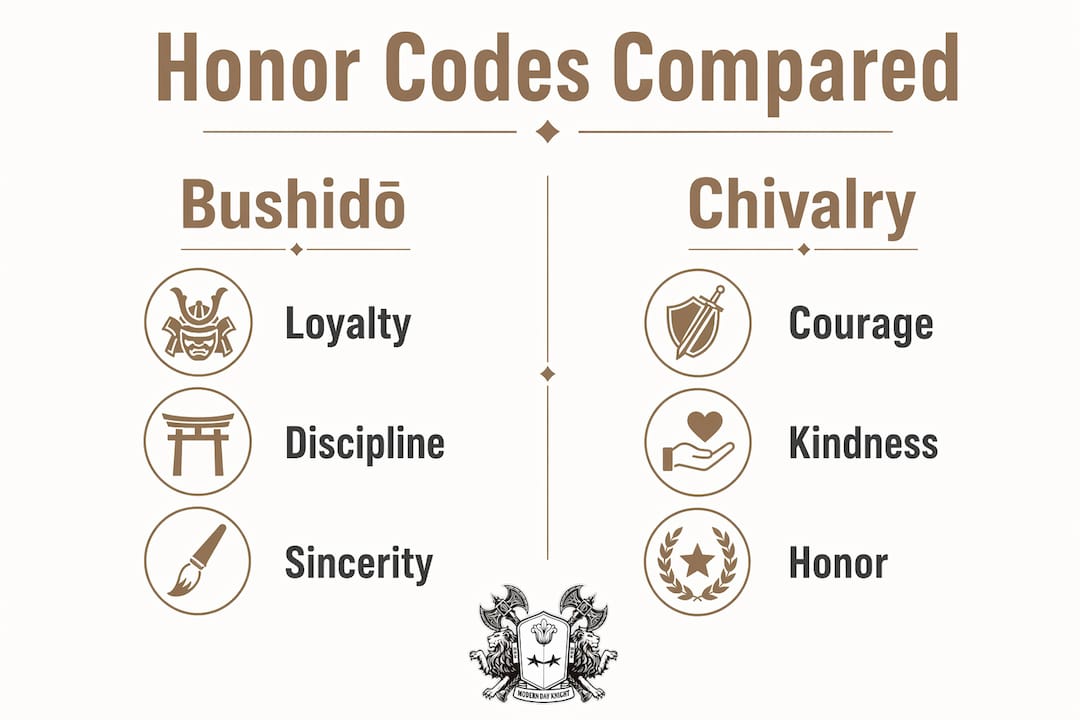
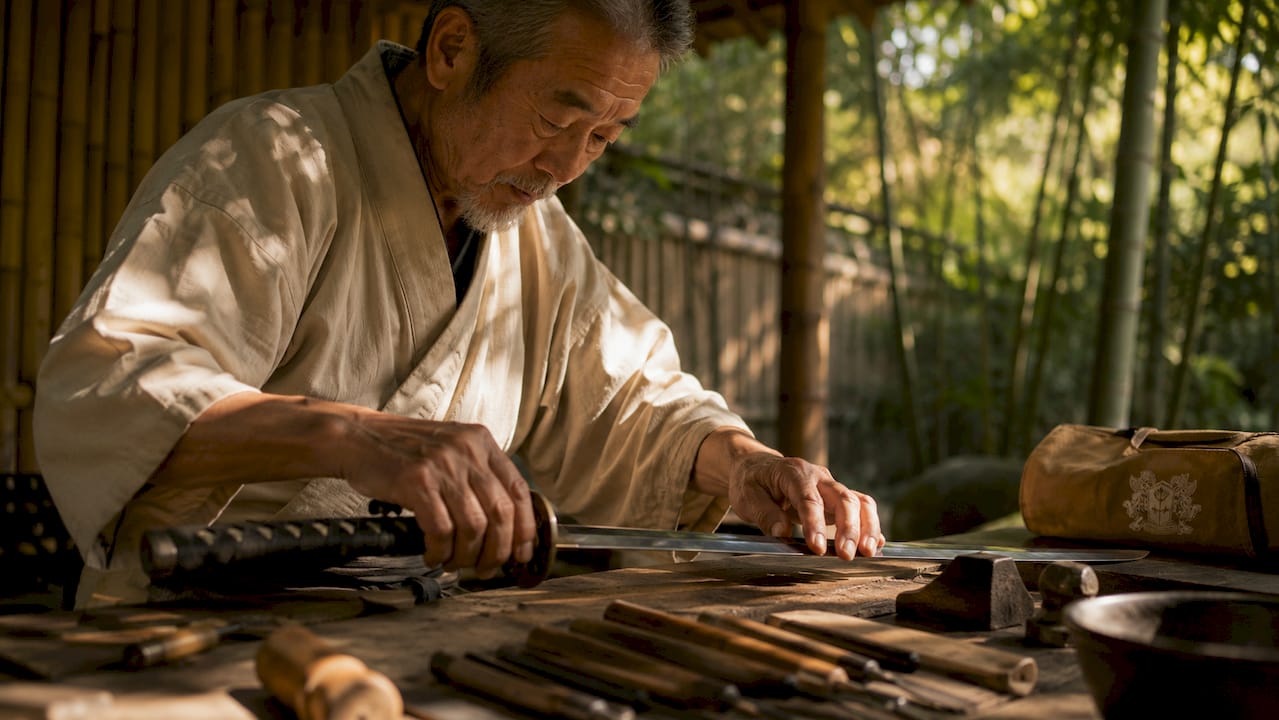
Bushidō emerged as an ethical framework for samurai conduct, stressing sincerity, frugality, loyalty, martial mastery, and honor to the death. It was initially unwritten, passed through practice and example. Later it was codified in texts like Yamamoto Tsunetomo’s Hagakure. The code tied a warrior’s identity so completely to honor that death was preferable to disgrace. Seppuku, ritual self-administered death, existed as the ultimate remedy for dishonor. Seppuku declined after the 19th century, but the behavioral standards it represented persisted in Japanese military and civic culture long after the practice ended.
Chivalry: the knightly code of Europe
Chivalry defined medieval European knightly conduct by emphasizing honor, kindness, and courage as equal pillars. The common mistake is reducing chivalry to battlefield bravery alone. Cambridge’s definition ties it explicitly to honorable social behavior, meaning a knight who won every fight but treated civilians with cruelty was not considered chivalrous. The code demanded virtue in every context, not just combat.
| Tradition | Core values | Key behavioral standard | Consequence of dishonor |
|---|---|---|---|
| Samurai bushidō | Loyalty, sincerity, frugality, martial mastery | Absolute fidelity to lord and code | Seppuku or exile |
| Medieval chivalry | Courage, kindness, honor, courtesy | Honorable conduct in war and society | Loss of status, public shame |
Pro Tip: Neither bushidō nor chivalry was primarily about reputation. Both were behavioral standards enforced from the inside. A warrior who acted honorably only when watched had already failed the code.
Honor in bushidō is fundamentally about behavioral standards such as sincerity, loyalty, and discipline rather than martial prowess alone. The same logic runs through chivalry. Chivalry links honor with kindness and courage, directly dispelling the misconception that warrior honor is only about aggression or reputation.
How has the warrior code of honor evolved in modern military culture?
The warrior code of honor did not disappear with feudal society. It changed form. Modern military honor embraces integrity, accountability, and moral courage as its defining features, framing honor as internal governance of conduct rather than public reputation. A soldier who refuses an unlawful order, reports abuse, or holds the line under pressure is living the same code that bushidō and chivalry described centuries ago.
Cultural practices also carry honor forward. The Choctaw Nation views honoring warriors as an ongoing responsibility, teaching values like courage and humility to future generations through ceremonial remembrance. This is not nostalgia. It is active ethical transmission, ensuring that the lessons of warrior sacrifice shape how communities live today.
Modern expressions of honor in military and cultural contexts include:
- Integrity under pressure. Acting correctly when no one is watching remains the clearest test of honor in any era.
- Accountability for failure. Owning mistakes without deflection is a direct continuation of warrior code ethics.
- Moral courage. Refusing cruelty and reporting wrongdoing are now recognized as honorable acts in military doctrine.
- Ceremonial remembrance. Honoring fallen warriors through ritual keeps the code alive and teaches it to those who follow.
- Identity through values. Modern warriors and veterans define themselves by what they stand for, not just what they have done.
Why does understanding warrior honor matter for ethics and social cohesion?
Honor codes create predictability. When every member of a group knows the rules and the consequences for breaking them, trust becomes possible even under extreme stress. That predictability is what makes a unit function when everything else is falling apart.
Honor traditions were functional, not romantic, systems essential for group survival. This distinction matters because it changes how you interpret warrior history. The samurai did not practice bushidō because it sounded noble. They practiced it because groups without discipline destroyed themselves. The code was a survival tool before it was a cultural symbol.
Social rewards reinforced the system. Warriors who acted with honor gained status, trust, and leadership roles. Those who violated the code lost standing, sometimes permanently. That social feedback loop made honor self-reinforcing across generations.
A common misconception equates honor solely with reputation or aggression. Distinguishing internal restraint from public status is the key to understanding historical honor systems accurately. Honor was never just about how others saw you. It was about who you were when the audience disappeared.
Pro Tip: Treat honor as a social mechanism, not an abstract virtue. Ask what behavior it produced, what it prevented, and what happened when it broke down. That framework works for samurai Japan, medieval Europe, and modern military units alike.
Key Takeaways
Honor in warrior culture is a practical ethical system that regulates violence, sustains group cohesion, and defines identity across every major warrior tradition in history.
| Point | Details |
|---|---|
| Honor regulates violence | It channels aggression outward and restrains it internally, keeping armed groups functional. |
| Bushidō and chivalry share core logic | Both prioritize behavioral standards over reputation, demanding virtue in every context. |
| Honor evolves but persists | Modern military ethics carry forward the same core values: integrity, accountability, and moral courage. |
| Restraint is the hidden function | The internal governance role of honor is as important as its external demands for bravery. |
| Honor builds social trust | Predictable, code-governed conduct creates the trust that makes group survival possible under stress. |
Honor is not a relic. It is a requirement.
I have spent years studying warrior cultures, and the single biggest mistake people make is treating honor as decoration. They see the samurai sword, the knightly crest, the military medal, and they think honor is about image. It is not. Honor is about what you do when the cost is real and the audience is gone.
The codes that governed samurai and knights were not written to inspire poetry. They were written because groups without them fell apart. Betrayal, cowardice, and cruelty are not just moral failures. They are operational failures. They break the trust that makes collective action possible. Honor codes exist to prevent that collapse.
What I find most compelling is how little the core has changed. The warrior spirit in everyday apparel conversation that Moderndayknightco leads is not about aesthetics. It is about the same internal standard that bushidō demanded: sincerity, loyalty, discipline, and the willingness to be accountable. The uniform changes. The code does not.
The challenge today is that honor has no formal enforcement mechanism for most people. There is no lord to answer to, no code carved in stone. That makes it harder, not easier. Choosing to live by a standard when no one requires it is the truest expression of what warrior honor always meant.
— Modern Day Knight
Warrior values you can wear every day
Moderndayknightco was built by veterans who understand that honor is not a feeling. It is a practice. Every piece in the warrior-inspired apparel collection carries that conviction, from the graphics to the message behind the brand.

The designs draw directly from the values this article covers: loyalty, integrity, strength, and the commitment to hold a standard when it costs something. Whether you are a history enthusiast, a veteran, or someone who simply believes that character matters, Moderndayknightco offers apparel that reflects what you stand for. The modern knight concept is not about the past. It is about choosing to carry those values forward, every single day.
FAQ
What is the role of honor in warrior culture?
Honor in warrior culture is a practical ethical code that regulates violence, enforces loyalty, and sustains group cohesion. It channels aggression toward enemies while restraining internal conflict, making armed groups functional under extreme pressure.
How does bushidō define honor for samurai warriors?
Bushidō defines honor through behavioral standards including sincerity, loyalty, frugality, and martial mastery. It tied a samurai’s identity so completely to the code that death through seppuku was considered preferable to living in dishonor.
Is chivalry the same as warrior honor?
Chivalry is the European warrior honor system, and it shares core logic with bushidō. Cambridge’s definition ties chivalry to honorable social behavior and courage, not just battlefield performance, making it a full ethical code rather than a reputation system.
How does honor function in modern military culture?
Modern military honor centers on integrity, accountability, and moral courage, including refusing unlawful orders and reporting wrongdoing. The core values are continuous with historical warrior codes, even though the specific practices have changed.
Why do warrior honor codes matter outside of combat?
Honor codes create the social trust and predictability that make group survival possible, in combat and beyond. The same principles that governed samurai and knights now inform military ethics, community remembrance, and personal standards of conduct.


