



Values-over-aesthetics clothing is military-inspired apparel that prioritizes conveying integrity, loyalty, and strength over fashion trends. The clothes on your body do more than cover you. Enclothed cognition research shows garments shape how you think and act, while the person-perception model confirms strangers read your dress for clues about who you are. Brands like Modern Day Knight build on both truths, turning a t-shirt into a statement of code rather than a costume.
Key Takeaways
Values-over-aesthetics clothing works because it uses enclothed cognition and visible symbolism to reinforce identity in the wearer and signal trust to observers.
| Point | Details |
|---|---|
| Definition matters first | Values-over-aesthetics clothing is military-inspired apparel built to communicate integrity, loyalty, and strength, not trends. |
| Clothing shapes behavior | Enclothed cognition research shows garments tied to values prime the wearer to embody those traits. |
| Buy for signal, not just style | Check material specs, veteran ownership, and mission transparency before trusting a values claim. |
| Wear it with intent | Subtle logos, good fit, and context awareness keep the message clear and respectful in civilian settings. |
| Modern Day Knight fits the standard | The veteran-owned brand pairs restrained, mission-driven design with durable materials across its shirts, hoodies, and hats. |
Table of Contents
- What Is Values-Over-Aesthetics Clothing to Veterans and Supporters?
- What Design Principles Define Values-First Military Apparel?
- How Do You Verify Authenticity Before You Buy?
- How Should You Wear Values-First Apparel in Civilian Life?
- Why Modern Day Knight Fits the Values-Over-Aesthetics Standard
- How Did Values-First Military Apparel Evolve?
- What Materials Hold Up Best in Values-Driven Apparel?
- A Note From Modern Day Knight
- Find Your Values-First Piece at Modern Day Knight
- Frequently Asked Questions
- Sources
What Is Values-Over-Aesthetics Clothing to Veterans and Supporters?
For a veteran, a shirt that says something true about honor does more work than a shirt that just looks sharp. That is the entire case for values-over-aesthetics clothing. It matters because clothing is not neutral. Garments tied to a role or a belief prime the wearer to embody it, according to enclothed cognition research, which treats clothing as a kind of second skin that shapes thought and behavior.
The same research points the other direction, too. Dress is not decoration to the people who see you wear it. It is data. Observers pull inferences about status, competence, and character straight from what you have on, and dress functions as a core input to how people size each other up in a first encounter. A veteran wearing a piece that signals integrity and loyalty is not just making a fashion choice. He or she is broadcasting a code.
That signal does specific psychological work:
- Identity reinforcement: wearing the values, not just believing them, deepens the wearer’s own sense of who they are.
- Peer recognition: a shared symbol lets veterans spot each other across a crowded room without a word exchanged.
- Trust signaling: clothing tied to service or mission tends to read as more competent and dependable to observers.
- Social bonding: common markers rebuild a version of the unit cohesion many veterans miss most after leaving service.
Picture a veteran at a farmer’s market wearing a shirt with a restrained, service-coded phrase across the chest. A stranger nearby, also a veteran, catches it, nods, and starts a conversation that would never have happened over a plain logo tee. That is not a coincidence. It is the visible cue doing exactly what distinctive service markers are shown to do: creating recognition and pride within a community that already shares an unspoken bond.
What Design Principles Define Values-First Military Apparel?
The strongest values-over-aesthetics pieces share five traits: message clarity, honest materials, restrained symbolism, fit built for real life, and language that actually sounds like it came from someone who served. Miss any one of these and a garment starts drifting toward costume rather than code.
Here is what separates the real thing from an imitation:
- Message clarity and authenticity: the words or symbol say something specific, not a vague slogan borrowed from a mood board.
- Quality materials and stitching: heavyweight cotton, reinforced seams, and fabric that survives repeated wash cycles without pilling.
- Functional, not flashy fits: cuts built for actual movement and daily wear, not just a photo shoot silhouette.
- Restrained, meaningful symbolism: one clear icon or phrase instead of a chest covered in camo patterns and skulls.
- Veteran-owned provenance: the people making the decisions have lived the experience the clothing claims to represent.
A quick contrast makes this concrete. An authentic piece might carry a single line like “Loyalty Is Not Convenient” in clean type on a solid earth-tone tee. A flashy imitation slaps oversized skulls, eagles, and three different fonts on the same shirt, chasing attention instead of meaning. One reads as a statement. The other reads as merchandise.
Pro Tip: Look for brands that use an operational lexicon, meaning functionally accurate terminology and restrained iconography instead of generic “tactical” clip art. A veteran can spot the difference between someone who understands the culture and someone who is just borrowing its imagery.
Quality blanks matter as much as the print itself. Branded apparel built on well-made materials communicates competence and care in a way a thin, mass-produced shirt never will, no matter how good the design looks on a screen.
How Do You Verify Authenticity Before You Buy?
Use these checks first, before you add anything to your cart. A five-point checklist filters out most of the noise fast:
- Confirm the ownership story. Is the brand actually veteran-owned, or does it just borrow military imagery for sales?
- Check the material specs. Look for stated fabric weight, fiber content, and construction details, not just a product photo.
- Read the brand’s mission page. A real values-first brand explains what it stands for beyond “support the troops” language.
- Look for community involvement. Events, partnerships, or donation programs tied to veteran causes are a strong signal.
- Review the return policy. Transparent, no-hassle returns suggest a brand confident in what it is selling.
When you land on a product page, ask it these questions directly: Is this veteran-owned? Where are the materials sourced? What stitching and fabric weights back this piece up? A page with clear answers is telling you something. A page with none of that information is also telling you something.
Price tells its own story, too. A $35 shirt with heavyweight cotton, reinforced seams, and a documented mission behind it usually beats a $12 shirt that fades and stretches out after three washes. Personal values genuinely predict this kind of buying decision. Research on clothing style confidence shows that people’s core values shape their interest in durable, values-driven apparel over disposable fast fashion, and that pattern holds whether the value in question is sustainability or service.
The trust signals worth hunting for stack up fast once you know what to look for: an explicit veteran-owned statement, listed material specs, visible community events or partnerships, and a returns page that does not bury you in fine print. If a brand has all four, you are probably looking at the real thing.
How Should You Wear Values-First Apparel in Civilian Life?
The primary signal these clothes send is intentional, not accidental. Wear them like you mean it. Keep logos and text subtle rather than shouting, prioritize a clean fit and good condition over a beat-up shirt, and read the room. A crowded veteran meetup calls for different energy than a client dinner.
A few etiquette basics keep the message respectful:
- Display service-related insignia thoughtfully. It represents something real, not a costume accessory.
- Save actual uniform pieces for ceremonial contexts. Values-inspired designs are for everyday life.
- Tone down heavy military markings in mixed civilian settings where the symbolism might read as intimidating rather than intentional.
Three combos cover most situations. For daily wear, pair a values-first tee with jeans and boots, casual and unforced. For a community event or veteran gathering, layer that same tee under an open flannel to signal without overwhelming. For a formal remembrance occasion, swap the tee for a branded hoodie or clean button-down that carries the same message with more polish.
Why Modern Day Knight Fits the Values-Over-Aesthetics Standard
Modern Day Knight was built by veterans for people who live by a code, not a trend cycle. The brand’s t-shirts, hoodies, hats, and stickers put integrity, loyalty, and strength front and center, and every piece is designed to be worn as a statement, not just picked off a rack.
When you browse the apparel collection, look for the same signals covered above: clear mission language on product pages, honest material details, and design choices that stay restrained rather than loud. That combination of mission and craft is what separates a brand people trust from one people just buy once and forget, and it is why mission, quality, and community together sustain loyalty in veteran-owned apparel specifically.
- Check the shirts category for message-driven tees built as daily entry points into the brand.
- Read the mission story on the site before you buy, not after.
- Look for community ties, since a brand active in veteran spaces tends to back its claims with more than words.
How Did Values-First Military Apparel Evolve?
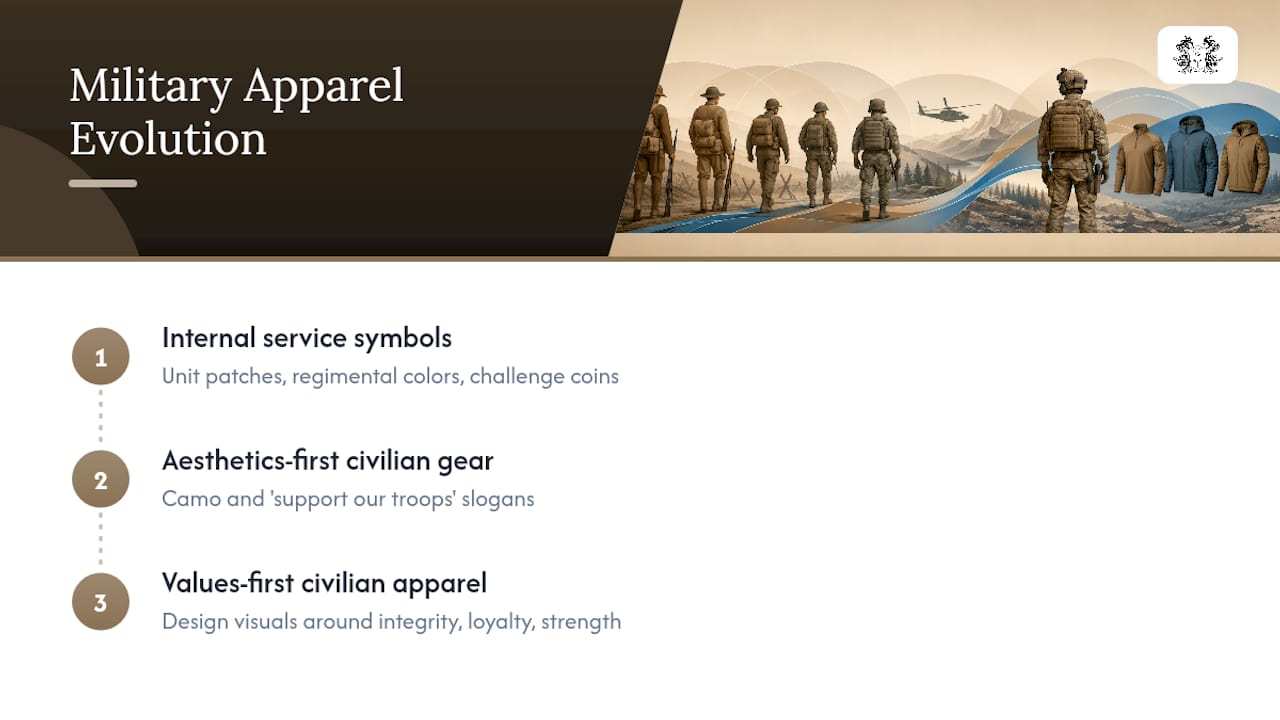
Military apparel with symbolic weight is not new. Unit patches, regimental colors, and challenge coins have carried identity and loyalty since long before “veteran-owned brand” was a marketing category. What changed is the audience. For most of history, these symbols stayed inside the service, understood only by those who wore the uniform.
The shift toward civilian-facing, values-driven apparel picked up momentum as more veterans left active service looking for ways to carry their identity into civilian life without wearing an actual uniform. Early attempts leaned heavily on camo patterns and generic “support our troops” slogans, aesthetics first, meaning second. That approach filled a gap but rarely satisfied veterans themselves, since it flattened a specific lived experience into a generic patriotic symbol.
The more recent evolution, the one Modern Day Knight and similar brands represent, flips that order. Instead of starting with a military look and hoping the message follows, these brands start with a code, integrity, loyalty, strength, and design the visual language around it. That mirrors what research on identity-building through appearance has long shown inside the services themselves: consistent, symbolic markers reinforce identity far more effectively than loud, generic ones. Civilian apparel is only now catching up to a lesson the military learned generations ago.
What Materials Hold Up Best in Values-Driven Apparel?
A shirt that claims to represent integrity has to survive more than one wash cycle, or the claim falls apart along with the fabric. Material choice is not a side detail here. It is part of the message.
Heavyweight cotton, usually in a range that resists pilling and holds its shape through repeated wear far better than the thin, stretched-out cotton common in fast-fashion basics. Ring-spun cotton in particular gives a softer hand feel while staying durable, which matters for a piece meant to be worn daily rather than saved for one occasion. Reinforced shoulder seams and double-stitched hems prevent the kind of early fraying that turns a values statement into a rag within a few months.
For hoodies, fabric weight matters even more. A midweight fleece blend, usually cotton mixed with polyester, holds warmth without losing shape after multiple washes, unlike thin, single-layer hoodies that stretch out at the cuffs within weeks. Hats built with structured panels and stitched embroidery, rather than cheap printed patches, tend to outlast their flimsier counterparts by years, not months.
None of this is about luxury. It is about the shirt still looking and feeling right a year from now, because a value only means something if it lasts. A brand that skips on fabric weight to hit a lower price point is quietly undercutting the exact message it is trying to sell.
A Note From Modern Day Knight
We built Modern Day Knight as veterans, for people who want their clothes to say something true. Every piece we make starts with the code, not the trend. If that resonates, come find your shirt and tell us your story.
Find Your Values-First Piece at Modern Day Knight
Modern Day Knight is the direct route to apparel built on a code, not a costume rack of borrowed military imagery. While plenty of retailers slap camo patterns on a shirt and call it tactical, every piece here starts with the same question: does this actually represent integrity, loyalty, and strength, or does it just look like it does?
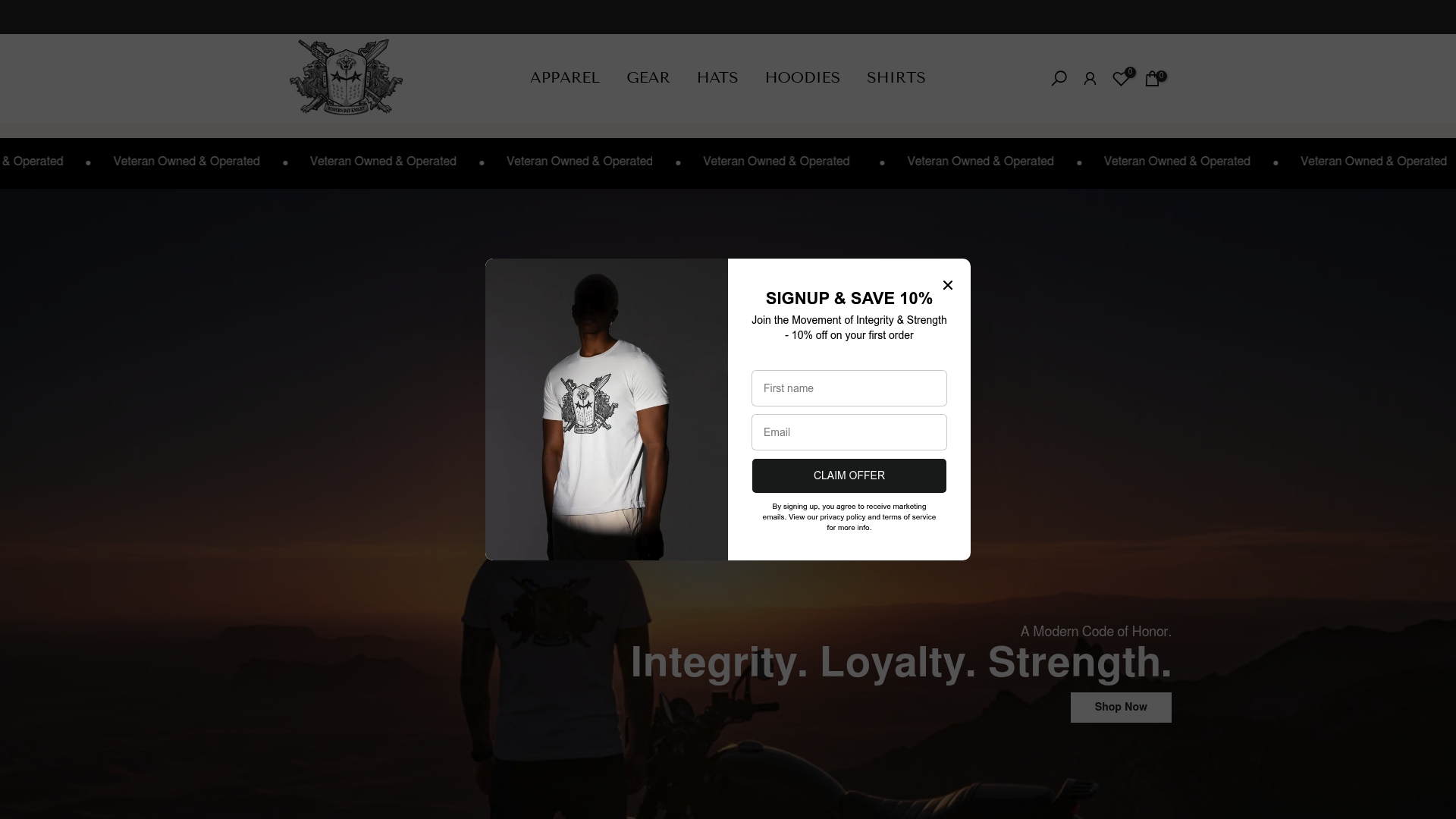
You get heavyweight materials, restrained symbolism, and a veteran-owned story behind every product, not an afterthought bolted on for marketing. Start with the shirts collection for an easy entry point, or check out the Modern Day Knight Old School Tee if you want a piece that carries the brand’s core message in its simplest form. Browse the full apparel collection and pick the piece that says what you actually stand for.
Frequently Asked Questions
What is values-over-aesthetics clothing, in simple terms?
It is apparel, often military-inspired, designed to communicate a belief system like integrity, loyalty, or strength before it worries about looking trendy. The message comes first, and the design follows it.
How is this different from regular military-style fashion?
Regular military-style fashion borrows camo patterns and tactical imagery mostly for visual effect. Values-over-aesthetics clothing centers a specific, meaningful statement and builds the design around that message using restrained, functionally accurate symbolism instead.
Why do veterans respond so strongly to this type of clothing?
Clothing tied to shared values acts as a recognition signal. It lets veterans identify each other in civilian spaces and rebuild a sense of community that mirrors the cohesion many felt during service.
Does higher price always mean better quality in this category?
Not automatically, but price often reflects fabric weight, stitching quality, and mission investment. A $12 shirt rarely holds up the way a well-constructed $35 piece does over a year of regular wear.
How can I tell if a brand is genuinely veteran-owned?
Check the brand’s mission or about page for a direct, specific ownership statement. Vague “support our troops” language without details about who founded the company is a warning sign worth noticing.
Sources
- Enclothed Cognition : How Clothing Shapes Our Thoughts, Feelings, and Behaviour | Springer Nature Link
- Dress is a Fundamental Component of Person Perception - PMC
- How the U.S. Air Force Can Build an Airminded Warrior Identity | RAND
- Effects of Personal Values and Clothing Style Confidence on Consumers’ Interest in Upcycled Clothing Products
- How Clothing Communicates Identity | Psychreg


