



War is organized armed conflict between political entities, states, or groups that use military force to achieve strategic objectives. It is one of the most defining forces in human history, shaping borders, identities, economies, and the moral codes we live by. Understanding conflict means understanding ourselves.
Two primary categories define most armed conflicts:
- Interstate war: Armed conflict between two or more sovereign states, typically involving conventional military forces fighting over territory, regime change, or strategic dominance. Think World War II or the US-Iran hostilities unfolding in 2026.
- Intrastate war: Conflict within a single state, often between a government and non-state actors such as rebel groups, militias, or separatist movements. These wars frequently involve asymmetric tactics and are far harder to resolve than interstate conflicts.
- Extra-state war: Armed conflict between a state and a non-state actor operating outside its borders, common in colonial history and counterterrorism operations.
- Non-state conflict: Violence between organized armed groups with no direct state involvement, often tied to criminal networks, warlords, or ethnic militias.
The Institute for the Study of War and international classification frameworks recognize these distinctions as foundational to analyzing conflict. Interstate wars tend to involve clear objectives and defined front lines. Intrastate wars blur those lines, pulling civilians into the center of the fight and making resolution far more complex.
How war has evolved from ancient battles to modern conflict
Millennia of armed conflict share one constant: war changes everything it touches, and then it changes itself.
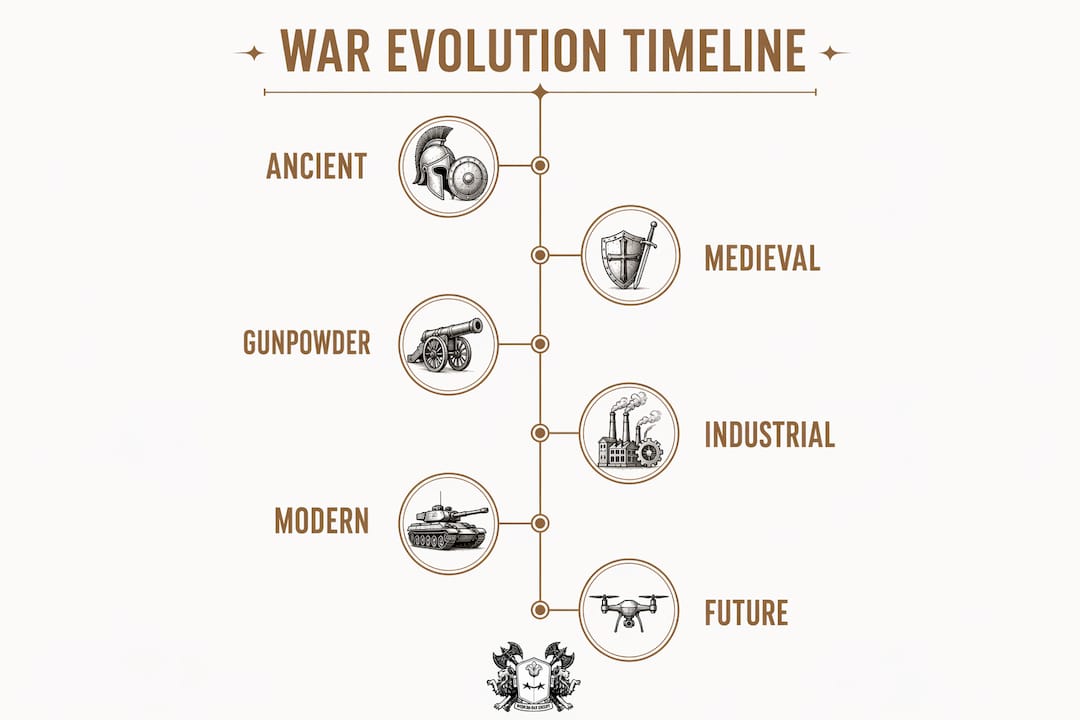
Ancient and classical warfare relied on massed infantry, chariots, and siege craft. Empires from Assyria to Rome built their dominance through disciplined armies and logistical superiority. The Roman legion, for instance, was not just a fighting force but an engineering corps capable of building roads, bridges, and fortifications that extended imperial reach for centuries.
Medieval warfare introduced cavalry dominance, castle fortifications, and the feudal obligation to fight. The rise of Islam and the Crusades reshaped conflict across three continents, fusing religious motivation with military ambition in ways that still echo today.
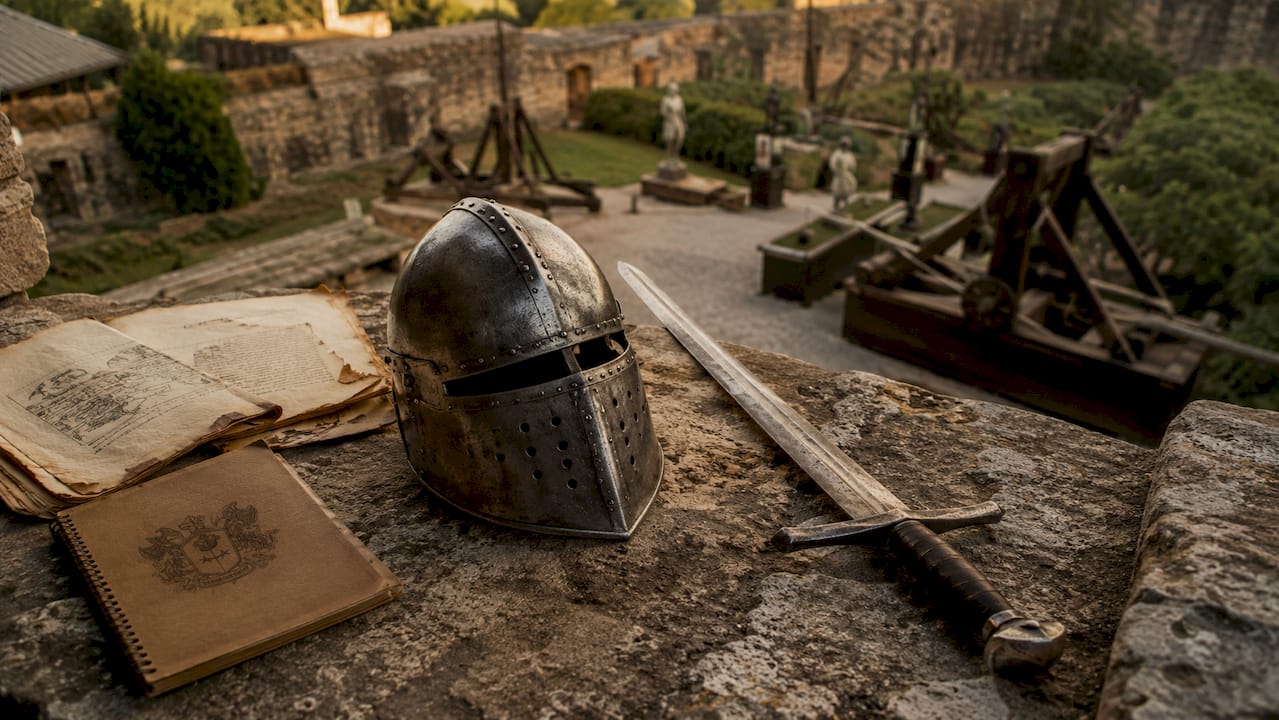
The gunpowder revolution of the 15th and 16th centuries dismantled the castle’s defensive advantage and made mass infantry armies viable again. Historians like Geoffrey Parker and John Keegan argue that cultural traditions and societal factors are just as decisive as weapons technology in explaining how wars are fought and why they end.
Industrial warfare arrived with the American Civil War and reached its brutal peak in World War I, where machine guns, artillery barrages, and poison gas produced casualties on a scale previously unimaginable. World War II added aerial bombardment, armored warfare, and ultimately nuclear weapons, permanently altering the calculus of great-power conflict.
Contemporary and asymmetric conflict defines the post-Cold War era. Non-state actors using guerrilla tactics, improvised explosive devices, and information operations have repeatedly frustrated technologically superior conventional forces. The Western way of war, characterized by rapid deployment, capital-intensive technology, and decisive engagement, often struggles against decentralized insurgencies that refuse to fight on those terms.
Key theoretical turning points in the history of warfare:
- The Napoleonic era’s introduction of mass conscript armies and total national mobilization
- The Industrial Revolution’s transformation of logistics, firepower, and casualty scales
- The development of airpower as a strategic and tactical tool in the 20th century
- Nuclear deterrence reshaping great-power relations after 1945
- The rise of counterinsurgency doctrine in response to post-colonial and Cold War proxy conflicts
- Cyber and information warfare emerging as a fifth domain of conflict in the 21st century
War’s deeper meaning, as scholars at the Cambridge History of Warfare emphasize, encompasses cultural and societal dimensions far beyond battlefield tactics. It shapes national identity, political evolution, and the moral frameworks entire generations inherit.
What actually causes war? The biological, psychological, and political roots
No single cause explains war. The most honest answer is that armed conflict usually erupts when multiple pressures converge and every other option has been exhausted or abandoned.
Biological and psychological drivers include competition for resources, fear of domination, and the human tendency to form in-groups that view outsiders as threats. Evolutionary psychology suggests that intergroup violence has deep roots, though it also shows that cooperation is equally hardwired. Fear is often the most immediate trigger: states that fear a rival’s growing power frequently strike first rather than wait.
Social and political causes are where most conflicts actually ignite. Identity conflicts rooted in ethnicity, religion, or nationality create fault lines that political actors can exploit. Resource competition over water, oil, or arable land turns latent tensions into active hostilities. Governance breakdowns, where states lose the monopoly on legitimate force, create power vacuums that armed groups rush to fill.
Value conflicts are the hardest to resolve. Research from Harvard’s Program on Negotiation identifies three types of conflict: task conflict (disagreements over concrete issues), relationship conflict (interpersonal tensions), and value conflict (fundamental differences in identity and belief). Value conflicts, rooted in what people believe is right or just, resist negotiation because compromise feels like betrayal. They underpin the most intractable wars, from sectarian civil wars to ideological interstate rivalries.
- Incompatible goals: When two parties each require something the other cannot concede, diplomacy hits a wall.
- Communication breakdown: Misread signals and miscalculation have started wars that neither side actually wanted.
- Failure of deterrence: When a potential aggressor concludes the cost of war is lower than the cost of restraint, conflict becomes likely.
- Historical grievances: Unresolved territorial disputes or past atrocities create a ready supply of mobilizing narratives for future conflict.
The path from grievance to gunfire is rarely straight. It runs through failed diplomacy, domestic political pressures, and the decisions of individual leaders who sometimes miscalculate badly.
What major conflicts are reshaping the world in 2026?
The global conflict map in 2026 is dense and complicated. Several wars are active simultaneously, each with its own logic, actors, and humanitarian toll.
| Conflict | Type | Key Actors | Strategic Focus |
|---|---|---|---|
| US-Iran hostilities | Interstate | United States, Iran, regional proxies | Strait of Hormuz, energy infrastructure |
| Russia-Ukraine war | Interstate/hybrid | Russia, Ukraine, NATO backers | Territory, sovereignty, European security |
| Sudan civil war | Intrastate | Sudanese Armed Forces, RSF | Political control, ethnic violence |
| Myanmar civil war | Intrastate | Military junta, ethnic armed groups | Governance, territorial control |
| Sahel conflicts | Non-state/intrastate | Jihadist groups, state militaries, Wagner remnants | Regional destabilization |
The US-Iran conflict illustrates a defining feature of modern interstate war: the target is often infrastructure, not just territory. Airstrikes aimed at controlling oil traffic through the Strait of Hormuz reflect a strategic logic where choking an adversary’s economic lifelines matters as much as seizing ground. Control of maritime chokepoints like the Strait of Hormuz can be more decisive than territorial conquest, given how deeply global trade depends on those corridors.
Ceasefire agreements in these conflicts face a persistent problem. Peace without trust collapses quickly, and unresolved sovereignty disputes give both sides reason to return to hostilities the moment conditions shift. The internationalization of civil wars, where outside powers back competing factions, adds another layer of complexity that makes resolution harder.
- Proxy warfare allows great powers to pursue strategic goals without direct confrontation.
- Asymmetric tactics by non-state actors neutralize conventional military advantages.
- Information warfare and disinformation campaigns now run parallel to every kinetic conflict.
- Economic sanctions function as a form of coercive pressure short of open war.
The true costs of war: human, economic, and social consequences
War’s price is never paid only by soldiers. Civilians, economies, and entire generations absorb costs that outlast the fighting by decades.
The human toll: Research from Brown University’s Costs of War Project documents the sustained impacts of military engagements, including mass displacement, infrastructure destruction, refugee crises, and the long-term financial burdens borne by both combatant and affected nations.
The economic consequences of armed conflict are severe and lasting. Military spending diverts resources from health care, education, and infrastructure. Destroyed factories, ports, and power grids take years to rebuild. Capital flight accelerates as investors exit unstable regions. Countries that experience prolonged conflict often see a generation of economic development erased.
Social fragmentation may be the most durable wound. Communities split along the lines that war exploits: ethnicity, religion, class, and political loyalty. Trust between neighbors collapses. Institutions that once held society together, courts, schools, local governments, lose legitimacy or cease to function entirely.
- Displacement: Armed conflict drives millions from their homes, creating refugee flows that strain neighboring countries and international aid systems.
- Psychological trauma: Populations exposed to sustained violence carry elevated rates of post-traumatic stress, depression, and anxiety long after fighting ends.
- Geopolitical shifts: Wars redraw borders, collapse alliances, and create power vacuums that new conflicts rush to fill.
- Long-term financial burden: Veterans’ care, debt from wartime spending, and reconstruction costs persist for generations after peace returns.
The social fabric of a society can survive a short, decisive conflict. Prolonged wars grind it down in ways that no peace treaty fully repairs.
How international institutions and diplomacy try to control war
No single institution has the power to stop a determined aggressor. But the architecture of international law and diplomacy has prevented many conflicts from escalating and ended others that might have continued far longer.
The United Nations operates the most visible conflict-management system in the world. UN peacekeeping missions deploy troops and observers to buffer zones, monitor ceasefires, and protect civilians. Diplomatic sanctions apply economic pressure on states that violate international norms. The Security Council can authorize military action, though the veto power of its five permanent members frequently blocks consensus on the most politically charged conflicts.
- Mediation and negotiation: UN envoys and regional bodies like the African Union and ASEAN broker talks between warring parties, often working for years before any agreement holds.
- International humanitarian law: The Geneva Conventions set binding rules on the treatment of prisoners, wounded combatants, and civilians. Violations constitute war crimes prosecutable under international law.
- The International Criminal Court: Established to hold individuals accountable for genocide, crimes against humanity, and war crimes, the ICC represents the most direct enforcement mechanism for war crime laws, though its jurisdiction is contested by several major powers.
- Arms control treaties: Agreements like the Chemical Weapons Convention and the Nuclear Non-Proliferation Treaty attempt to limit the most destructive tools of war.
- Ceasefire monitoring: International observers create accountability structures that make violations visible, raising the political cost of returning to hostilities.
The limitations are real. Political will among powerful states determines whether institutions act or stand aside. Enforcement without the cooperation of major powers remains weak. Still, the post-1945 international order has produced the longest period of great-power peace in recorded history, which is not nothing.
Honor, loyalty, and the warrior code: how culture shapes the meaning of war
War has never been purely a military event. Every culture that has fought has also built a story around why it fights and what it means to fight well.
The samurai code of Bushido, the European chivalric tradition, the Roman concept of virtus, and the warrior ethos of indigenous peoples across the Americas all share a common thread: the belief that how you fight matters as much as whether you win. These codes were not just ideals. They shaped training, discipline, unit cohesion, and the treatment of enemies and civilians. The symbolic significance of warrior weapons and status across history reflects how deeply cultures have tied martial identity to social order and personal honor.
Modern military culture carries these traditions forward. The U.S. Army’s seven core values, loyalty, duty, respect, selfless service, honor, integrity, and personal courage, are a direct descendant of warrior codes refined over centuries. Veterans who internalize these values often find that they shape their civilian lives just as powerfully as their service did.
Pro Tip: If you want to understand a culture’s relationship with war, look at what it honors in its warriors. The virtues it celebrates on the battlefield are usually the same ones it tries to build in its citizens.
At Moderndayknightco, we believe that code of honor is not a relic. It is a living standard. The warrior values that carried soldiers through history, integrity, loyalty, strength, and respect, are the same values that define character today. Wearing what you believe in is one way to carry that standard forward. Explore how warrior culture shapes modern identity and what it means to live by a modern code of honor.
War strategies and tactics: how battles are actually won and lost
Strategy operates at the level of the whole war. Tactics operate at the level of the individual battle. Confusing the two is one of the most common mistakes in understanding military history.
Grand strategy aligns military, economic, diplomatic, and informational power toward a political objective. The Allied strategy in World War II, for example, prioritized defeating Germany before Japan, accepted temporary setbacks in the Pacific, and coordinated industrial production across multiple continents. That kind of coherence across domains is what separates winning strategies from losing ones.
Operational art connects strategy to tactics, planning campaigns that sequence battles to achieve strategic goals. The German blitzkrieg of 1940 was an operational concept: use speed, armor, and air support to penetrate enemy lines faster than the defender could respond, then exploit the chaos rather than fight through fixed positions.
Tactical innovation has repeatedly changed the outcome of wars. The longbow at Agincourt, the rifle at Gettysburg, the tank at Cambrai, and the precision-guided munition in the Gulf War each shifted the balance between offense and defense. Modern warfare tactics increasingly rely on electronic warfare, cyber operations, and unmanned systems to degrade enemy command and control before the first ground unit moves.
Asymmetric tactics deserve particular attention. Non-state actors and weaker states use guerrilla warfare, improvised explosive devices, and civilian population centers to neutralize the advantages of technologically superior opponents. The lesson repeated across Vietnam, Afghanistan, and Iraq is that tactical dominance does not guarantee strategic success.
How war affects civilians and creates refugee crises
Civilians bear the heaviest burden of modern armed conflict. The shift from battlefield-centric warfare to urban combat and infrastructure targeting has made civilian populations both incidental victims and, in some cases, deliberate targets.
Displacement is the most immediate consequence. When fighting reaches cities and towns, families flee with whatever they can carry. Refugee camps become long-term settlements when the conflict drags on. Host countries absorb economic pressure, social tension, and political strain as refugee populations grow. The Syrian civil war produced one of the largest displacement crises since World War II, with millions scattered across Turkey, Lebanon, Jordan, and Europe.
Sexual violence, forced recruitment of child soldiers, and deliberate destruction of food and water supplies are documented tactics used to terrorize civilian populations into submission or flight. International humanitarian law prohibits all of these practices, but enforcement depends on access and political will that are often absent during active conflict.
Children who grow up in conflict zones face compounded disadvantages: interrupted education, exposure to trauma, recruitment by armed groups, and the long-term health consequences of malnutrition and untreated injury. The effects ripple forward into the next generation, making post-war recovery far harder than the physical reconstruction alone.
How technology and innovation are changing warfare
Technology has always driven military change. What is different now is the pace and the domains involved.
Drone warfare has transformed both surveillance and strike capability. Unmanned aerial vehicles allow militaries to conduct persistent reconnaissance and precision strikes without risking pilots. Non-state actors have adapted commercial drones for improvised weapons, democratizing a capability that once required nation-state resources.
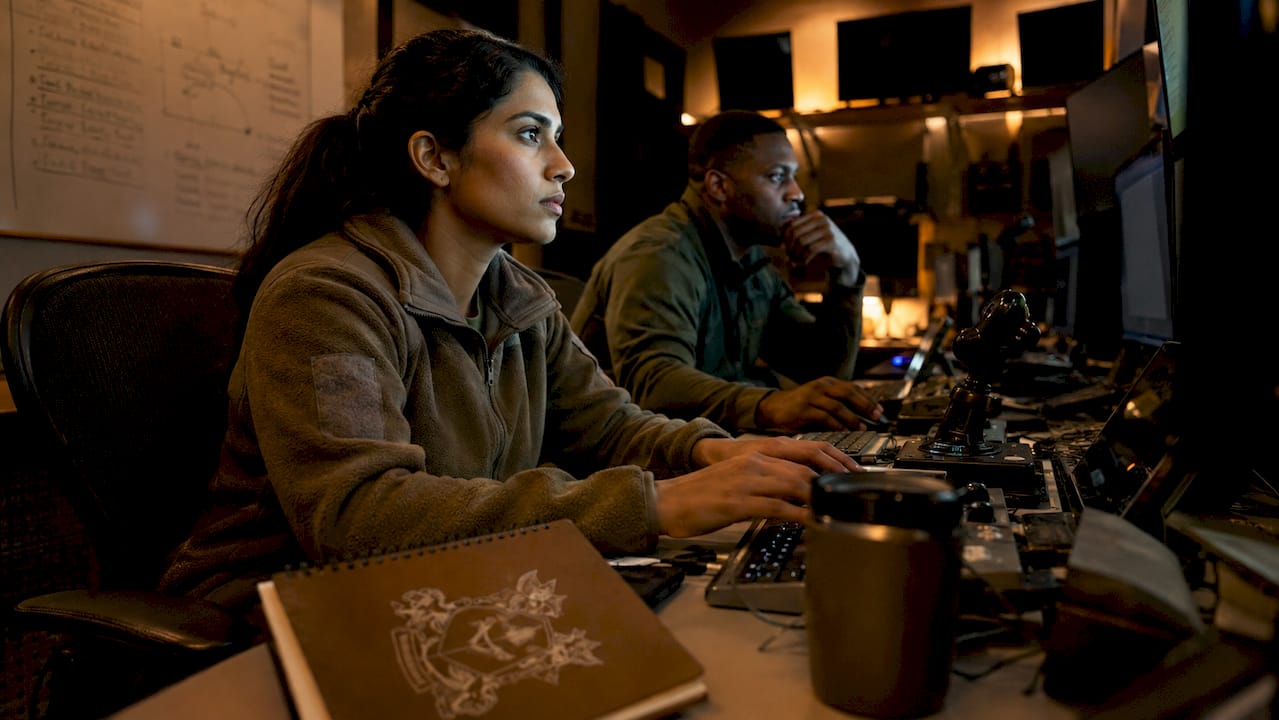
Cyber warfare targets the digital infrastructure that modern societies depend on: power grids, financial systems, communications networks, and military command systems. A successful cyberattack can degrade an adversary’s military effectiveness without firing a single conventional weapon. Several states now maintain dedicated cyber commands as a core military capability.
Artificial intelligence is accelerating decision cycles in ways that human operators struggle to match. AI-assisted targeting, logistics optimization, and intelligence analysis are already deployed in active conflicts. The ethical and legal questions around autonomous weapons systems, machines that select and engage targets without human authorization, remain unresolved in international law.
Space as a contested domain has moved from science fiction to operational reality. Satellites provide the GPS navigation, communications, and intelligence that modern militaries depend on. Antisatellite weapons and electronic jamming now threaten those systems directly, making space a potential theater of conflict in any major interstate war.
The Pentagon’s analysis of climate change and war adds another dimension: environmental stress, resource scarcity driven by climate shifts, and the military logistics burden of operating in extreme conditions are reshaping how defense planners think about future conflicts.
The psychological toll war takes on soldiers and societies
Combat changes people. The psychological effects of war on soldiers are well-documented and severe, and they do not stay confined to the individuals who served.
Post-traumatic stress disorder affects a substantial portion of combat veterans across every modern conflict. Symptoms include intrusive memories, hypervigilance, emotional numbing, and severe disruption of sleep and relationships. Veterans who struggle to access mental health care, or who face stigma around seeking it, carry those wounds into their families and communities.
Moral injury is a related but distinct phenomenon. It occurs when soldiers witness or participate in events that violate their deeply held moral beliefs, killing civilians, following orders they believe are wrong, or surviving when comrades did not. Moral injury does not respond to the same treatments as PTSD and is only recently receiving the clinical attention it deserves.
Societies at war also change psychologically. Sustained conflict produces collective trauma, heightened nationalism, dehumanization of the enemy, and a tolerance for violence that persists long after the fighting ends. Post-war societies often struggle with elevated rates of domestic violence, substance abuse, and political extremism as veterans and civilians alike process what they experienced. The military values that guide service members through combat, honor, integrity, and loyalty, are also the values that help them rebuild when they come home.
What post-war reconstruction and peacebuilding actually require
Ending a war is not the same as building peace. The gap between ceasefire and stable society is where reconstruction either takes hold or collapses.
Physical reconstruction is the most visible need: rebuilding roads, hospitals, schools, and power infrastructure. It requires sustained funding, security for workers, and functional governance to manage contracts and prevent corruption. The Marshall Plan after World War II remains the most cited model of successful reconstruction, precisely because it combined financial resources with institutional support and clear strategic purpose.
Institutional rebuilding is harder and slower. Courts, police forces, civil services, and electoral systems that were destroyed or corrupted during conflict need to be rebuilt from the ground up, often while former combatants are still armed and former enemies are being asked to share power. Disarmament, demobilization, and reintegration programs attempt to transition fighters into civilian life, with mixed results across different conflicts.
Reconciliation addresses the social wounds that physical reconstruction cannot reach. Truth and reconciliation commissions, as used in South Africa and Rwanda, create structured processes for communities to confront what happened and build a shared account of the past. They do not erase grievances, but they can prevent those grievances from becoming the seeds of the next conflict.
Pro Tip: The most durable peace agreements share one feature: they address the underlying causes of the conflict, not just the symptoms. A ceasefire that leaves core grievances unresolved is a pause, not a peace.
Peacebuilding also requires patience from the international community. Donor fatigue and shifting political attention often lead to premature withdrawal of support, leaving fragile states to manage reconstruction with inadequate resources. The countries that have successfully rebuilt after major conflicts, Germany, Japan, Rwanda, each benefited from sustained external support combined with strong internal leadership committed to a different future.
Wear what you stand for
War tests everything: courage, loyalty, integrity, and the will to hold a line when it costs something. Those values do not belong only to the battlefield. They belong to every person who chooses to live by a code.
At Moderndayknightco, we are a veteran-owned brand built on exactly that belief. Every piece we make is a statement of ideals, not just a garment. If you carry those values, wear them.

Shop the full apparel collection and find gear that reflects who you are and what you stand for. You can also check out the Army Brat Hoodie, one of our most worn pieces for those who grew up inside the military community.
We honor those who served. We build for those who carry the code forward. Join the movement.
Key Takeaways
War’s most lasting lesson is that its costs, human, economic, and social, always outlast the fighting, making prevention and peacebuilding as critical as military strategy.
| Point | Details |
|---|---|
| Two core conflict types | Interstate wars involve states; intrastate wars involve governments and non-state actors with asymmetric tactics. |
| Value conflicts drive the hardest wars | Identity-based disputes rooted in belief and culture resist negotiation and underpin the most intractable conflicts. |
| Modern warfare targets infrastructure | Controlling chokepoints like the Strait of Hormuz now matters as much as seizing territory. |
| Costs extend across generations | Brown University’s Costs of War research documents displacement, trauma, and financial burdens that persist long after peace. |
| Peace requires more than a ceasefire | Durable reconstruction demands institutional rebuilding, reconciliation, and sustained international support. |


