



A chivalric code in modern life is a universal moral framework built on five core principles: courage, integrity, respect, compassion, and loyalty. These are not relics of medieval Europe. They are the operating standards of anyone who chooses to treat others with consistent dignity, whether at work, in relationships, or in the community. The formal term for this framework is the code of chivalry, and its modern interpretation has shed the armor, the gendered hierarchy, and the pageantry. What remains is something far more demanding: a daily commitment to character over convenience. Moderndayknightco was built on exactly this foundation, and this article breaks down what living that code actually looks like in 2026.
What is a chivalric code in modern life, and what are its core principles?
Modern chivalry is founded on five core pillars: courage, integrity, respect, compassion, and loyalty. These principles apply universally across every social role, not just to warriors or men. That universality is what makes the modern code both more demanding and more relevant than its medieval predecessor.
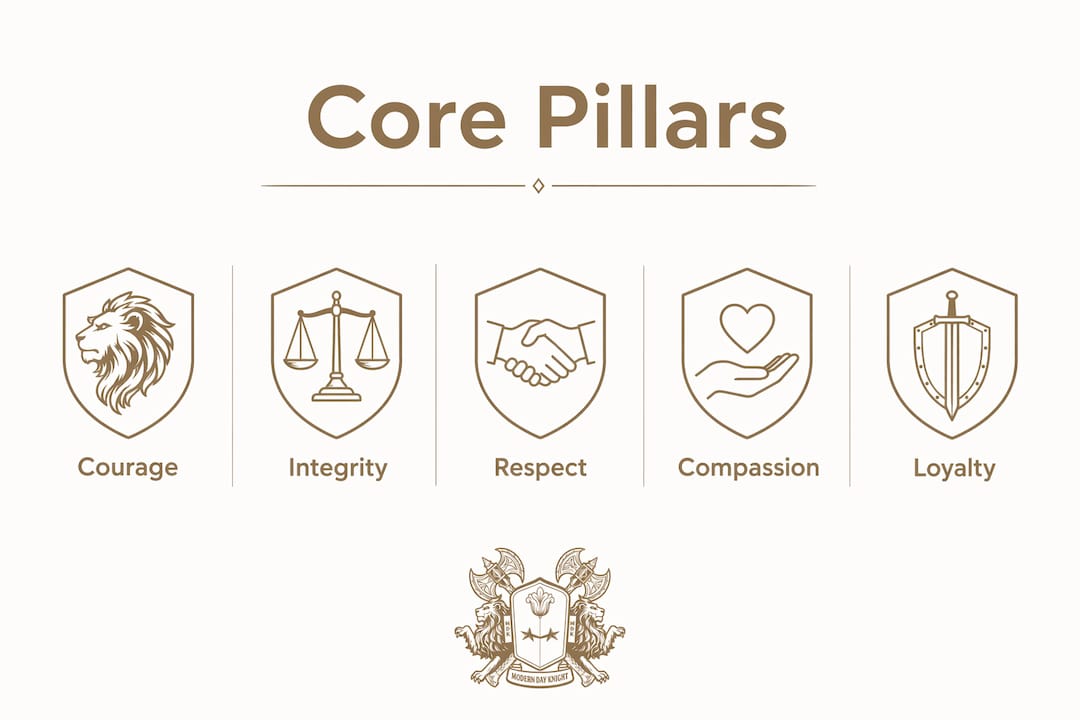
Courage in modern life rarely means physical bravery. It means speaking up in a meeting when something is wrong, having a difficult conversation instead of going silent, and standing by your values when it costs you something. That kind of courage is harder than most people admit.
Integrity is reliability made visible. You keep your word when it is inconvenient. You show up on time. You follow through on commitments that no one is tracking. In professional settings, integrity shows up as credit-sharing and honest feedback. In personal life, it looks like consistency between what you say and what you do.

Respect means honoring others’ autonomy and dignity without requiring them to earn it first. You listen without interrupting. You acknowledge people’s time. You treat the person serving your coffee with the same attention you give your manager.
Compassion is empathy with action. It means recognizing when someone is struggling and offering support without making them feel small for needing it. The distinction matters. Compassion lifts people. Pity diminishes them.
Loyalty is commitment that holds under pressure. It means defending someone’s reputation when they are not in the room, staying consistent in relationships through difficulty, and choosing your community over personal convenience.
- Courage: speak truth when it is uncomfortable
- Integrity: do what you said you would do
- Respect: honor others’ time, space, and dignity
- Compassion: support without patronizing
- Loyalty: show up consistently, not just when it is easy
Pro Tip: Start with one pillar per week. Pick integrity this week and track every promise you make. Write them down. Honor every single one. That single habit will change how people experience you faster than any grand gesture.
How does modern chivalry differ from the medieval code?
The medieval code of chivalry included loyalty, honor, protecting the weak, and serving justice. It was a warrior’s code, limited to knights, and it carried strict gendered roles. Women were objects of courtly devotion, not equals. The code was aspirational but rarely lived up to in practice.
Modern chivalry keeps the ethical core and discards the hierarchy. The shift is from performance to substance. Opening a door is not chivalry. Holding space for someone in a hard conversation is. The difference is whether the act centers your image or the other person’s dignity.
A common misconception is that chivalry is patronizing, particularly toward women. That critique applies to the old version. Modern chivalry redefines gendered acts into supportive behaviors that respect autonomy. It moves away from rescue narratives toward mutual dignity and equality. Chivalry practiced well is not about who needs protecting. It is about who deserves respect. The answer is everyone.
| Behavior | Medieval chivalry | Modern chivalry |
|---|---|---|
| Who it applies to | Knights only | Every person, every role |
| Gender dynamic | Man protects woman | Mutual respect and dignity |
| Core motivation | Honor through status | Honor through character |
| Key acts | Combat, courtly gestures | Active listening, reliability, credit-sharing |
| Success measure | Social recognition | How others feel after interacting with you |
Chivalry complements equality by expressing deep respect and care without domination. It is not gender-specific. It extends respect to everyone regardless of status, background, or role. That is the version worth practicing.
How to practice the chivalric code in daily life
Successful modern chivalry is measured by the impact on others’ feelings of respect and empowerment, not by cost or grand gestures. Small habits build long-term trust. Here is how to put the code into practice across personal and professional settings.
-
Practice active listening. Put your phone down. Make eye contact. Let the other person finish before you respond. This single act signals that you value their words more than your next point.
-
Communicate with clarity and honesty. In dating, emotional safety means clear communication, no passive aggression, and honest intentions. Say what you mean. Do not leave people guessing about where they stand with you.
-
Share credit at work. When a project succeeds, name the people who contributed. Do not absorb recognition that belongs to others. This is one of the most visible forms of integrity in professional settings.
-
Be the first to apologize. Modern chivalry requires de-centering the self: being first to apologize, last to take credit, and maintaining calm under pressure. That takes more strength than aggression ever does.
-
Show up consistently. Reliability and predictability are forms of care that build trust over time. Punctuality is a form of respect. Following through on small commitments signals that your word means something.
-
Champion others in public. Speak up when someone is being treated unfairly. Defend people who are not in the room to defend themselves. This is loyalty in action.
Pro Tip: The biggest pitfall in modern chivalry is inconsistency. One grand gesture does not build trust. Fifty small, reliable acts do. Audit your week: did your behavior match your stated values every day, or only when someone was watching?
What role does the chivalric code play in leadership and community?
Leaders who embody chivalric qualities create safe, trustful organizational cultures. Virtue becomes contagious. When a leader consistently demonstrates integrity and courage, the team follows. That is not a soft claim. It is how culture actually forms.
The connection between chivalry and leadership runs deep. According to research from goskybound.com, leaders who put their team first, demonstrate courage, and pursue purpose-driven work improve both morale and performance. The knight metaphor holds here. A knight’s value was not in rank. It was in service.
- Psychological safety: Leaders who practice chivalric respect create environments where people speak up without fear of punishment.
- Accountability culture: When a leader owns mistakes publicly, the team learns that accountability is strength, not weakness.
- Protecting team members: Standing between your team and organizational pressure is a direct expression of the chivalric value of loyalty.
- Consistent honorable choices: Leaders embodying chivalric codes make consistent honorable choices that influence organizational culture positively over time.
Community works the same way. When enough individuals commit to chivalric values in society, the social fabric strengthens. Neighborhoods become safer. Workplaces become more honest. Relationships become more durable. The code scales. It starts with one person choosing integrity when no one is watching. That choice ripples outward.
Modern society’s lack of a cohesive moral framework makes chivalry a necessary antidote. It reinforces virtue as an internal ethos rather than a set of external acts. That distinction is everything. You do not practice chivalry to be seen practicing it. You practice it because it is who you are.
Key Takeaways
A chivalric code in modern life is most effective when practiced as a daily internal standard, not a public performance.
| Point | Details |
|---|---|
| Five core pillars | Courage, integrity, respect, compassion, and loyalty form the foundation of modern chivalric behavior. |
| Modern vs. medieval | Today’s code is inclusive and mutual, replacing gendered hierarchy with universal dignity and respect. |
| Consistency over gestures | Small, repeated behaviors like punctuality and credit-sharing build more trust than rare grand acts. |
| Leadership application | Chivalric leaders create psychologically safe teams by modeling accountability and protecting others. |
| Internal ethos | True chivalry is felt by others as dignity, not seen as performance. It starts from the inside out. |
Why I believe the code is harder and more necessary than ever
Here is what years of living by this code have taught me: most people want to be chivalrous. They just do not want to pay the daily price. The price is not dramatic. It is the moment you choose honesty over comfort. It is the meeting where you give credit to someone else when you could have taken it. It is the argument where you apologize first even though you were only half wrong.
The misconception I see most often is that chivalry is about grand gestures. Someone holds a door, calls it chivalry, and considers the obligation met. That is not the code. True modern chivalry is invisible and felt. It shows up in how people feel after spending time with you. Do they feel respected? Do they feel heard? Do they trust you more than they did before?
What I have found is that the people who live this code do not talk about it much. They just do it. They are the ones others turn to in a crisis. They are the ones whose word means something. They are the ones who build real loyalty because they gave it first. That is the modern knight. Not a title. A standard.
The code is not a burden. It is a backbone. And in a world where character is increasingly rare, choosing to live by these principles is one of the most powerful things you can do.
— Modern Day Knight
Wear what you stand for
If this code resonates with you, Moderndayknightco was built for exactly this community. Every piece in our apparel collection is designed to represent the values you carry: integrity, loyalty, strength, and honor. This is veteran-owned gear made for people who live by a standard, not a trend.

The Old School Tee is more than a shirt. It is a statement that you belong to a movement built on character. When your clothing reflects your code, every day becomes a reminder of who you are committed to being. Wear what you believe in. Join the movement at Moderndayknightco.
FAQ
What is a chivalric code in modern life?
A chivalric code in modern life is a personal moral framework centered on courage, integrity, respect, compassion, and loyalty. It applies to everyone, regardless of gender or social role, and governs how you treat others in daily interactions.
Is modern chivalry still relevant today?
Modern chivalry is more relevant than ever because it addresses the absence of a shared moral framework in contemporary society. It reinforces virtue as an internal standard rather than a set of performative acts.
How does modern chivalry differ from traditional chivalry?
Traditional chivalry was a warrior’s code limited to knights and shaped by gendered hierarchy. Modern chivalry is inclusive, mutual, and measured by whether others feel respected and dignified after interacting with you.
How can I practice chivalry in everyday life?
Practice chivalry through consistent small acts: active listening, keeping your word, sharing credit, apologizing first, and defending others when they are not present. Consistency matters far more than occasional grand gestures.
Does chivalry conflict with gender equality?
Chivalry practiced correctly complements equality. It expresses deep respect and care without domination or condescension, extending dignity to every person regardless of gender, status, or background.


