



Community-centered apparel is clothing designed and produced to serve a specific community’s social, economic, and cultural needs, not just to sell a trend. A local mental-health initiative tee that funds wellness programs is one example. A run-club made-to-order hoodie, produced only after members commit to buying, is another. Both share the same core structure:
- Shared identity: The design reflects who the community actually is, not who a brand thinks they want to be.
- Co-creation: Members shape the product through input, preorders, or direct participation.
- Community benefit: Proceeds, jobs, or visibility flow back to the people who wear it.
That structure is what separates community-centered apparel from ordinary ethical fashion. The community is not the customer. The community is the reason the garment exists.
Key Takeaways
Community-centered apparel works when the community is the organizing principle behind design, production, and reinvestment, not an afterthought added to a marketing brief.
| Point | Details |
|---|---|
| Definition is specific | Community-centered apparel serves a named community’s social, economic, and cultural needs, not just a trend. |
| Made-to-order reduces risk | Preorder and made-to-order models eliminate unsold inventory and build trust with community members. |
| Better Together scaled from 300 to 100,000+ | A grassroots mental-health apparel initiative grew nationally while keeping proceeds local and production honest. |
| Authenticity has a checklist | Ask who designed it, where proceeds go, and where it was made; deflection on any of these is a red flag. |
| Moderndayknightco applies these principles | The veteran-owned brand centers integrity, loyalty, and strength in every values-driven piece it produces. |
Table of Contents
- What makes community-centered apparel different from ethical fashion?
- How community-centered apparel is made and sold
- How brands build and sustain community around apparel
- Brand examples that show community-centered apparel in practice
- How to tell if a brand is genuinely community-centered
- A real case study: how community apparel can scale fast
- Why values-driven apparel is personal to us
- Values-driven apparel you can wear with conviction
- Sources
What makes community-centered apparel different from ethical fashion?
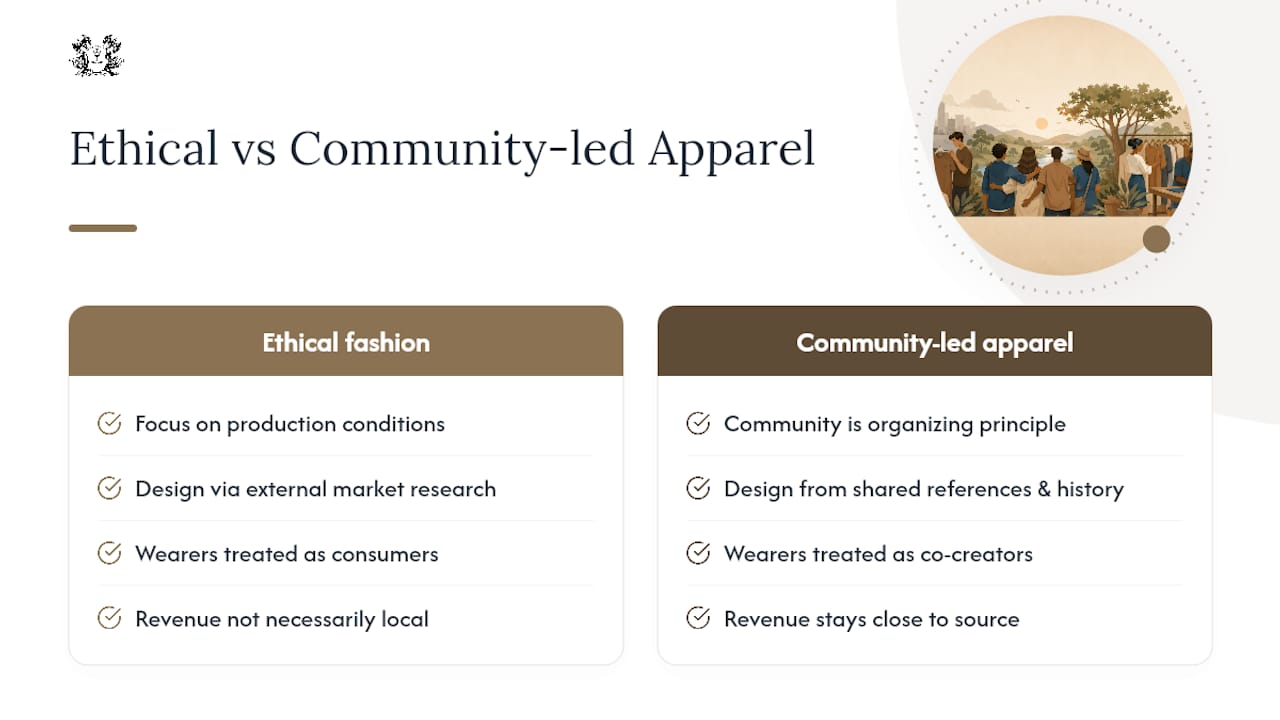
“Ethically made” and “locally sourced” describe production conditions. Community-centered apparel goes further: the community is the organizing principle behind every decision, from design to distribution to where the money goes. Community-driven design emerges from shared references, local history, and insider knowledge, not external market research. That distinction matters at every stage of the garment’s life.
Five principles define the model:
Identity-first design. The visual language comes from inside the community. Symbols, phrases, and colors carry meaning that members recognize immediately. If an outsider designed it without community input, it shows.
Participatory process. Wearers are treated as co-creators. Surveys, open design calls, preorder votes, and community feedback sessions are standard tools. The product becomes a narrative vessel, not a commodity.
Local economic benefit. Revenue stays close to the source. That means local manufacturers, local printers, or direct reinvestment into community programs. Community Clothing, the British brand founded by Patrick Grant, built its entire model around reviving UK garment factories and paying living wages, demonstrating that local reinvestment can be a brand’s core identity.
Transparent supply chain. Members can trace where the shirt was made, who made it, and what margin the brand keeps. Opacity is a red flag.
Lifecycle thinking. On-demand production, durable materials, and resale or repair programs reduce waste. Community brands tend to reject the take-make-dispose cycle because their audience holds them accountable.
Pro Tip: Avoid cultural tokenism by asking one direct question before you launch: “Could someone outside this community have designed this?” If the answer is yes, go back to the community and ask again. Authenticity comes from specificity, not good intentions.
How community-centered apparel is made and sold
The production and sales models used by community-focused brands reflect their values. Each model carries real trade-offs.
| Business Model | Primary Benefit | Primary Trade-Off |
|---|---|---|
| Made-to-order / preorder | Zero unsold inventory; no waste | Longer fulfillment time; requires upfront community commitment |
| Small-batch local production | Local jobs; faster iteration | Higher unit cost; limited scale |
| Cooperative / community-owned | Shared governance; profits stay local | Complex decision-making; slower growth |
| Revenue-reinvestment model | Proceeds fund programs directly | Requires transparent accounting to maintain trust |
| Event-based drops | High excitement; strong community moment | Irregular supply; hard to plan for new members |
Made-to-order is the most common entry point for grassroots groups. Boring Run Club’s made-to-order hoodie program shows exactly why: no warehouse, no guesswork on quantities, and members get a product that reflects their input on weight, fit, and design. The trade-off is a two-to-four week wait, which most committed community members accept without friction.
Small-batch local production costs more per unit but creates jobs and keeps quality visible. Cooperative models go further, giving members a governance stake, though they require more organizational maturity to run well.
The global fashion e-commerce market represents a massive channel for community-built apparel to reach buyers beyond a local zip code, giving even small grassroots initiatives the infrastructure to scale nationally without a traditional retail footprint.
Revenue-reinvestment models are the most mission-aligned but also the most scrutinized. Members want to see the numbers. Brands that publish clear breakdowns of where proceeds go build the deepest loyalty.
How brands build and sustain community around apparel
Tactics that actually work tend to be simple, repeatable, and tied to a real community moment. Here are the ones that show up consistently across successful programs:
- Local pickup events. Turn order fulfillment into a gathering. Members collect their gear together, meet the people behind the brand, and leave with a story, not just a package.
- Co-creation sessions. Host open design calls or feedback rounds before finalizing a drop. Even a short survey signals that the community’s voice shapes the product.
- Ambassador programs. Identify members who already wear the brand’s values, not just its clothes, and give them early access and a platform. Glossier built its early community this way, turning loyal customers into brand voices before influencer marketing had a formal playbook.
- Storytelling drops. Release each product with a narrative: who inspired it, what problem it addresses, which community member contributed the concept. Nike Run Club does this well, framing each seasonal release around a runner’s story rather than a performance spec.
- Membership models. Rapha’s Cycling Club charges an annual fee for access to rides, events, and exclusive gear. The apparel becomes a membership badge, and the community becomes the product’s primary value.
- Structured preorder windows. Gymshark and Bandit Running both use limited-window drops that create urgency and signal exclusivity without manufacturing artificial scarcity. The window closes, the order ships, and the next drop becomes an event.
Pro Tip: Release on a consistent rhythm, quarterly or seasonally, rather than whenever a design is ready. One-off drops feel like experiments. A predictable cadence tells the community you are committed, not just testing the water.
Brand examples that show community-centered apparel in practice
These examples represent different mechanisms, not just different aesthetics. Each one centers a specific community and uses a specific model to do it.
- Glossier centers beauty enthusiasts who were historically ignored by legacy cosmetics brands. Its apparel line, including the iconic pink hoodie, functions as a membership signal for a community built through direct customer dialogue and user-generated content.
- Nike Run Club centers urban runners across skill levels. Seasonal apparel drops are tied to training programs and local run events, making the clothing a participation marker rather than a purchase.
- Gymshark centers fitness communities online and offline. Its ambassador model elevates real athletes from within the community, and limited drops create shared moments that members plan around.
- Shinola centers Detroit’s manufacturing heritage and the workers who sustain it. Every product, including apparel, is framed around local production and economic reinvestment in a city that needed both.
- Rapha centers road cyclists through its Cycling Club membership. Apparel is exclusive to members, turning a jersey into proof of belonging to a community that rides together.
- Bandit Running centers runners who felt alienated by traditional running brands. Its drops are timed to race seasons, and its community-first messaging is built into every product description and social post.
- Better Together (Battlefords, Canada) centers mental-health awareness in a specific region. Starting with a 300-person pilot, the initiative grew to more than 100,000 wearers nationally, with proceeds supporting local wellness programs and some production kept local.
- Community Clothing (UK) centers British garment workers. The brand’s model prioritizes factory capacity in off-peak seasons, keeping skilled workers employed year-round rather than only during fashion weeks.
Availability note: Nike Run Club, Gymshark, Rapha, Bandit Running, Glossier, and Shinola are all active in the U.S. market. Better Together ships across Canada. Community Clothing is a UK brand with limited U.S. availability.
How to tell if a brand is genuinely community-centered
Use this checklist before you buy or before you launch. Honest answers reveal more than any marketing copy.
Green-light indicators:
- The community is named and specific, not a vague demographic.
- Designers or contributors from within the community are credited publicly.
- The brand publishes where proceeds go, including dollar amounts or percentages.
- Production location is stated, not buried in fine print.
- Members have a visible role in product decisions (surveys, votes, open calls).
- The brand has been present in the community before it started selling to them.
- Apparel is available through values-aligned channels rather than mass retail alone.
- Reinvestment evidence exists: funded programs, hired local workers, supported events.
- The brand’s social content features real community members, not just models.
- Returns or unsold inventory are handled responsibly (donated, recycled, or avoided through preorders).
Red flags:
- The “community” is described in marketing language but never named or shown.
- Proceeds go to a vague “charitable fund” with no public accounting.
- All design decisions are made internally with no community input.
- The brand launched the apparel before establishing any community presence.
- Supply chain details are absent or deflected.
Three questions to ask before you buy:
- “Who from the community was involved in designing this piece?”
- “Where does the revenue go, and can I see the breakdown?”
- “Where was this made, and who made it?”
A brand that answers all three clearly has earned your trust. One that deflects any of them has told you something important. For a deeper evaluation framework, the purposeful lifestyle clothing checklist offers a step-by-step tool aligned with these principles.
A real case study: how community apparel can scale fast
The Better Together initiative out of Battlefords, Saskatchewan, is one of the clearest recent examples of community-centered apparel working at scale. It started as a three-month mental-health awareness pilot with 300 participants. Within months, local reporting tracked growth from 300 to 6,000 wearers, and the initiative eventually reached more than 100,000 people wearing the message across Canada. Proceeds support local mental-wellness programs. Some production is kept local, and youth involvement is built into the program’s structure.
The Better Together project shows that a single, specific community message, produced honestly and reinvested locally, can spread further than most branded campaigns with ten times the budget.
Three lessons creators can take from that trajectory:
- Start with a real problem the community already feels. Better Together did not invent a cause. It named one that existed and gave people a way to signal solidarity.
- Keep production local as long as possible. Local manufacturing builds trust and keeps money in the community, even when it costs more per unit.
- Let the community carry the message. The initiative grew because wearers became advocates. The apparel did the outreach work, prompting conversations without requiring awkward asks.
Building community through shared apparel follows the same logic at every scale: the garment is a conversation starter, a membership signal, and a funding mechanism all at once.
Why values-driven apparel is personal to us
We built Moderndayknightco as a veteran-owned brand because we know what it means to belong to something larger than yourself. Service teaches you that identity is earned, not purchased, and that the people beside you matter more than the gear you wear. That experience shapes every product decision we make. When we talk about clothing that builds military community and belonging, we are not speaking theoretically. We are speaking from the kind of loyalty that does not wash out.
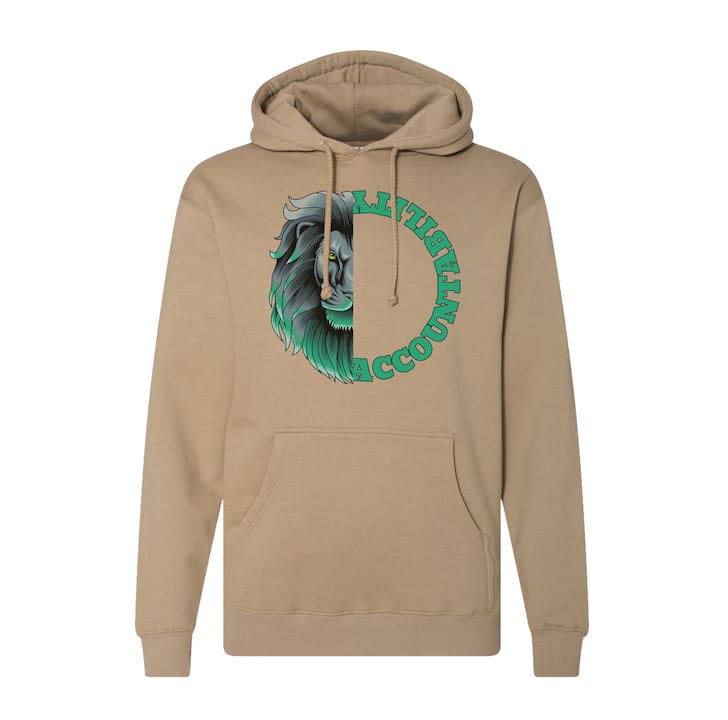
Community-centered apparel, at its best, carries that same weight. It is not decoration. It is declaration.
Values-driven apparel you can wear with conviction
If this article resonated, you are probably the kind of person who wants clothing that means something. Moderndayknightco is a veteran-owned apparel brand built around integrity, loyalty, and strength. Every piece carries a message worth wearing, and every purchase supports a brand that puts values before aesthetics.
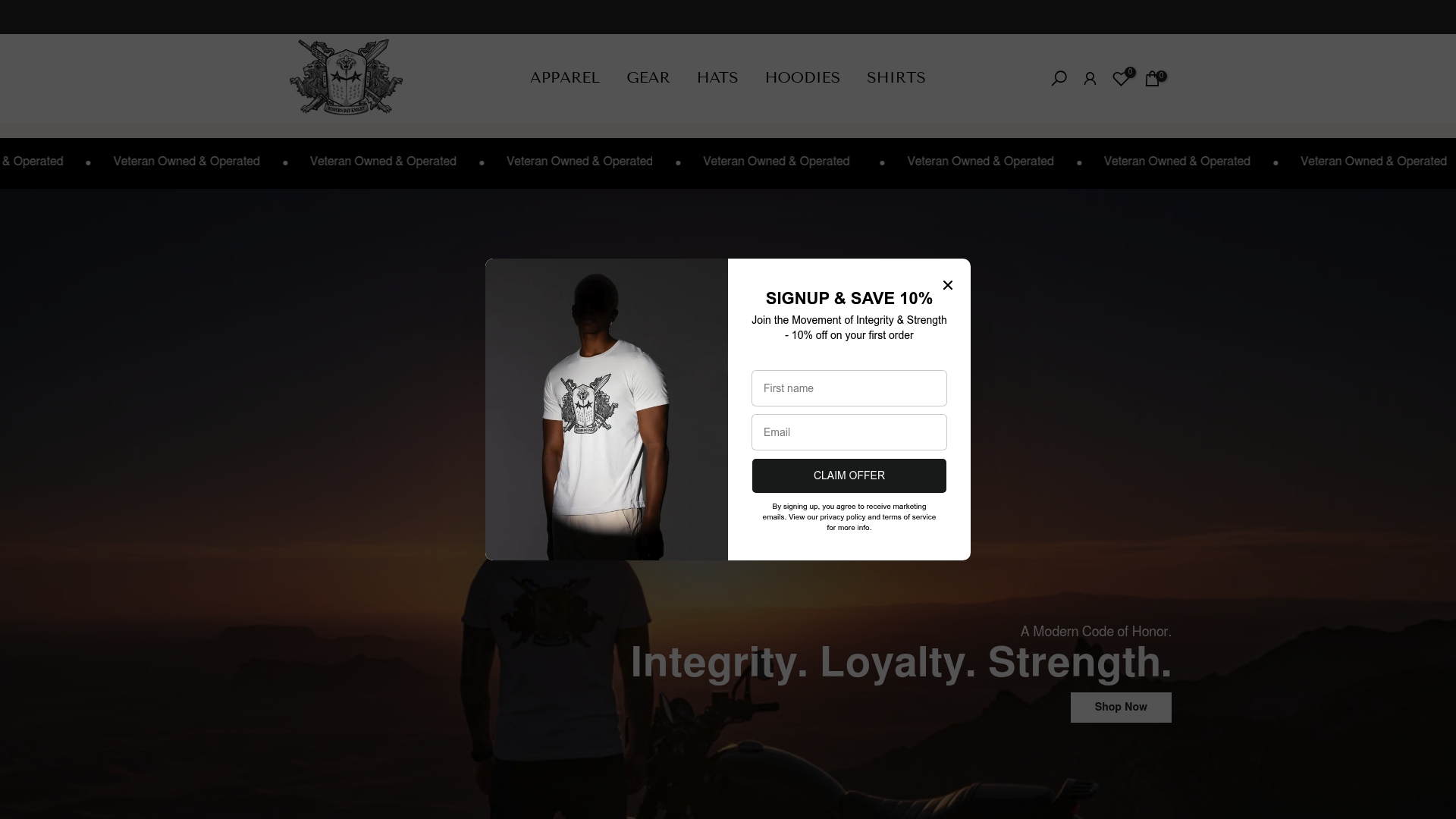
This is the publisher’s own product line, and we say that plainly. The principles in this article, identity-first design, transparent intent, and community benefit, are the same principles behind every shirt, hoodie, and hat in our collection. Browse the Moderndayknightco apparel collection and find the piece that reflects who you are and what you stand for.
Sources
- Battlefords born Better Together mental-health initiative now worn by over 100,000 across Canada
- Fashion e-commerce worldwide — Statistics & Facts
- How Boring Run Club outfits its community with made-to-order custom hoodies
- Community Clothing — Wikipedia


