



A morale patch is an unofficial, often humorous patch attached by hook-and-loop to signal unit identity, personal values, or an inside joke. It exists because formal insignia can’t carry humor, grief, pride, or personality, and troops needed a way to say who they are beyond rank and branch. Three functions drive its use: identity, esprit de corps, and personal expression. Authorization always depends on the unit and the uniform in question.
TL;DR:
- Velcro patches revolutionized morale patch use by enabling easy swapping and collection, especially during the Global War on Terror.
- Most patches communicate identity, humor, or inside jokes, with meaning heavily dependent on context and audience, making them private signals.
- Formal uniforms generally prohibit morale patches, but tactical gear and private wear allow them with unit approval and proper etiquette.
- Collectible patches gain value from provenance and are often traded or gifted within units, extending their significance beyond active service.
- Reputable manufacturers create original or authorized designs to avoid legal issues and respect units’ trademarks and personal connections.
Table of Contents
- Where Morale Patches Came From
- What Morale Patches Actually Communicate
- Types of Morale Patches and How They’re Made
- When and Where You Can Actually Wear One
- Why Patches Become Collectibles and Community Currency
- What Apparel and Patches Share as Values Statements
- The Legal and Etiquette Line Around Buying and Selling Patches
- A Veteran-Owned Take on Wearing What You Believe
- Wear Your Values Beyond the Patch
- Sources
- FAQ
Where Morale Patches Came From
The story starts with British battle patches, cloth identifiers sewn onto uniforms during World War I so commanders could track units at a glance in the chaos of trench warfare. American forces picked up the practice fast. The 81st Division, nicknamed the “Wildcats,” became one of the earliest and most recognized U.S. examples, wearing a wildcat silhouette that gave the unit a visual identity separate from rank insignia.
The concept sat mostly dormant for decades until Vietnam and the rise of special-operations culture pushed patches toward something more expressive. Troops in unconventional units started wanting patches that said something about them, not just their outfit.
Then Velcro changed everything. Hook-and-loop backing meant a patch no longer had to be sewn on permanently. That single shift, accelerated by wide commercial availability during the Global War on Terror, turned the morale patch from a fixed unit marker into something modular and personal.
- British battle patches (WWI) established unit identification through cloth insignia
- The 81st Division Wildcats gave the U.S. one of its earliest morale-patch icons
- Vietnam-era and special-operations units pushed patches toward humor and self-expression
- Velcro adoption during the Global War on Terror made patches swappable and collectible
What Morale Patches Actually Communicate
A patch is a small canvas for a big statement, and reading one correctly takes context. Common motifs fall into a handful of categories, and each one signals something different about the wearer.
- Mascots and unit symbols point to shared identity and pride in a specific team or platoon
- Skulls, blood type, or “combat” iconography signal a tactical mindset or a nod to readiness
- Flags and heritage symbols communicate patriotism or a specific service branch’s culture
- Inside-joke artwork (a meme, a nickname, a running gag) marks someone as part of a tight, specific circle
Context changes meaning fast. A patch that’s harmless on a range bag might read as tasteless on a deployed plate carrier, and a patch that’s a private joke within a squad can look confusing, or even alienating, to anyone outside it. A patch worn stateside at a civilian shooting match communicates something entirely different than the same patch worn overseas, where the stakes and the audience shift.
Pro Tip: If you can’t explain the joke on a patch in one sentence to someone outside your unit, it’s probably a private signal, not a unit-wide message. Wear it accordingly, and know your audience before you clip it on.
This is part of what makes morale patches distinct from official insignia. Formal rank and branch patches communicate rigid facts. Morale patches communicate feeling, humor, and belonging, which is exactly why they fill a psychological gap dress uniforms never could.
Types of Morale Patches and How They’re Made
Four production methods dominate the market, and each one trades durability for detail differently.
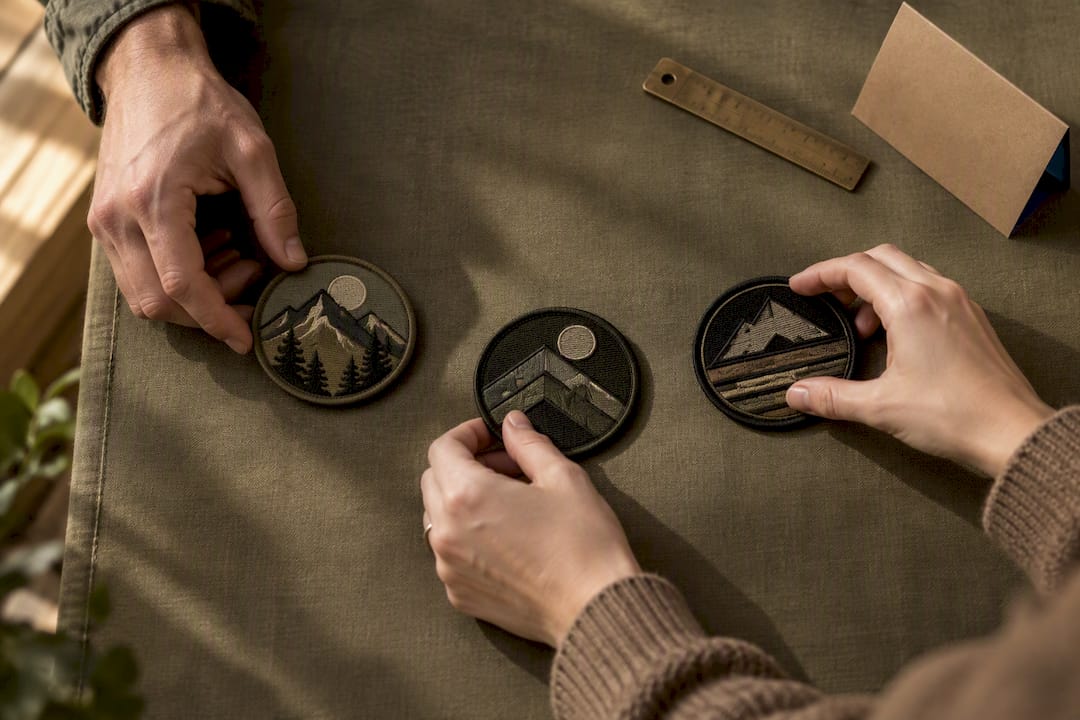
- PVC patches use molded rubber for raised, 3D detail and hold up well against water and abrasion, though they can feel stiff.
- Embroidered patches offer the classic textured look most people associate with military insignia, but fine detail suffers compared to other methods.
- Sublimated patches print full-color, photo-realistic designs directly onto fabric, ideal for complex artwork that embroidery can’t replicate.
- IR (infrared) patches incorporate materials visible under night-vision devices, built for operational use rather than aesthetics.
Most patches attach via hook-and-loop backing rather than sewing, which lets wearers swap patches based on mission, mood, or audience. Placement tends to favor plate carriers, backpacks, and range bags, where size and shape need to clear other gear. Keep patches away from prolonged direct sun to protect color, and check hook-and-loop backing periodically since grit and lint reduce grip over time.
When and Where You Can Actually Wear One
Formal duty uniforms almost never permit morale patches. Dress and service uniforms follow strict, published standards, and adding an unofficial patch there is a fast way to draw the wrong kind of attention. Tactical gear is a different story. Plate carriers, backpacks, and range vests are widely tolerated spaces for morale patches, especially in units with a more relaxed operational culture.
Authorization ultimately comes down to the chain of command. Policy varies by branch, by unit, and even by commanding officer, so what flies in one company might get you a talking-to in another. A few etiquette habits keep you out of trouble:
- Skip anything overtly obscene, politically inflammatory, or likely to embarrass your unit publicly
- Remove morale patches before formal inspections or ceremonies, even if your unit normally tolerates them
- Think about who’s watching; a patch fine among your team might read very differently to civilians or press
- When in doubt, ask your NCO before clipping something new onto your gear
Civilians navigating similar questions around military-style insignia should understand that wearing military insignia carries its own legal boundaries separate from unit-level policy.
Why Patches Become Collectibles and Community Currency
Morale patches don’t stop mattering once someone leaves service. A thriving collector culture exists around limited runs, commemorative designs, and patches tied to specific deployments or milestones. Provenance matters here the same way it does in any collectible market: a patch worn during an actual deployment carries more weight than a reproduction bought online.
Patches also build community through trading and gifting, a practice that turns a small piece of fabric into a conversation starter and a shared story. That culture has spread well past the military, with law enforcement and first responders adopting the same format to build unit pride and mark shared experience.
- Store collectible patches flat, away from humidity, to prevent curling or fading
- Track provenance (unit, deployment, date) for patches with sentimental or resale value
- Trade thoughtfully; a patch given in good faith carries more meaning than one bought in bulk
What Apparel and Patches Share as Values Statements
Modern Day Knight is veteran-owned and operated, built on the belief that what you wear should say something true about what you stand for. A morale patch does that on a plate carrier. A well-made hoodie or hat can do the same thing off-duty, carrying values like integrity and loyalty into everyday life… Pairing a hoodie with a small morale patch, or a hat with a subtle unit emblem, extends that same identity from the field into daily wear.
The Legal and Etiquette Line Around Buying and Selling Patches
Morale patches occupy a legal gray zone that surprises a lot of first-time buyers. Because they’re unofficial, there’s generally no restriction on manufacturing or selling them commercially, which is why specialty makers produce small-batch runs without needing military approval. That’s different from official rank insignia or protected unit crests, which can carry trademark protections or restrictions on commercial reproduction.
Etiquette matters more than law in most cases. Selling a patch that mimics an active unit’s actual crest without permission can cause real friction, even if no law is broken, because it can look like a civilian company is profiting off a unit’s identity or cheapening something that carries weight for the people who earned it. Reputable manufacturers typically design original artwork or work directly with units on commemorative pieces rather than copying protected crests outright.
For buyers, the main consideration is representation. Wearing a unit patch you have no connection to, especially one tied to a specific deployment or award, can read as stolen valor in the eyes of anyone who served in that unit, even when no legal line is crossed. The safest approach is buying patches that reflect values or humor you genuinely relate to, rather than borrowing the identity of a unit you were never part of. Sellers, meanwhile, should be transparent about whether a patch is officially licensed, unit-commissioned, or simply inspired by military culture. That distinction protects both the buyer’s credibility and the integrity of the units whose imagery inspired the design in the first place.
A Veteran-Owned Take on Wearing What You Believe
Patches matter because they let service members say something formal insignia never could, grief, humor, pride, all in a few square inches of fabric. Wear them with respect for context and command. Consider values-first apparel as a natural extension of that same instinct to signal what you stand for.
— Modern Day Knight
Wear Your Values Beyond the Patch
Apparel can carry the same weight as a patch when a patch isn’t the right fit for the moment, at work, at church, or just running errands off-post. Modern Day Knight builds shirts, hoodies, and hats around the same instinct that drives morale-patch culture: say something true about who you are without needing a uniform to do it.
Our lineup includes the Global Citizen Hoodie, the History Matters Hoodie, and the Accountability Hoodie for anyone who wants a statement piece with weight behind it. Prefer something lighter? The Global Citizen Tee, History Matters Tee, Accountability Tee, Army Brat Hoodie, and Army Brat Tee all carry the same values-first design approach. Browse the full apparel collection and pick the piece that matches what you’re ready to stand behind.
Sources
For deeper reading on origins, production, and etiquette, see Carryology’s history of the morale patch, the Havok Journal’s breakdown of modern usage, and Keep Shooting’s buyer’s guide.
- Morale patch — Wikipedia
- The History of the Morale Patch - Carryology
- Morale patches: What they are, why modern units actually wear them (Havok Journal)
FAQ
When Can You Wear Morale Patches?
Morale patches are generally worn on tactical gear like plate carriers, packs, and range bags rather than formal duty uniforms. Authorization depends on unit policy and chain-of-command discretion, so always check with your NCO before adding one to gear you’ll wear on duty.
Does the U.S. Army Allow Morale Patches?
The Army doesn’t authorize morale patches on formal duty uniforms, but individual units often tolerate them on personal gear and tactical equipment. Policy varies significantly by command, so what’s accepted in one unit may not fly in another.
What Does Morale Mean in the Military?
Morale refers to the collective confidence, spirit, and motivation of a unit, and it directly affects performance and cohesion. Morale patches get their name because they’re designed to boost that spirit through humor, identity, and shared inside jokes rather than formal recognition.
What Are the Three Types of Patches?
Patches generally fall into three categories: official insignia (rank, branch, unit crests required by uniform regulation), morale patches (unofficial, expressive, and typically Velcro-backed), and commemorative patches (marking a deployment, event, or milestone). Production methods within the morale-patch category include PVC, embroidered, sublimated, and IR styles, each suited to different looks and uses.


